
Introduction
International trade generates an immense amount of structured and semi-structured data every day. Customs declarations, shipment manifests, port records, and logistics documentation collectively form a vast dataset describing the movement of goods across borders. Governments collect much of this information for regulatory and taxation purposes, yet businesses, researchers, and analysts increasingly rely on similar datasets to understand supply chains, sourcing patterns, and global market activity.
The complexity of modern supply networks has intensified the need for accessible trade intelligence platforms. Manufacturers seek to understand supplier ecosystems, exporters analyze foreign demand, logistics firms track commodity flows, and researchers examine macroeconomic patterns. However, raw customs data alone is rarely easy to interpret. It often arrives fragmented across jurisdictions, formatted inconsistently, and dispersed across multiple databases.
Trade intelligence tools emerged to address this problem by aggregating, structuring, and presenting global import–export data in searchable formats. These platforms attempt to transform customs records and shipment data into insights that organizations can analyze without needing specialized data infrastructure.
Volza is one such platform operating within the global trade analytics category. It focuses on compiling international shipment information and presenting it through searchable databases and analytical tools designed to help users study trade flows, supplier relationships, and market activity.
Understanding how Volza operates, where it fits within the broader data intelligence landscape, and what limitations accompany trade databases can help organizations determine whether this category of tools aligns with their research or operational needs.
What Is Volza?
Volza is a global trade intelligence platform that aggregates customs shipment records and international import–export data from multiple countries. The platform organizes this information into searchable datasets that allow users to explore trade transactions involving companies, products, and shipping routes.
The service operates within the broader category of trade data analytics and supply chain intelligence tools. These platforms compile shipment-level information such as:
- Exporting company names
- Importing companies
- Product descriptions
- Harmonized System (HS) codes
- Shipment quantities
- Ports of origin and destination
- Trade dates and logistics details
By structuring these records into a unified database, Volza enables users to examine patterns in international trade activity.
The platform draws from customs filings and trade documentation published by various national authorities and combines these records into a consolidated interface. Rather than accessing multiple government databases individually, users can analyze cross-border trade information within a single environment.
Organizations typically use platforms like Volza for trade research, competitive analysis, supplier discovery, and logistics trend monitoring. The platform does not directly facilitate trade transactions or logistics operations; instead, it functions primarily as an analytical resource.
The official website for the platform is volza.com, where the company presents its data coverage, platform capabilities, and dataset scope.
Key Features Explained
Trade intelligence tools vary widely in how they structure and present customs data. Volza incorporates several functions intended to make shipment data easier to explore and interpret.
Global Import–Export Database
At the core of Volza is a large database containing import and export records from multiple countries. These datasets typically include transaction-level shipment information derived from customs documentation.
Users can search the database using filters such as:
- Product descriptions
- HS codes
- Company names
- Exporting or importing countries
- Shipment timelines
This structured search capability allows analysts to locate specific trade activities within large datasets that would otherwise be difficult to navigate.
Company-Level Trade Analysis
Another component of the platform focuses on analyzing trade activity associated with particular businesses. Shipment records often identify both the exporter and importer involved in a transaction.
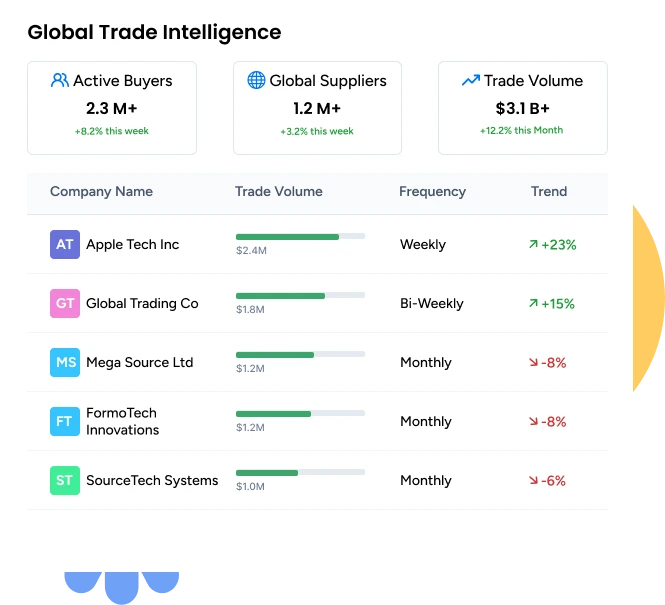
Volza organizes these records into company-level profiles that may display:
- Export volumes
- Import history
- Trading partners
- Shipment frequencies
- Product categories traded
For supply chain analysts, this information can help map relationships between manufacturers, distributors, and buyers.
Product and Commodity Tracking
Global trade classification systems rely heavily on Harmonized System (HS) codes, which categorize products into standardized international codes.
Volza allows users to search trade data using HS codes or product keywords. This capability enables the study of specific commodity flows, including:
- Industrial components
- Raw materials
- Consumer products
- Machinery and equipment
Researchers studying supply chain shifts or import demand patterns often rely on this type of classification-based analysis.
Country-Specific Trade Insights
Trade patterns vary widely by region due to regulatory policies, economic conditions, and infrastructure capacity. Volza organizes shipment data by country so users can examine import and export activity within specific markets.
Typical country-based analysis may include:
- Leading exporters for a particular product
- Major importing countries
- Trade volume changes over time
- Shipment destinations for specific industries
This geographic dimension supports comparative analysis across international markets.
Historical Shipment Records
Another aspect of trade intelligence platforms is the availability of historical datasets. Instead of focusing only on recent shipments, Volza includes records covering multiple years.
Historical data can support research tasks such as:
- Identifying long-term trade trends
- Studying market entry patterns
- Observing supply chain shifts
- Evaluating changes in export markets
Time-based analysis helps researchers understand how trade relationships evolve.
Data Filtering and Segmentation
Large trade databases contain millions of shipment entries. To make analysis manageable, Volza provides filtering options that narrow search results based on specific criteria.
Common filters may include:
- Shipment date ranges
- Product classifications
- Trade value or quantity
- Exporting or importing country
- Company names
These segmentation tools enable more targeted research within extensive datasets.
Common Use Cases
Trade intelligence platforms serve a range of industries and professional roles. Volza’s dataset structure supports several common analytical applications.
Supplier Discovery Research
Companies seeking potential suppliers sometimes analyze import data to identify manufacturers exporting particular products. Shipment records can reveal which companies are actively shipping specific goods internationally.
Competitive Market Analysis
Businesses occasionally study export data to observe competitors’ shipping patterns. By examining shipment frequencies and trade partners, analysts may gain insights into supply networks within an industry.
Global Supply Chain Mapping
Researchers and supply chain consultants sometimes use trade databases to understand how products move between countries. Shipment-level data can illustrate relationships among manufacturers, distributors, and importers.
Trade Policy Research
Economists and policy researchers often analyze customs datasets to evaluate the effects of tariffs, regulatory changes, or trade agreements. Historical trade records can help identify shifts in import or export behavior.
Import Trend Monitoring
Organizations involved in procurement or logistics sometimes track the flow of particular goods into certain markets. Trade intelligence platforms help identify changes in import demand or emerging supply sources.
Market Entry Exploration
Companies exploring international markets occasionally analyze export records to understand which firms already operate within a particular sector or geographic region.
Potential Advantages
The value of a trade intelligence platform depends largely on the accessibility and organization of the data it provides. Several potential advantages are associated with platforms such as Volza.
Consolidated Global Data
Trade information is normally distributed across many national databases. Aggregating these records into one searchable environment reduces the complexity of gathering data from multiple government sources.
Structured Data Organization
Raw customs records are often difficult to analyze due to inconsistent formatting. Platforms like Volza standardize these datasets into structured fields that support filtering and analysis.
Visibility Into Trade Networks
Shipment records reveal relationships between exporters and importers. When organized effectively, these datasets can illustrate supply chain networks and trading partnerships across industries.
Time-Series Trade Analysis
Historical datasets allow analysts to examine trends over extended periods. This capability supports long-term economic research and market evaluation.
Product-Level Trade Tracking
The use of HS codes allows detailed examination of trade activity for individual product categories. This level of granularity supports industry-specific research.
Limitations & Considerations
Despite their usefulness, trade intelligence platforms have inherent limitations related to the nature of customs data and global reporting systems.
Data Coverage Variability
Not all countries publish shipment-level trade data publicly. As a result, global trade databases may have uneven geographic coverage depending on national transparency policies.
Data Interpretation Challenges
Shipment records often contain abbreviated product descriptions or inconsistent company names. Analysts may need additional verification to confirm the accuracy of certain entries.
Time Delays in Data Availability
Customs data is typically released after processing and publication cycles. This means shipment records may not reflect real-time trade activity.
Confidentiality Restrictions
Some countries limit access to detailed company-level information in customs filings. In such cases, certain shipment details may be anonymized or unavailable.
Context Limitations
Shipment records describe what was shipped, when, and between whom. They do not necessarily explain the broader contractual or operational context behind those transactions.
Who Should Consider Volza
Trade intelligence platforms generally appeal to professionals involved in global commerce, economic analysis, or supply chain research.
Potential users may include:
- Supply chain analysts
- Import–export researchers
- Procurement specialists
- Market intelligence teams
- Trade policy researchers
- Logistics consultants
- Academic researchers studying international trade
These groups often require structured access to historical shipment data and international trade records.
Who May Want to Avoid It
Certain organizations may find limited relevance in trade intelligence databases.
For example:
- Businesses operating exclusively in domestic markets
- Organizations requiring real-time logistics tracking
- Companies needing direct supplier verification rather than shipment data
- Small firms without dedicated research or analytics functions
Trade databases focus primarily on historical shipment information rather than operational logistics management.
Comparison With Similar Tools
Volza operates within a broader ecosystem of trade intelligence platforms that compile customs and shipment data.
Several tools in this category share similar goals but differ in dataset coverage, analytics capabilities, and interface design.
Common categories of comparable platforms include:
Global customs data aggregators
These services compile import–export records from multiple countries and provide searchable databases for trade analysis.
Supply chain intelligence platforms
Some tools expand beyond customs records to include additional datasets such as supplier directories, shipping schedules, or corporate registries.
Economic trade research databases
Academic and policy research platforms often focus on macro-level trade statistics rather than shipment-level records.
The differences between these tools usually relate to:
- Geographic data coverage
- Historical data depth
- Interface usability
- Filtering and analytics capabilities
- Industry focus
Users evaluating trade intelligence tools often compare these aspects when determining which dataset structure best supports their research needs.
Final Educational Summary
Global trade data plays a significant role in understanding how products move between countries, companies, and supply chains. Customs records and shipment documentation collectively provide one of the most detailed sources of information about international commerce.
Volza represents one approach to organizing and presenting this data through a centralized trade intelligence platform. By aggregating shipment records from multiple jurisdictions, the platform allows users to search and analyze import–export activity across industries and geographic regions.
Its database structure supports research tasks such as supplier exploration, product-level trade analysis, and historical shipment tracking. However, as with all customs-based datasets, users must consider factors such as data coverage limitations, reporting delays, and interpretation challenges.
Trade intelligence platforms occupy an increasingly important role as global supply chains become more interconnected and data-driven. Understanding the structure, capabilities, and constraints of tools like Volza can help organizations evaluate how shipment data fits into broader market research and supply chain analysis strategies.
Disclosure
This article is for educational and informational purposes only. Some links on this website may be affiliate links, but this does not influence our editorial content or evaluations.
