Introduction
In the contemporary business environment, seamless communication is critical to operational efficiency. Traditional phone systems often struggle to meet the demands of mobile teams, remote work, and integrated digital workflows. This has led to the development of cloud-based telephony solutions, which aim to provide flexibility, scalability, and advanced features beyond conventional systems. Unitel Voice operates within this category, offering businesses a platform designed to centralize communications in a virtual environment.
What Is Unitel Voice?
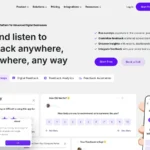
Unitel Voice is a cloud-based business phone system that provides virtual PBX capabilities, VoIP connectivity, and a suite of communication tools for organizations of varying sizes. It is classified as a unified communications platform, emphasizing the convergence of voice, messaging, and collaboration tools in a single digital framework. Unlike legacy PBX systems, Unitel Voice leverages internet-based delivery, enabling remote access and multi-device integration.
Key Features Explained
Unitel Voice includes a range of features designed to enhance business communication:
- Virtual PBX: Allows for central management of multiple phone lines without physical hardware dependency.
- Auto Attendant: Automates call routing with custom greetings and menu options.
- Call Forwarding and Transfer: Provides dynamic routing of calls to appropriate team members or departments.
- Business Voicemail and Call Recording: Ensures documentation and accessibility of important interactions.
- Softphone and Mobile App Support: Extends functionality to smartphones, tablets, and desktop applications.
- Team Messaging and Presence: Facilitates real-time internal communication and status visibility.
- Conference Calling: Supports multi-party audio communication with centralized management.
These features collectively enable organizations to maintain professional communication workflows while accommodating remote work and multi-location operations.
Common Use Cases
Unitel Voice serves diverse operational scenarios:
- Small to Medium Enterprises (SMEs): Centralizes communications for teams operating across multiple sites or home offices.
- Remote Workforce Management: Enables distributed teams to collaborate efficiently without dependence on physical office infrastructure.
- Customer-Facing Services: Supports call routing, voicemail, and on-hold messaging for professional client interaction.
- Multi-Office Coordination: Provides unified management of phone systems across branches or franchise networks.
- Startup Environments: Offers scalable telephony solutions without upfront hardware investments.
These use cases highlight the adaptability of cloud-based phone systems in modern organizational contexts.
Potential Advantages
Several operational advantages are associated with adopting Unitel Voice:
- Scalability: Easily accommodates growth or downsizing without physical infrastructure changes.
- Cost Predictability: Reduces upfront capital expenditures, transitioning to subscription-based models.
- Enhanced Accessibility: Employees can connect via mobile devices or desktops, supporting remote operations.
- Feature Integration: Combines voice, messaging, and conferencing in a unified system.
- Operational Continuity: Cloud-based architecture minimizes downtime risks associated with hardware failures.
Limitations & Considerations
Despite its benefits, certain considerations are essential:
- Internet Dependence: System performance relies on stable internet connectivity; outages can affect call quality.
- Learning Curve: Teams may require training to maximize feature utilization effectively.
- Feature Complexity: Some advanced functions, such as automated routing and multi-level menus, may necessitate administrative oversight.
- Integration Needs: Compatibility with existing CRM or business management platforms should be evaluated before adoption.
These limitations underscore the importance of assessing organizational readiness for cloud telephony.
Who Should Consider Unitel Voice
Unitel Voice is particularly suitable for organizations that:
- Operate multiple offices or remote teams.
- Require advanced call handling without investing in physical PBX systems.
- Seek a scalable, cloud-based communication solution adaptable to growth.
- Value unified management of calls, messaging, and conferencing.
Who May Want to Avoid It
Conversely, businesses may reconsider adoption if they:
- Operate in areas with unreliable internet connectivity.
- Depend exclusively on legacy analog phone infrastructure.
- Require extremely high call volume capacity beyond standard cloud PBX limits.
- Prefer fully on-premise telephony solutions for compliance or regulatory reasons.
Comparison With Similar Tools
Unitel Voice operates alongside other cloud-based telephony solutions such as RingCentral, 8×8, and Nextiva. While many platforms offer similar features, Unitel Voice differentiates itself through simplicity in deployment, flexible virtual number options, and integrated messaging capabilities. Compared to traditional VoIP providers, it emphasizes a comprehensive suite of administrative tools, which can be advantageous for small to medium organizations seeking centralized management without extensive IT overhead.
Final Educational Summary
Unitel Voice exemplifies the evolution of business communication into cloud-based, integrated systems. By combining virtual PBX, VoIP, messaging, and conferencing, it addresses operational needs for remote teams, SMEs, and multi-location businesses. While considerations around internet reliability and feature management are important, the platform represents a significant shift from conventional telephony toward a flexible, software-driven approach. Understanding both its potential and limitations allows organizations to make informed decisions regarding digital communication infrastructure.
Disclosure
This article is for educational and informational purposes only. Some links on this website may be affiliate links, but this does not influence our editorial content or evaluations.