
Introduction
Digital marketing has introduced a wide range of measurement tools designed to help organizations understand how customers interact with advertising and communication channels. While website analytics platforms provide detailed insight into online behavior—such as page visits, click paths, and form submissions—phone conversations have historically been harder to analyze. Many businesses, especially service-based organizations, still receive a significant portion of inquiries through phone calls. Without a structured tracking system, identifying which marketing channel prompted a call can be difficult.
To address this gap, a specialized category of software known as call tracking and conversation analytics tools has developed. These platforms attempt to bridge offline communication with digital attribution models by associating phone calls with marketing campaigns, website visits, advertisements, or keywords. They often combine call routing, analytics dashboards, and conversation analysis technologies.
CallRail is one of the tools in this category. It is designed to help organizations track inbound phone calls, analyze conversation data, and connect call activity with marketing sources. By providing detailed reporting on call behavior and attribution, the platform contributes to the broader field of marketing analytics and customer communication monitoring.
Understanding how systems like CallRail function can help clarify how modern businesses analyze phone-based interactions alongside digital engagement metrics.
What Is CallRail?
CallRail is a call tracking and conversation analytics platform developed to measure and analyze phone interactions associated with marketing campaigns. The platform connects inbound calls with the digital sources that generated them, such as search engine advertisements, website visits, email campaigns, or social media promotions.
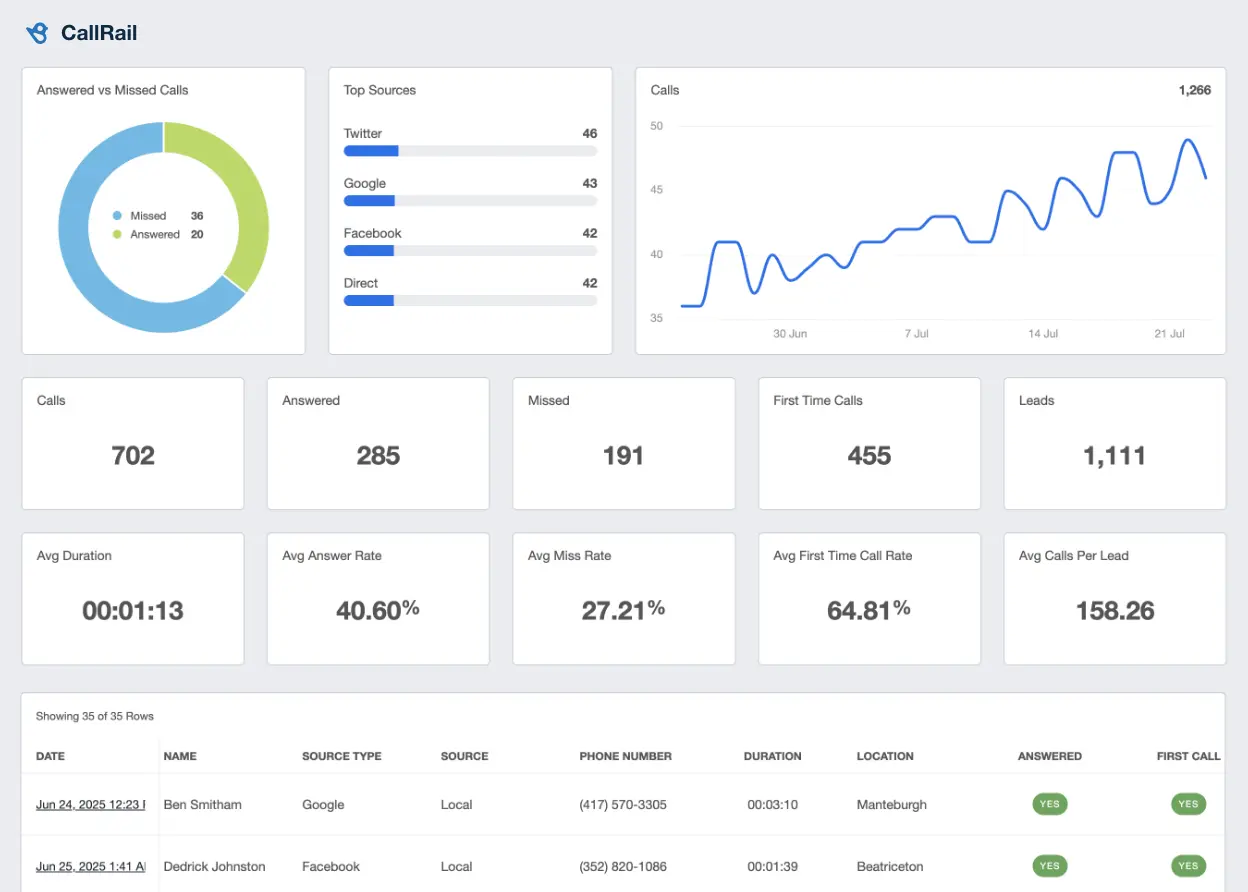
In practice, CallRail works by assigning unique phone numbers to different marketing channels or campaigns. When a customer calls one of these numbers, the platform records information about the call and associates it with the originating source. This information is stored in an analytics dashboard where organizations can review call data, evaluate campaign performance, and examine patterns in customer communication.
Beyond simple call logging, CallRail also includes additional technologies such as call recording, transcription, keyword spotting, and conversation analytics. These capabilities enable businesses to review the content of calls and identify trends related to customer inquiries, service issues, or sales discussions.
Within the broader software landscape, CallRail falls into several overlapping categories:
- Call tracking software
- Marketing attribution tools
- Conversation intelligence platforms
- Customer communication analytics systems
These categories reflect the increasing integration between marketing analytics and communication management.
Key Features Explained
Dynamic Number Insertion
One of the foundational technologies used by CallRail is dynamic number insertion (DNI). This feature replaces a website’s displayed phone number with a unique tracking number depending on how the visitor arrived at the site. For example, a visitor who arrived through a search engine advertisement might see a different number than someone who came through an organic search result.
When a call is placed, the system can attribute that call to a specific campaign, keyword, or marketing channel. This process helps create a more accurate understanding of how marketing efforts influence phone-based inquiries.
Call Recording and Transcription
CallRail includes the ability to record phone conversations, subject to regional laws and user permissions. Recorded calls can then be transcribed into text using speech recognition technology. Transcriptions allow users to search and analyze conversations without listening to each recording manually.
Conversation transcripts can assist with several forms of analysis, including customer feedback review, service quality monitoring, and training evaluation.
Conversation Intelligence Tools
Conversation intelligence features attempt to extract patterns from phone calls by identifying keywords, phrases, or topics discussed during conversations. These tools can automatically flag calls that mention particular terms, such as pricing questions, appointment requests, or service complaints.
The goal of these capabilities is to provide a structured way to review large volumes of phone conversations and identify recurring themes that may affect marketing performance or customer satisfaction.
Call Attribution and Marketing Analytics
A central function of CallRail is marketing attribution for phone calls. Attribution models attempt to determine which marketing channels contribute to customer inquiries. By connecting calls with campaign data, CallRail can generate reports showing how different channels perform in terms of call volume and lead generation.
This type of data can be integrated with broader marketing analytics systems, enabling organizations to compare phone-based interactions with website conversions or form submissions.
Call Routing and Management
CallRail also includes call management features that allow organizations to route incoming calls to specific departments, teams, or locations. For example, a call from a specific campaign might be directed to a sales team, while another call might be routed to customer support.
This routing capability helps ensure that calls reach the appropriate personnel and can also support more detailed reporting on call outcomes.
Integrations With Other Platforms
Modern marketing workflows often rely on multiple software platforms, including customer relationship management systems (CRM), advertising networks, and analytics tools. CallRail offers integrations that allow call data to be shared with other systems. This integration capability enables organizations to combine phone call insights with broader customer data and campaign performance metrics.
Common Use Cases
Marketing Campaign Attribution
One of the most common uses of CallRail involves identifying which marketing channels generate phone calls. Businesses running digital advertising campaigns—such as pay-per-click advertising or social media promotions—may use call tracking to evaluate whether those campaigns lead to phone inquiries.
Lead Generation Monitoring
Many service-oriented businesses rely on phone calls as a primary lead source. CallRail can help monitor incoming calls, measure lead volume, and track patterns in inquiry behavior. This data may assist marketing teams in understanding which campaigns produce higher-quality leads.
Customer Communication Analysis
Call recordings and transcripts provide a record of customer interactions. Organizations may review these recordings to understand common questions, evaluate service performance, or identify recurring issues.
Sales Conversation Review
Sales teams sometimes use conversation analysis tools to review phone discussions with potential customers. By examining transcripts or recordings, organizations can analyze how sales conversations develop and identify frequently discussed topics.
Multi-Location Business Tracking
Companies operating across multiple locations may assign unique phone numbers to each location or marketing campaign. CallRail’s reporting system can help track call volume by location, making it easier to analyze regional differences in marketing performance.
Potential Advantages
Improved Marketing Attribution
One of the primary advantages associated with call tracking tools is improved attribution for phone inquiries. By connecting calls with marketing sources, organizations can gain clearer insight into which campaigns generate engagement.
Centralized Call Data
CallRail provides a centralized dashboard for reviewing call activity, recordings, and transcripts. This consolidated approach allows teams to analyze communication patterns without relying on multiple systems.
Insight Into Customer Intent
Conversation transcripts and keyword analysis may reveal patterns in customer questions or concerns. These insights can help organizations better understand customer expectations and adjust communication strategies accordingly.
Integration With Marketing Data
Because call data can be integrated with advertising platforms and analytics tools, it becomes possible to analyze phone calls alongside other marketing metrics. This broader perspective may help organizations evaluate overall campaign performance.
Support for Communication Review
Recorded calls can be used for training, compliance review, or service quality assessment. Organizations that rely heavily on phone communication may benefit from having a structured archive of customer interactions.
Limitations & Considerations
Privacy and Compliance Requirements
Call recording and conversation analysis features must comply with local regulations related to privacy and consent. Laws governing call recording vary by region, and organizations using these tools must ensure that they follow applicable legal requirements.
Dependence on Phone-Based Communication
Call tracking systems provide the most value in environments where phone calls represent a significant portion of customer inquiries. Businesses that rely primarily on online forms, chat systems, or e-commerce transactions may not require extensive call tracking.
Data Interpretation Challenges
While call analytics tools provide detailed data, interpreting that data can require careful analysis. Attribution models may not always capture the full complexity of customer journeys, particularly when multiple channels influence a purchasing decision.
Implementation Complexity
Setting up dynamic phone numbers, campaign tracking, and integrations may require technical configuration. Organizations may need to allocate time to properly implement and maintain the system.
Cost and Scalability Factors
Pricing structures for call tracking tools often depend on call volume, tracking numbers, and feature usage. Organizations considering such platforms may need to evaluate how usage patterns affect long-term operational costs.
Who Should Consider CallRail
CallRail may be relevant for organizations that rely heavily on phone calls as part of their customer acquisition or service process. Examples include:
- Home service companies
- Healthcare clinics and appointment-based practices
- Legal service providers
- Marketing agencies managing advertising campaigns
- Real estate organizations
- Automotive service businesses
These types of organizations often receive inquiries through phone conversations, making call tracking analytics particularly relevant.
Marketing teams seeking to connect offline communication with digital campaign performance may also find tools in this category useful for reporting and attribution purposes.
Who May Want to Avoid It
Not every organization requires specialized call tracking software. Businesses that operate primarily through digital transactions—such as e-commerce retailers with minimal phone support—may see limited value from these systems.
Additionally, organizations with strict privacy constraints or limited resources for managing compliance requirements may need to carefully evaluate whether call recording and conversation analysis features align with their operational policies.
Companies that already rely on comprehensive customer communication platforms with built-in call analytics might also find overlapping functionality with dedicated call tracking tools.
Comparison With Similar Tools
CallRail operates within a competitive landscape of call tracking and conversation analytics platforms. Several tools provide similar capabilities, including call attribution, conversation recording, and marketing analytics integration.
Some platforms focus primarily on enterprise-level conversation intelligence, offering advanced machine learning analysis of sales calls. Others emphasize marketing attribution, helping businesses understand which advertising channels generate leads.
Compared with broader customer communication systems, CallRail’s design centers specifically on marketing-driven call tracking and campaign attribution. This focus can make it particularly relevant for organizations seeking to connect advertising efforts with inbound phone inquiries.
However, different tools vary in their pricing structures, integration capabilities, analytics features, and scalability. Organizations evaluating call tracking solutions often compare several platforms to determine which one aligns best with their operational requirements.
Final Educational Summary
The growth of digital marketing has increased the need for detailed measurement of customer interactions across multiple communication channels. While website analytics platforms provide comprehensive data about online behavior, phone conversations have traditionally been harder to attribute to specific marketing activities.
CallRail represents one approach to addressing this challenge. As a call tracking and conversation analytics platform, it enables organizations to associate phone calls with marketing campaigns, analyze conversation content, and manage call data within a centralized reporting environment.
Its features—such as dynamic number insertion, call recording, transcription, and attribution reporting—reflect broader trends in marketing analytics that seek to integrate offline communication with digital performance metrics. For organizations that rely heavily on phone-based inquiries, these capabilities can provide additional visibility into customer engagement patterns.
At the same time, tools in this category require careful consideration of privacy regulations, implementation requirements, and the role of phone communication within a company’s broader customer experience strategy. Evaluating these factors helps determine whether call tracking software fits within a given operational context.
Understanding platforms like CallRail contributes to a broader perspective on how businesses measure customer interactions and analyze marketing effectiveness in an increasingly data-driven environment.
Disclosure
This article is for educational and informational purposes only. Some links on this website may be affiliate links, but this does not influence our editorial content or evaluations.
