
Introduction
Modern software companies increasingly rely on distributed communication channels to interact with customers. Email, chat platforms, and collaborative tools have become central to how support teams operate. However, this shift has introduced a structural challenge: customer conversations are often scattered across multiple platforms, making it difficult to maintain consistency, accountability, and visibility.
Traditional help desk systems were designed around ticket-based workflows, which emphasize structured intake and resolution processes. While effective in certain contexts, these systems can feel disconnected from real-time communication environments. As teams adopt tools like Slack for daily operations, the gap between internal collaboration and customer-facing support continues to widen.
This gap has led to the emergence of a new category of tools focused on conversational support infrastructure. These systems aim to integrate customer support directly into communication platforms rather than forcing teams to operate in separate environments. Pylon belongs to this category, offering a framework that aligns support processes with modern messaging-based workflows.
What Is Pylon?
Pylon is a customer support and communication management platform designed to operate within messaging ecosystems, particularly Slack. Instead of functioning as a standalone ticketing application, it acts as an intermediary layer that captures, organizes, and tracks customer conversations occurring in real-time channels.
The platform is commonly classified as a conversational support tool or Slack-based help desk alternative. Its primary function is to transform informal chat interactions into structured, trackable support workflows without disrupting the natural flow of communication.
Pylon is especially relevant in B2B SaaS environments, where customers often interact directly with product teams through shared Slack channels or similar platforms. By embedding support capabilities into these channels, it enables organizations to manage requests, assign responsibility, and monitor progress without leaving their existing workspace.
Key Features Explained
Conversation Structuring Within Chat Environments
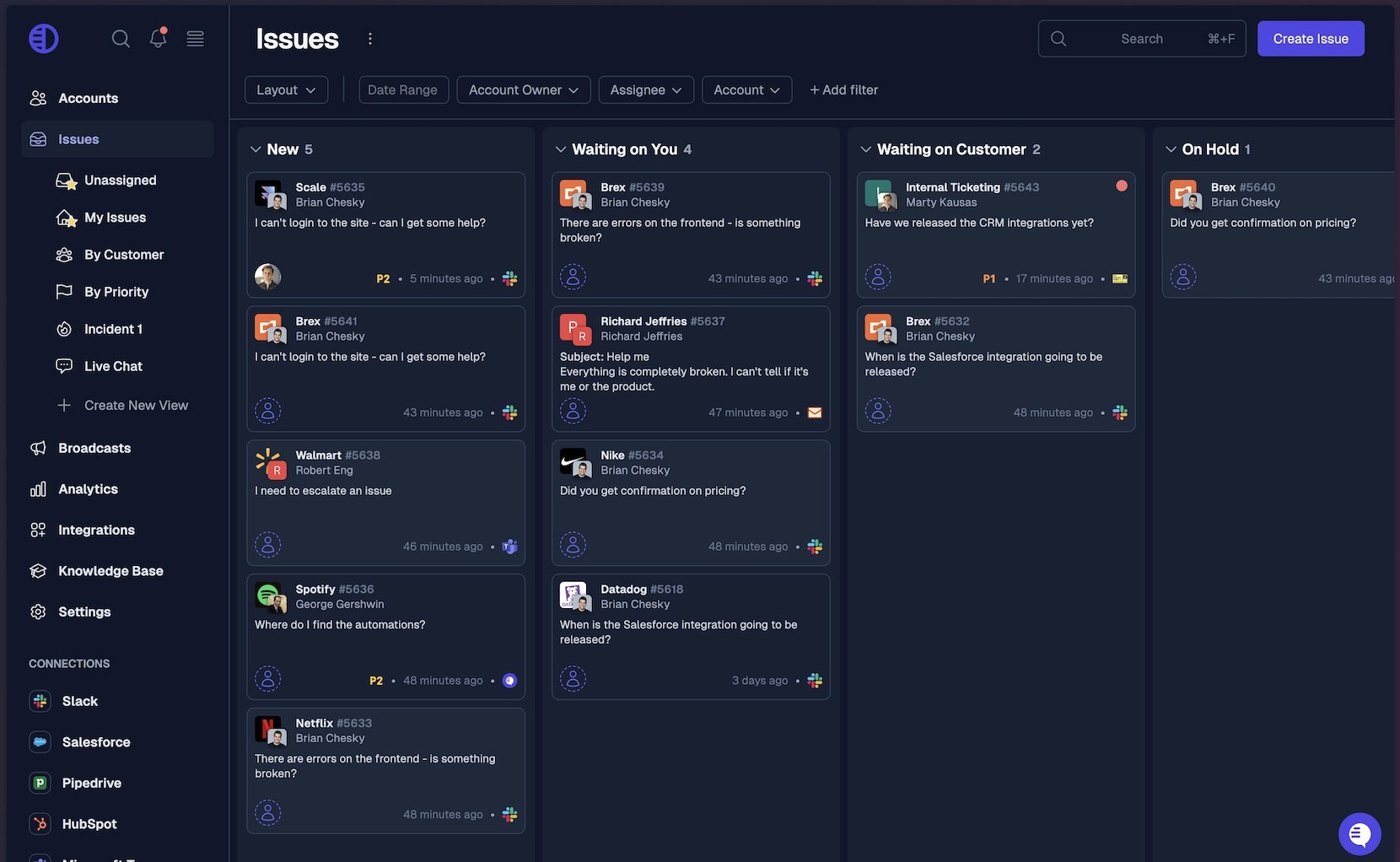
Pylon introduces a system for organizing chat-based interactions into coherent threads. Each conversation can be treated as a distinct support case, even if it originates in an informal messaging environment. This allows teams to retain conversational context while adding structure typically associated with ticketing systems.
Native Slack Workflow Integration
A defining feature of Pylon is its deep integration with Slack. Support teams can manage incoming requests, respond to customers, and collaborate internally without switching tools. This reduces reliance on external dashboards and aligns support processes with everyday communication habits.
Assignment and Ownership Tracking
In fast-paced environments, multiple team members may interact with the same customer. Pylon enables explicit assignment of conversations to individuals, ensuring that responsibility is clearly defined. This helps prevent duplication of effort and reduces the risk of unresolved issues.
Status Management Across Conversations
Pylon allows teams to label conversations based on their current state, such as open, active, or resolved. This creates visibility into the progress of support tasks and helps teams prioritize work effectively.
Internal Collaboration Layer
Support interactions often require input from engineering or product teams. Pylon provides a mechanism for internal discussion that remains separate from customer-facing communication. This ensures that technical conversations can occur without cluttering the customer experience.
Searchable Knowledge Through Conversation History
All interactions managed through Pylon are stored in a structured format, making them searchable. Over time, this creates an internal knowledge base derived from real support cases, which can be useful for identifying recurring issues and improving response efficiency.
Integration With External Systems
While centered around messaging platforms, Pylon can connect with other operational tools such as CRM systems and issue trackers. This integration enables teams to link customer conversations with broader business data, enhancing context and continuity.
Common Use Cases
Managing Slack-Based Customer Communities
Many SaaS companies host customer communities within Slack. Pylon enables these organizations to manage support requests within those communities while maintaining structure and accountability.
Developer Support Environments
Technical products often require detailed, real-time troubleshooting. Pylon supports this by allowing developers and support engineers to collaborate directly within messaging threads, preserving technical context.
Customer Success Operations
Customer success teams frequently engage in ongoing conversations rather than one-time interactions. Pylon supports this continuous engagement model by maintaining conversation history and context over time.
Internal Help Desk Functions
Organizations can also use Pylon for internal support, such as IT or operations requests. Employees can submit issues through messaging platforms, and support teams can manage them within the same environment.
Potential Advantages
Alignment With Modern Communication Habits
Pylon reflects how teams already communicate, reducing the friction associated with adopting new systems. By integrating support into familiar tools, it minimizes disruption to existing workflows.
Faster Response Cycles
Real-time messaging enables quicker interaction between support teams and customers. This can lead to shorter resolution times, particularly for technical issues that require back-and-forth discussion.
Context Preservation
Unlike traditional ticketing systems, which may fragment conversations, Pylon keeps interactions within a continuous thread. This helps maintain context and reduces the need for repetitive explanations.
Improved Cross-Team Collaboration
The ability to involve multiple departments within a single conversation streamlines problem-solving. Teams can coordinate responses without switching platforms or losing track of information.
Flexible Workflow Design
Pylon does not enforce rigid processes, allowing organizations to adapt workflows based on their specific needs. This flexibility can be valuable for teams operating in dynamic environments.
Limitations & Considerations
Dependence on Messaging Infrastructure
Pylon’s effectiveness relies heavily on platforms like Slack. Organizations that do not use these tools extensively may find limited value in adopting it.
Potential for Informal Workflow Drift
Because the system operates within conversational environments, maintaining structured workflows requires discipline. Without clear practices, conversations can become difficult to track.
Scalability Constraints
As the volume of support interactions grows, managing conversations within messaging platforms can become complex. Larger organizations may require additional layers of organization or complementary tools.
Limited Advanced Automation
Compared to traditional help desk platforms, Pylon may offer fewer built-in automation features. Teams that rely heavily on automated workflows may need to integrate additional solutions.
Data Organization Challenges
While conversations are searchable, extracting structured insights from large volumes of chat data can be challenging. Organizations must implement processes to ensure long-term usability of stored information.
Who Should Consider Pylon
SaaS Companies With Slack-Centric Operations
Organizations that already use Slack as their primary communication tool are well-positioned to integrate Pylon into their workflows.
Teams Supporting Technical Products
Products that require detailed, ongoing interaction with users can benefit from Pylon’s conversational approach to support.
Startups and Growing Businesses
Smaller teams that prioritize flexibility over rigid processes may find Pylon easier to adopt compared to traditional help desk systems.
Customer Success-Oriented Organizations
Businesses focused on long-term client relationships can use Pylon to maintain continuous, context-rich communication.
Who May Want to Avoid It
Enterprises Requiring Formal Ticketing Systems
Large organizations with strict compliance, auditing, or reporting requirements may prefer structured help desk platforms.
Email-Centric Support Teams
If customer communication primarily occurs through email, Pylon’s messaging-based approach may not align with existing workflows.
High-Volume Support Centers
Teams handling large numbers of repetitive requests may find traditional ticketing systems more efficient for managing scale.
Automation-Driven Operations
Organizations that rely heavily on automation and predefined workflows may need more advanced tools than Pylon currently provides.
Comparison With Similar Tools
Traditional Help Desk Platforms
Traditional help desks focus on structured ticket management, automation, and reporting. Pylon, by contrast, emphasizes conversational workflows and real-time collaboration. The choice between the two often depends on whether a team values structure or flexibility.
Chat-Based Support Tools
While many chat tools enable customer interaction, they often lack built-in mechanisms for tracking and managing support workflows. Pylon adds this layer of organization without removing the conversational nature of chat.
Collaboration Platforms
General collaboration tools facilitate communication but do not provide support-specific features such as assignment, status tracking, or resolution management. Pylon extends these platforms with functionality tailored to support operations.
Final Educational Summary
Pylon represents a shift in how customer support systems are designed in the context of modern communication tools. By embedding support workflows into messaging platforms, it challenges the traditional separation between internal collaboration and customer interaction.
Its approach prioritizes real-time communication, contextual continuity, and workflow flexibility. These characteristics make it particularly relevant for SaaS companies, developer-focused products, and teams that rely heavily on Slack-based communication.
At the same time, the conversational model introduces trade-offs, especially in areas such as scalability, automation, and formal process control. Organizations must evaluate whether this model aligns with their operational requirements and long-term growth plans.
As customer support continues to evolve, tools like Pylon highlight the growing importance of integrating communication and workflow management into a unified system.
Disclosure: This article is for educational and informational purposes only. Some links on this website may be affiliate links, but this does not influence our editorial content or evaluations.
