Introduction
The rapid expansion of digital media has transformed how information is produced, distributed, and consumed. Podcasts, webinars, live streams, online courses, and recorded interviews generate vast quantities of spoken content every day. While these formats are valuable for audiences who prefer audio or video, they also create a practical challenge: converting long-form recordings into written materials that can be reused across websites, newsletters, social media, and research documentation.
Traditionally, this conversion process required manual transcription, editing, summarization, and formatting. For journalists, educators, and research teams, these tasks could consume significant time and labor resources. As content production volumes increased, the need for automated transcription and content repurposing tools became more apparent.
Artificial intelligence has increasingly been used to address this gap. A growing category of software now focuses on converting spoken media into structured written outputs such as summaries, articles, transcripts, and marketing materials. These platforms combine speech recognition with natural language processing to interpret and restructure audio-based information.
One platform frequently discussed within this category is Castmagic. The tool is designed to process audio or video recordings and transform them into multiple forms of written content. Understanding how this type of software operates—and where it fits within modern digital workflows—helps clarify its role in the broader ecosystem of AI-assisted content production.
What Is Castmagic?
Castmagic is an artificial intelligence platform focused on transforming audio and video recordings into structured written content. It belongs to a category commonly described as AI content repurposing tools, which combine automated transcription, language modeling, and structured formatting to extract usable text from spoken media.
The platform processes recordings such as podcasts, interviews, webinars, or lectures and generates a variety of text outputs. These outputs may include transcripts, summaries, article drafts, highlight quotes, or social media snippets derived from the original spoken material.
At its core, Castmagic relies on two primary technologies:
- Automated speech recognition (ASR) to convert spoken language into text.
- Natural language processing (NLP) to interpret and restructure the resulting transcript.
Rather than producing only a raw transcript, the system attempts to organize the information into readable segments. These may resemble blog outlines, newsletters, summaries, or documentation depending on the selected format.
Tools like Castmagic are often used in media production environments where audio and video recordings represent a primary source of information. In these contexts, automated content generation can help convert recordings into multiple written formats suitable for publication, archiving, or analysis.
Key Features Explained
Automated Audio and Video Transcription
One of the foundational capabilities of Castmagic is automated transcription. The software analyzes uploaded recordings and converts spoken dialogue into written text. This process uses speech recognition algorithms trained to identify words, punctuation patterns, and speaker transitions.
Transcriptions generated by AI tools typically serve as the base layer for additional content processing. Once the spoken material has been converted into text, it can be reorganized into different written formats.
Accuracy in transcription may vary depending on factors such as audio clarity, accents, background noise, and the number of speakers involved.
AI-Powered Content Generation
After transcription is complete, Castmagic applies language models to interpret the text and produce structured outputs. These may include:
- Episode summaries
- Blog-style article drafts
- Key topic outlines
- Highlight quotes
- Descriptive captions
The goal is to extract meaningful insights from longer recordings and present them in shorter, readable segments.
This feature reflects a broader shift toward AI-assisted editorial workflows, where software helps convert source material into multiple derivative formats.
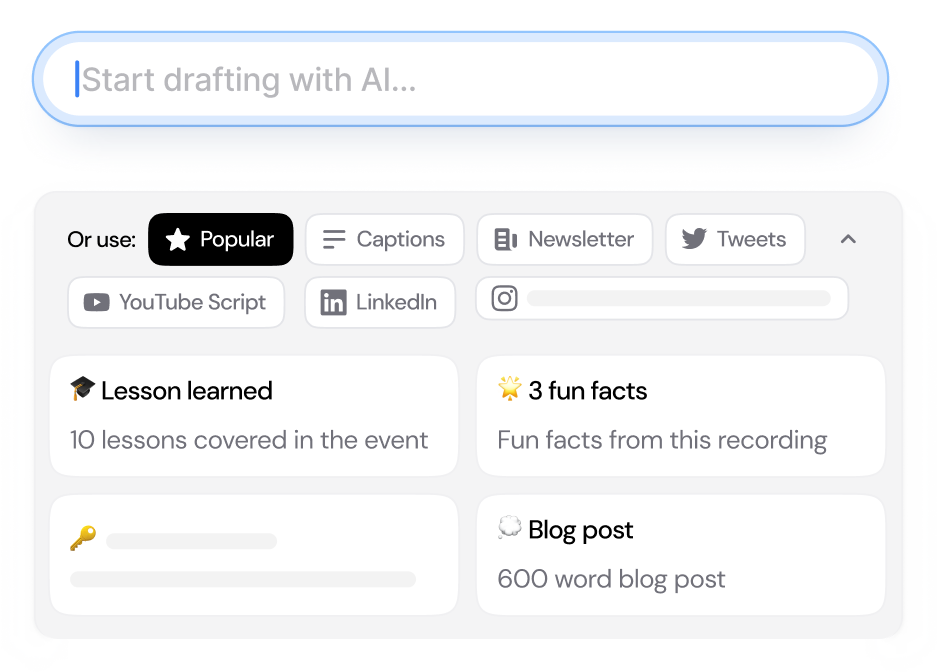
Content Repurposing Templates
Some AI content platforms include structured templates designed for specific publishing formats. Castmagic provides preset structures that help transform raw transcripts into:
- Newsletter content
- Podcast show notes
- Social media captions
- Content outlines
Templates help standardize the format of generated outputs. This can be particularly useful for teams producing recurring content series where consistency across episodes or publications is important.
Speaker Identification
When recordings involve multiple participants, identifying who is speaking becomes important for readability and documentation. Castmagic attempts to differentiate speakers within a transcript, assigning labels that clarify dialogue structure.
Speaker detection is commonly used in:
- Podcast interviews
- panel discussions
- online classes
- recorded meetings
Although automated speaker recognition can assist with organization, manual adjustments are sometimes required to ensure accuracy.
Knowledge Extraction and Highlights
Another function associated with AI transcription platforms involves identifying key ideas or important segments within long recordings. Castmagic analyzes transcripts to locate passages that may represent major themes or memorable quotes.
These highlights can then be reused as:
- summary points
- pull quotes
- social media snippets
- article sections
The process is intended to simplify the task of reviewing lengthy recordings in search of notable moments.
Common Use Cases
AI transcription and repurposing platforms are used in a variety of professional environments. The most common applications tend to involve situations where audio or video recordings serve as primary content sources.
Podcast Production
Podcast creators often publish multiple forms of content related to each episode. These may include show notes, transcripts, promotional posts, or blog summaries. Tools like Castmagic can help generate written materials from recorded conversations.
Webinar and Online Course Documentation
Educational webinars and online training sessions frequently contain valuable instructional information. Converting these recordings into written summaries or transcripts can help preserve the material for later review.
Educators may also use transcripts to create course documentation or supplementary learning materials.
Interview-Based Journalism
Journalists conducting recorded interviews often rely on transcripts for quoting sources accurately. Automated transcription tools can help accelerate the process of converting interviews into written form for reporting or research purposes.
Research and Knowledge Archiving
Researchers and academic teams sometimes record interviews, lectures, or discussions as part of qualitative research projects. Transcription software allows these recordings to be converted into analyzable text.
This can assist with coding, annotation, and thematic analysis.
Content Repurposing for Media Teams
Digital media teams often distribute the same core content across multiple platforms. A single recorded discussion may later appear as:
- a podcast episode
- a written article
- social media posts
- a newsletter summary
Repurposing tools help restructure one recording into several different formats.
Potential Advantages
Workflow Efficiency
Automating transcription and summarization can reduce the time required to convert recordings into written material. For teams managing large volumes of media content, automation may help streamline editorial workflows.
Improved Content Accessibility
Transcripts and summaries make audio and video content accessible to audiences who prefer reading or who require text-based formats for accessibility reasons.
Written versions of recordings can also be indexed by search engines, improving discoverability.
Centralized Content Organization
When recordings are converted into structured text outputs, they become easier to archive and search. This can be beneficial for organizations maintaining large libraries of recorded discussions or presentations.
Support for Multiplatform Publishing
AI repurposing tools help adapt the same information for multiple publishing formats. A single source recording can be transformed into shorter excerpts or structured documents suitable for different channels.
Limitations & Considerations
Transcription Accuracy Variability
Speech recognition systems are not perfect. Accuracy may decline when recordings contain background noise, overlapping speech, or specialized terminology.
Human review is often required before transcripts are published or used in professional documents.
Context Interpretation Challenges
Language models can summarize content, but they may occasionally misinterpret nuance, tone, or complex subject matter. This is especially relevant when recordings involve technical discussions or specialized expertise.
Manual editing remains important for ensuring accuracy.
Dependence on Recording Quality
The performance of AI transcription tools depends heavily on audio clarity. Poor microphone quality, inconsistent volume levels, or heavy accents may affect the reliability of automated outputs.
Data Privacy Considerations
Organizations working with confidential recordings must consider how uploaded audio data is processed and stored. Reviewing platform privacy policies and data handling procedures is often necessary before using AI transcription services.
Who Should Consider Castmagic
Castmagic may be relevant for professionals or teams who regularly produce recorded media content and require written derivatives.
Potential users may include:
- podcast producers
- webinar hosts
- online educators
- journalists and interviewers
- research teams conducting recorded studies
- digital media organizations managing multimedia content
In these environments, converting recordings into written documentation is a routine part of the workflow.
Who May Want to Avoid It
Not all content workflows benefit from automated transcription or repurposing platforms.
Individuals who may find limited value include:
- creators who produce primarily written content
- organizations that rarely work with audio or video recordings
- teams requiring highly specialized or technical transcription accuracy
- professionals handling sensitive audio data that cannot be uploaded to external platforms
In such cases, manual transcription or specialized documentation processes may remain more appropriate.
Comparison With Similar Tools
Castmagic operates within a growing ecosystem of AI-driven transcription and content repurposing software. Other platforms in this category often provide similar capabilities, including speech recognition, transcript editing, and AI-generated summaries.
However, tools in this space vary in several ways:
Feature specialization
Some platforms focus primarily on transcription accuracy, while others emphasize automated content generation or editing features.
Workflow integration
Certain tools integrate with podcast hosting platforms, video editing software, or collaboration tools, enabling smoother content pipelines.
Customization options
Different systems offer varying levels of control over templates, formatting styles, and content outputs.
Pricing structures
AI transcription platforms often differ in pricing models, which may depend on recording length, usage volume, or subscription tiers.
When evaluating tools within this category, organizations typically consider transcription reliability, available output formats, and compatibility with existing content workflows.
Final Educational Summary
AI-powered transcription and content repurposing tools have become increasingly common as digital media production continues to grow. Platforms designed for converting audio and video recordings into structured written content address a practical challenge faced by podcasters, educators, researchers, and journalists.
Castmagic represents one example of software operating in this emerging category. By combining automated transcription with language processing capabilities, the platform attempts to transform spoken material into summaries, transcripts, and other written formats.
While such tools can improve workflow efficiency and expand the accessibility of recorded content, they also present limitations related to transcription accuracy, contextual interpretation, and data handling considerations.
Understanding how AI transcription platforms function helps professionals determine whether these systems align with their content production processes. In many cases, they serve as supportive tools rather than complete replacements for human editorial review.
Disclosure
This article is for educational and informational purposes only. Some links on this website may be affiliate links, but this does not influence our editorial content or evaluations.