Introduction
Hiring has evolved from a largely manual, relationship-driven activity into a complex, data-supported process shaped by digital infrastructure. Recruitment firms and in-house hiring teams increasingly rely on specialized platforms to manage candidate pipelines, coordinate communication, and maintain long-term talent networks. This shift reflects broader challenges: fragmented candidate data, inefficient outreach methods, and the growing expectation for faster, more accurate hiring decisions.
Recruitment software platforms have emerged to address these issues by centralizing information and automating repetitive workflows. Within this category, some tools focus narrowly on applicant tracking, while others extend into network-based recruiting, collaboration, and relationship management.
Top Echelon belongs to the latter group. It operates in the niche intersection of recruiting software and collaborative hiring networks, aiming to streamline how recruiters manage candidates and interact with peers. Understanding its structure and intended use requires examining both its technical capabilities and the specific problems it attempts to solve.
Learn More About Top Echelon Now
What Is Top Echelon?
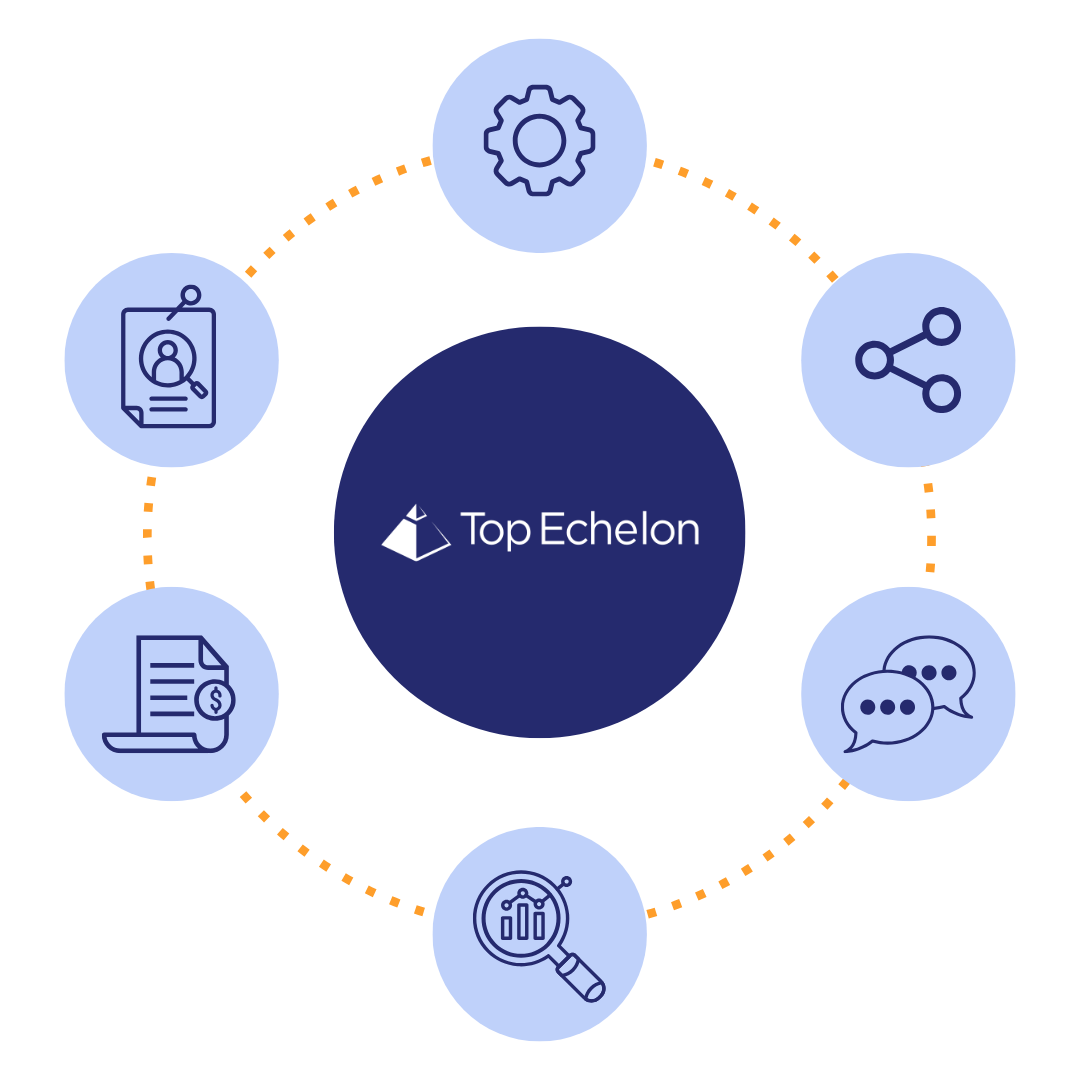
Top Echelon is a cloud-based recruitment software platform designed primarily for staffing agencies and independent recruiters. It combines applicant tracking system (ATS) functionality with a shared recruiting network that allows participating recruiters to collaborate on job placements.
The platform is generally classified under:
- Applicant Tracking Systems (ATS)
- Recruitment CRM (Candidate Relationship Management)
- Split-placement recruiting networks
Unlike standalone ATS tools, Top Echelon integrates a cooperative hiring model. Recruiters can share job openings and candidate leads with others in the network, potentially dividing placement fees when a hire is successfully made through collaboration.
The system is accessed via a web interface and is structured to support end-to-end recruitment workflows, including candidate sourcing, tracking, communication, and reporting.
Key Features Explained
Centralized Candidate Database
Top Echelon organizes candidate information into a structured database. Recruiters can store resumes, contact details, employment history, and communication records in one location. This reduces reliance on scattered spreadsheets or email threads.
Search functionality within the database allows filtering by skills, experience, and other criteria, which can assist in identifying suitable candidates for open roles.
Applicant Tracking System (ATS)
The built-in ATS enables recruiters to manage job postings and track applicants through various hiring stages. Each candidate can be assigned a status, such as “submitted,” “interviewing,” or “placed,” creating visibility across the hiring pipeline.
Workflow customization is possible, allowing users to adapt stages based on their recruiting process.
Split Placement Network
One of the defining characteristics of Top Echelon is its collaborative network. Recruiters can:
- Share job orders with other recruiters
- Submit candidates to external job listings within the network
- Collaborate on placements
When a placement is completed through joint effort, the fee is typically divided between participating recruiters. This model is often referred to as split placement recruiting.
Communication Tracking
The platform includes tools for logging emails, calls, and notes related to candidate interactions. This creates a historical record that can be useful for follow-ups and long-term relationship management.
Some integrations may allow syncing with external email systems, though functionality varies depending on setup.
Reporting and Analytics
Top Echelon provides reporting tools that give insights into recruiting activity. Metrics may include:
- Number of job orders
- Candidate submissions
- Placement rates
- Recruiter performance
These reports can help agencies evaluate productivity and identify bottlenecks in the hiring process.
Job Board Integration
Recruiters can post job openings to external job boards through the platform. This helps extend reach without requiring manual posting across multiple sites.
The degree of integration depends on the job boards supported and the user’s configuration.
Common Use Cases
Staffing Agencies
Recruitment firms often use Top Echelon to manage multiple clients and job orders simultaneously. The ATS functionality helps track candidate progress, while the network feature allows agencies to expand their reach beyond internal resources.
Independent Recruiters
Solo recruiters may benefit from access to the split placement network. It provides opportunities to work on roles they might not otherwise access and collaborate with others to increase placement potential.
Niche Recruiting Firms
Firms specializing in specific industries—such as healthcare, engineering, or finance—can use the platform to build targeted candidate databases and leverage network connections within their niche.
High-Volume Recruiting Environments
Organizations dealing with a large number of applicants may use the system to maintain structure and consistency in candidate tracking and communication.
Potential Advantages
Network-Driven Opportunities
The inclusion of a recruiter network distinguishes Top Echelon from many ATS platforms. It allows users to participate in shared hiring efforts, which may expand access to job orders and candidate pools.
Consolidation of Recruiting Activities
By combining ATS, CRM, and collaboration tools, the platform reduces the need for multiple disconnected systems. This can simplify workflows and improve data consistency.
Structured Workflow Management
The ability to define and track hiring stages provides clarity in recruitment pipelines. This can help teams coordinate efforts and reduce miscommunication.
Data Accessibility
Having candidate information stored in a centralized system improves accessibility and retrieval. Recruiters can quickly locate relevant profiles when new job opportunities arise.
Performance Tracking
Reporting features enable agencies to monitor key performance indicators. This can support internal evaluations and operational adjustments.
Limitations & Considerations
Learning Curve
Users unfamiliar with ATS platforms or collaborative recruiting networks may require time to understand the system’s structure and features. Initial setup and workflow customization can also take effort.
Dependence on Network Participation
The effectiveness of the split placement feature depends on active participation from other recruiters. In less active networks or niche markets, collaboration opportunities may be limited.
Customization Constraints
While some workflow customization is available, it may not meet the needs of organizations with highly specialized recruiting processes.
Integration Limitations
Depending on the user’s requirements, integration with external tools (such as CRM systems, HR software, or advanced analytics platforms) may be limited compared to larger enterprise solutions.
Data Management Responsibility
As with any centralized database, maintaining accurate and up-to-date candidate information requires consistent user input and oversight.
Who Should Consider Top Echelon Software
Small to Mid-Sized Recruiting Agencies
Organizations that need a structured system without the complexity of enterprise-level platforms may find the feature set aligned with their operational scale.
Recruiters Interested in Collaboration
Those who actively seek partnership opportunities with other recruiters may benefit from the shared network model.
Agencies Managing Multiple Job Orders
Recruiters handling numerous clients and roles simultaneously may use the platform to maintain organization and visibility.
Independent Recruiters Expanding Reach
Solo professionals looking to access broader job markets or candidate pools may find value in the network component.
Who May Want to Avoid It
Large Enterprises with Complex HR Systems
Organizations requiring deep integration with enterprise resource planning (ERP) systems or advanced HR ecosystems may find the platform insufficient for their needs.
Recruiters Preferring Fully Independent Workflows
Those who do not engage in collaborative recruiting or split placements may not fully utilize one of the platform’s central features.
Teams Requiring Extensive Customization
Companies with highly specialized workflows or compliance requirements may require more flexible or configurable systems.
Users Seeking Minimalist Tools
Recruiters who prefer lightweight, single-purpose tools may find the combined functionality more than necessary.
Comparison With Similar Tools
Top Echelon vs Traditional ATS Platforms
Traditional ATS platforms focus primarily on candidate tracking and workflow management. While Top Echelon includes these features, its distinguishing factor is the integrated recruiter network.
This network introduces an additional layer of collaboration that is not typically present in standard ATS solutions.
Top Echelon vs Recruitment CRM Systems
Recruitment CRM systems emphasize long-term relationship management with candidates and clients. Top Echelon incorporates CRM-like features but places greater emphasis on active job placements and collaboration.
Top Echelon vs Enterprise Recruiting Suites
Enterprise platforms often provide advanced analytics, AI-driven candidate matching, and extensive integrations. Top Echelon, by contrast, is more focused on core recruiting tasks and network-based collaboration, making it more suitable for smaller operations.
Top Echelon vs Freelance Recruiting Platforms
Freelance recruiting marketplaces connect recruiters with job opportunities but may not offer comprehensive ATS functionality. Top Echelon combines both aspects, providing infrastructure for managing candidates alongside access to shared job orders.
Final Educational Summary
Top Echelon represents a hybrid approach within recruitment technology, combining applicant tracking capabilities with a collaborative hiring network. Its design reflects the needs of recruiters who operate in environments where relationships, shared opportunities, and efficient data management intersect.
The platform’s strengths lie in its ability to centralize candidate information, structure recruitment workflows, and facilitate cooperation between recruiters. At the same time, its effectiveness depends on user engagement, particularly within the network component.
For small to mid-sized agencies and independent recruiters, it offers a consolidated system that addresses multiple aspects of the hiring process. However, organizations with highly complex requirements or minimal interest in collaborative recruiting may find alternative tools more aligned with their needs.
Understanding Top Echelon involves recognizing both its functional capabilities and the broader context of recruitment software evolution, where efficiency, connectivity, and data organization continue to shape hiring practices.
Disclosure: This article is for educational and informational purposes only. Some links on this website may be affiliate links, but this does not influence our editorial content or evaluations.