Introduction
In an increasingly digital business environment, access to accurate professional contact information has become a persistent challenge. Organizations across industries depend on reliable data to support outreach, recruitment, partnerships, and research. However, fragmented data sources, outdated contact details, and privacy constraints often limit the effectiveness of traditional methods such as manual research or static directories.
This gap has led to the emergence of contact intelligence platforms—tools designed to aggregate, verify, and organize professional data at scale. These platforms aim to streamline how businesses and individuals locate email addresses, phone numbers, and organizational insights while maintaining a structured database that evolves with real-world changes.
Among the tools operating in this space, RocketReach has established itself as a widely referenced solution for accessing professional contact information. Understanding how such platforms function, along with their strengths and constraints, is essential for evaluating their role in modern workflows.
What Is RocketReach?
RocketReach is a contact intelligence and data enrichment platform that provides access to professional profiles, including email addresses, phone numbers, and company-related information. It operates within the broader category of business intelligence tools and sales prospecting software, though its applications extend beyond sales functions.
The platform aggregates data from multiple public and proprietary sources, organizing it into searchable profiles linked to individuals and organizations. Users can query the database using filters such as job title, company name, industry, or geographic location.
RocketReach is commonly classified alongside tools focused on lead generation, recruitment sourcing, and business research. It is used by professionals in roles such as sales development, human resources, marketing, and analytics.
Key Features Explained
Contact Information Retrieval
A central feature of RocketReach is its ability to provide professional contact details. This includes business email addresses, phone numbers, and sometimes social media profiles. The platform uses algorithms and data verification processes to estimate or confirm contact accuracy.
Advanced Search Filters
Users can refine their searches through a range of filters, including:
- Job titles and seniority levels
- Company size and industry
- Geographic location
- Skills or keywords
This filtering system allows users to narrow down large datasets into more targeted lists.
Data Enrichment Capabilities
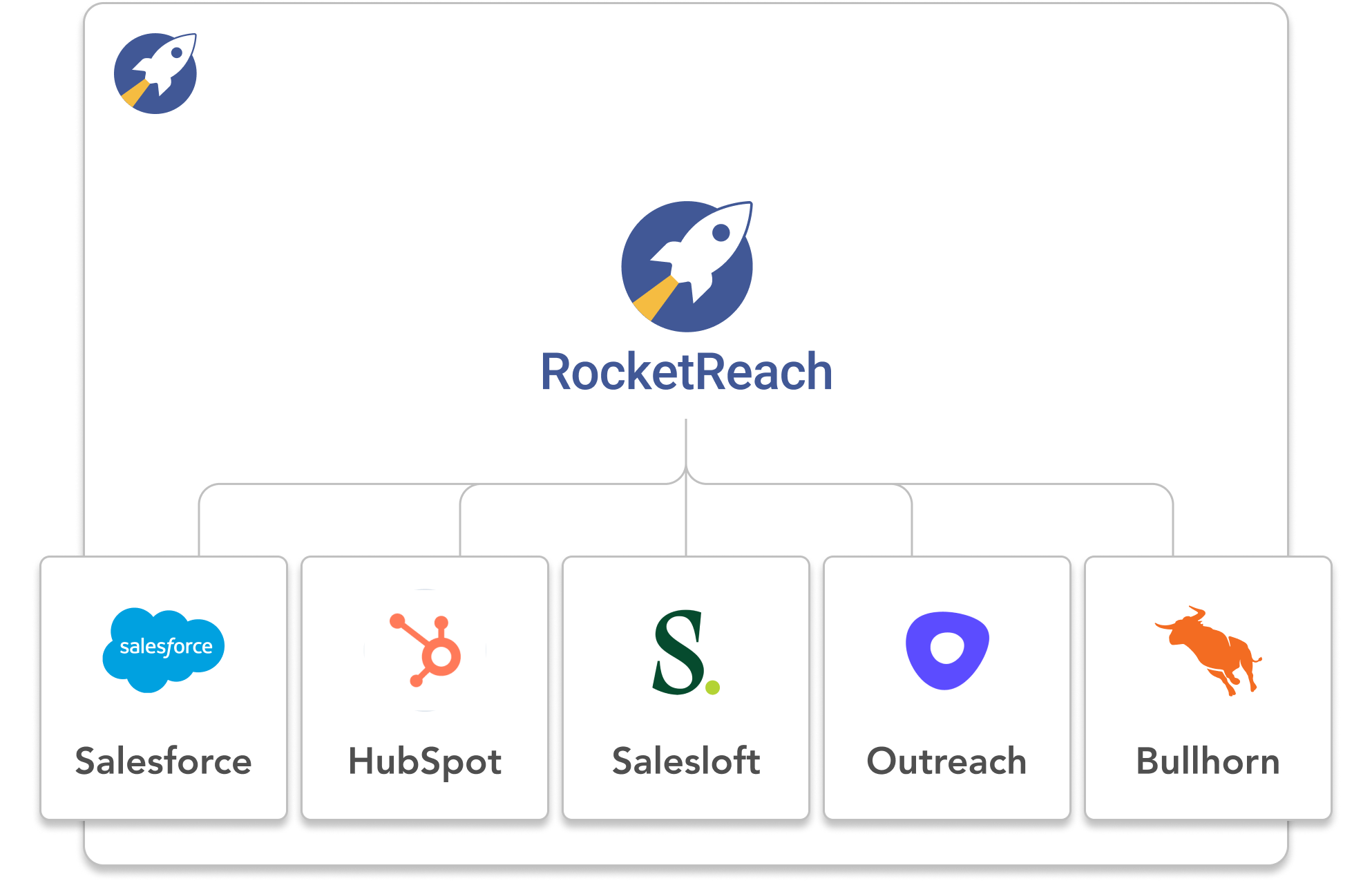
RocketReach can enhance existing datasets by appending missing contact details or updating outdated information. This is particularly useful for organizations maintaining customer relationship management (CRM) systems.
API Access
For organizations requiring integration, RocketReach offers API functionality. This enables automated data retrieval and synchronization with internal systems, supporting workflows such as lead generation pipelines or recruitment databases.
Browser Extension
The platform provides a browser extension that allows users to access contact information directly from websites such as professional networking platforms or company pages. This feature reduces the need to switch between tools during research.
Bulk Lookup Functionality
Users can upload lists of names or companies to retrieve corresponding contact data in bulk. This feature is often used for scaling outreach or conducting large-scale research.
Common Use Cases
Sales Prospecting
Sales professionals use RocketReach to identify potential leads and obtain contact details for outreach. By filtering based on role or company characteristics, teams can create targeted prospect lists.
Recruitment and Talent Sourcing
Recruiters rely on the platform to locate candidates, particularly passive candidates who may not be actively applying for roles. Access to verified contact information allows for direct communication.
Business Research
Analysts and researchers use RocketReach to gather organizational insights and identify key personnel within companies. This supports market research and competitive analysis.
Marketing Outreach
Marketing teams may use the tool to build contact lists for campaigns, particularly in business-to-business (B2B) contexts where precise targeting is essential.
Networking and Partnerships
Professionals seeking partnerships or collaborations can use RocketReach to identify and connect with relevant individuals across industries.
Potential Advantages
Centralized Data Access
RocketReach consolidates information from various sources into a single interface, reducing the need for manual data collection across multiple platforms.
Time Efficiency
Automated search and filtering significantly reduce the time required to locate contact details compared to traditional research methods.
Scalability
The platform supports both individual users and large organizations, offering features such as bulk lookup and API integration for scaling operations.
Versatility Across Roles
Unlike tools designed exclusively for sales or recruitment, RocketReach serves multiple professional functions, making it adaptable across departments.
Data Enrichment Support
The ability to update and expand existing datasets helps maintain the relevance and accuracy of internal records.
Limitations & Considerations
Data Accuracy Variability
While RocketReach employs verification methods, contact data accuracy is not guaranteed. Email addresses and phone numbers may change frequently, leading to potential inconsistencies.
Privacy and Compliance Concerns
Accessing and using personal contact information raises questions about data privacy and regulatory compliance. Users must ensure alignment with laws such as GDPR or similar frameworks in their region.
Cost Structure
Some features and data access levels may be restricted based on subscription tiers. Organizations need to assess whether the available features align with their requirements.
Dependency on External Data Sources
The platform relies on aggregated data, which may vary in quality depending on the source. This can affect completeness and reliability.
Learning Curve for Advanced Features
While basic search functions are relatively straightforward, more advanced capabilities such as API integration or bulk operations may require technical familiarity.
Who Should Consider RocketReach
Sales Development Teams
Teams focused on outbound outreach and lead generation may find RocketReach useful for identifying and contacting potential clients.
Recruiters and HR Professionals
Those involved in talent acquisition can benefit from the ability to locate and reach candidates efficiently, particularly in competitive job markets.
Market Researchers
Professionals conducting industry analysis or competitive research can use the platform to identify organizational structures and key individuals.
Small and Medium Enterprises
Businesses without extensive data infrastructure may use RocketReach as a starting point for building contact databases.
Consultants and Freelancers
Independent professionals seeking to expand their networks or identify potential clients may also find value in the platform’s search capabilities.
Who May Want to Avoid It
Organizations with Strict Data Compliance Requirements
Companies operating in highly regulated environments may need more controlled or internally verified data sources to meet compliance standards.
Users Seeking Fully Verified Data
Those requiring guaranteed accuracy for mission-critical operations may find limitations in the probabilistic nature of aggregated data.
Budget-Constrained Individuals
Users with limited financial resources may find the cost of access restrictive, particularly if only occasional use is required.
Non-B2B Contexts
RocketReach is primarily designed for professional and organizational use. Individuals seeking personal or consumer-level contact information may not find it relevant.
Comparison With Similar Tools
RocketReach vs. ZoomInfo
ZoomInfo is often positioned as a more enterprise-focused solution with extensive datasets and analytics capabilities. While RocketReach provides a broad range of contact information, ZoomInfo emphasizes deeper organizational insights and integrations.
RocketReach vs. Hunter.io
Hunter.io is more narrowly focused on email discovery and verification. RocketReach, in contrast, offers a wider dataset that includes phone numbers and additional profile information.
RocketReach vs. Apollo.io
Apollo.io combines contact data with sales engagement tools such as email sequencing. RocketReach primarily focuses on data retrieval rather than integrated outreach workflows.
RocketReach vs. LinkedIn Sales Navigator
LinkedIn Sales Navigator provides access to professional profiles within its own ecosystem. RocketReach extends beyond a single platform by aggregating data from multiple sources, though it may not offer the same level of real-time updates.
Final Educational Summary
RocketReach represents a segment of modern digital infrastructure designed to address the challenges of accessing professional contact information. By aggregating data from diverse sources and offering structured search capabilities, it simplifies processes that would otherwise require extensive manual effort.
Its applications span multiple domains, including sales, recruitment, research, and networking. While the platform offers efficiency and scalability, users must remain aware of its limitations, particularly regarding data accuracy and compliance considerations.
Evaluating RocketReach involves understanding both its functional scope and the broader context in which contact intelligence tools operate. As organizations continue to rely on data-driven decision-making, tools like RocketReach will likely remain part of the evolving landscape, though their effectiveness depends on how they are integrated into responsible and informed workflows.
Disclosure: This article is for educational and informational purposes only. Some links on this website may be affiliate links, but this does not influence our editorial content or evaluations.