Introduction
Finding reliable scientific information online can be difficult. Search engines often return large numbers of articles, blog posts, or opinions, and it may take significant time to identify peer-reviewed research that actually answers a question. Students, researchers, and writers often need to scan many academic papers before understanding what scientific studies collectively suggest about a topic.
This challenge has led to the development of specialized research tools designed to organize and interpret scientific literature more efficiently. One example is Consensus, an AI-based academic search engine built to help users explore research papers and summarize findings from scientific studies.
What Is Consensus
Consensus is an AI-powered academic search platform designed to locate and analyze findings from peer-reviewed research papers. The system searches a large database of scientific publications and uses artificial intelligence to identify relevant studies, extract key insights, and present summarized conclusions supported by citations.
The platform focuses on evidence-based answers rather than general web content. Instead of returning websites or opinion articles, it prioritizes research papers from academic journals and scientific databases. The platform currently analyzes a corpus containing more than 200 million academic papers covering many scientific fields.
Each response produced by the system links back to the underlying studies, allowing users to verify the original research sources.
Key Features Explained
AI-Powered Academic Search
The platform combines semantic search and keyword analysis to locate research papers that match a user’s question. The system retrieves relevant studies from its research database and ranks them according to factors such as citation counts, publication date, and journal quality.
Research-Backed Summaries
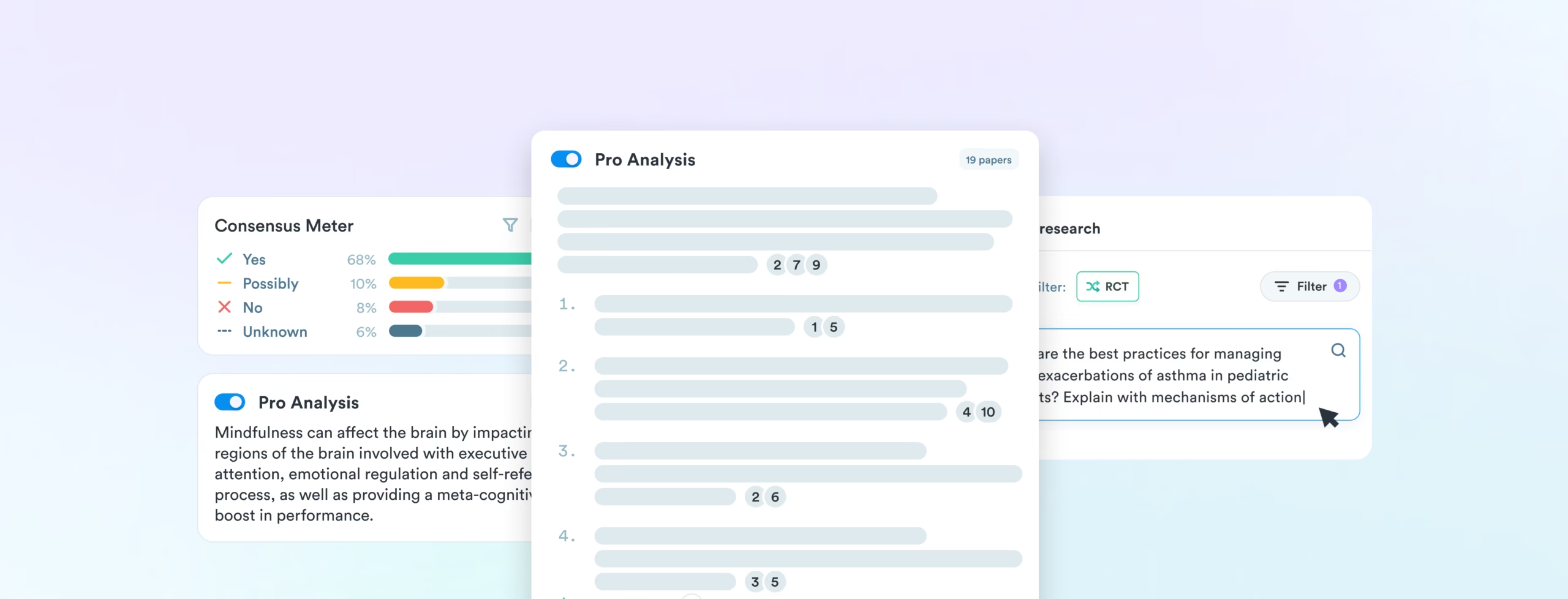
AI models analyze the selected research papers and generate summaries that highlight major findings. These summaries synthesize information across multiple studies so users can quickly understand the current evidence on a topic.
Consensus Meter
The platform includes a feature that evaluates how much agreement exists among research papers on certain questions. This feature analyzes multiple studies and visualizes whether the research tends to support, reject, or remain uncertain about a specific claim.
Study Snapshot
Individual research papers are broken down into structured summaries that include information such as methodology, sample size, and outcomes. This allows users to quickly review study details without reading the full paper immediately.
Ask Paper
Users can interact with a research paper directly by asking questions about its findings or methods. The system analyzes the text of the paper and provides explanations based on the content of that study.
Research Library Management
The platform allows users to save papers and organize them into collections or research lists, which can help manage literature during longer research projects.
Common Use Cases
Academic research and literature reviews
Students and researchers often use the tool to identify key papers and summarize findings while preparing research papers or literature reviews.
Evidence-based writing
Writers covering science, health, or technology topics can use the platform to locate peer-reviewed research and verify claims.
Scientific topic exploration
Individuals exploring topics such as psychology, medicine, or environmental science can quickly find research studies related to specific questions.
Research discovery across disciplines
Because the database includes papers from multiple scientific fields, users can explore research in areas ranging from biology and medicine to social sciences.
Potential Advantages
One potential advantage is the platform’s emphasis on research-based information rather than general web content. By focusing on peer-reviewed studies, the system attempts to reduce the risk of unsupported claims.
Another advantage is speed. Literature reviews traditionally require scanning many research papers individually, while AI summarization can help identify relevant findings more quickly.
The ability to trace answers back to cited research papers may also help users verify the information they receive and evaluate the original studies.
Limitations & Considerations
Although the platform analyzes large numbers of research papers, it still relies on automated summaries. Important nuances in research methodology or interpretation may require reviewing the original papers.
Not all academic papers are fully accessible because some journals restrict access. In such cases, the system may analyze only abstracts or publicly available information.
Users should also consider that scientific research can evolve over time. New studies may change the overall interpretation of evidence on a particular topic.
Who Should Consider Using Consensus
This type of research platform may be useful for:
- Students working on academic assignments
- Researchers conducting literature reviews
- Science writers or journalists
- Professionals who need evidence-based information
Who May Want to Avoid It
The tool may be less suitable for:
- Users looking for general web information or news
- Individuals seeking simplified explanations without references
- Situations where full research papers must be read in detail rather than summarized
Comparison With Similar Tools
Several other platforms also assist with academic literature analysis.
For example, Elicit focuses on AI-assisted literature reviews and research question exploration, while SciSpace provides tools for understanding and annotating academic papers.
While these tools share similar goals, they may differ in interface design, summarization methods, and database coverage.
Final Educational Summary
Consensus is an AI-based academic search engine designed to help users locate and interpret scientific research. By analyzing large collections of peer-reviewed papers and summarizing findings, the platform attempts to simplify the process of understanding existing research.
Its features focus on literature discovery, research synthesis, and evidence tracking. However, users should still review original studies when conducting serious academic or scientific work.
Disclosure
This article is provided for educational and informational purposes only. It is an independent overview intended to explain how the platform functions and how it may be used in research workflows. It does not represent a recommendation or endorsement of the tool.