Introduction
In an era of rapid workforce evolution and increasingly complex regulatory landscapes, organizations of every size face mounting challenges in managing human resources, payroll, and benefits administration. Traditional approaches to these functions, long rooted in manual processes, spreadsheets, and disparate systems, are strained by new expectations around compliance, employee experience, and real‑time data insights. Rising from this context is a category of software that seeks to streamline core workforce administration tasks, reduce friction, and centralize data. Platforms in this category aim to address persistent organizational inefficiencies, cut down on administrative overhead, and support business compliance with labor and tax laws that vary by jurisdiction.
One significant offering within this category is Gusto, a comprehensive platform designed to support payroll processing, benefits administration, and HR tasks. As organizations look for tools to manage these critical functions more effectively, it is important to explore what Gusto is, how it works, and how it compares with other software in the workforce management space. This article provides a thorough and objective investigation into Gusto, its core features, intended use cases, potential limitations, and contextual relevance within the broader HR technology ecosystem.
What Is Gusto?
Founded in the mid‑2010s, Gusto is a cloud‑based workforce management platform that integrates payroll processing, benefits administration, and basic human resources functions. It is designed to serve small to midsize organizations that seek a unified solution for managing compensation and compliance without the complexity of traditional enterprise‑grade systems. At its core, Gusto automates payroll calculations, tax withholdings, and filings, and it also provides tools for employee onboarding, benefits enrollment, and time tracking.
From a classification standpoint, Gusto resides within the broader category of human capital management (HCM) and HR‑tech solutions. These platforms typically provide a suite of features that support the employee lifecycle, from hiring to payroll to offboarding. What distinguishes offerings like Gusto from legacy human resources information systems (HRIS) is a focus on simplified user interfaces, accessible pricing structures, and modular functionality tailored to smaller organizations.
Gusto’s development reflects a response to structural shifts in the workforce, including the rise of remote work, the proliferation of gig and contract labor, and an increased regulatory focus on payroll accuracy and benefits compliance. The tool aims to consolidate administrative tasks that were once siloed across multiple spreadsheets and service providers into a single digital environment.
Key Features Explained
A detailed understanding of Gusto begins with an exploration of its core capabilities. While implementations and pricing structures may vary, the platform typically includes the following foundational components:
Payroll Automation
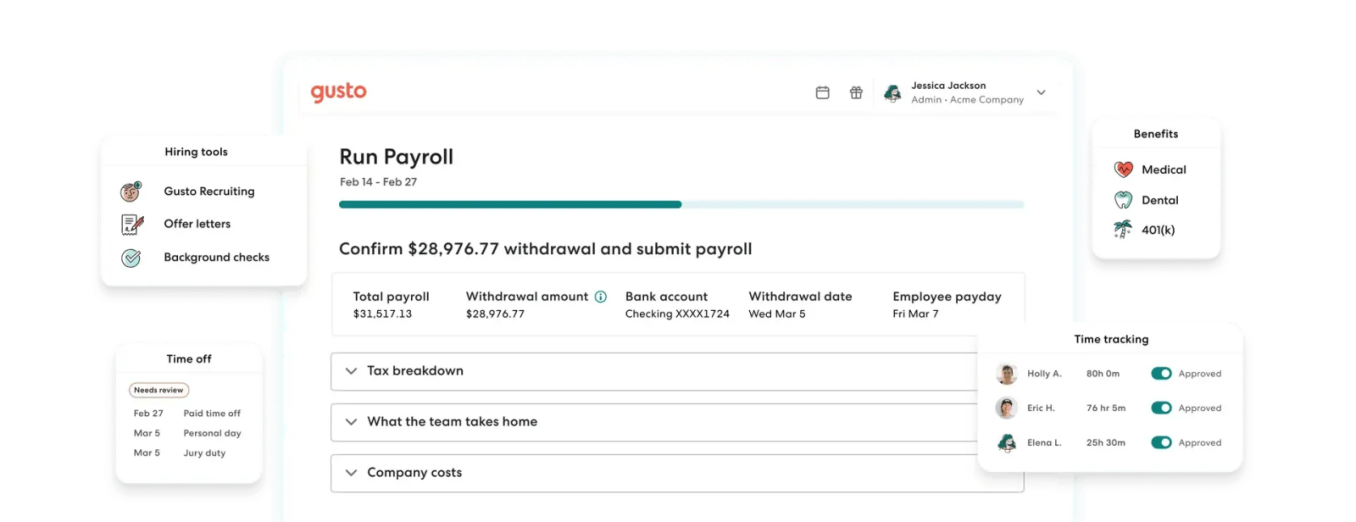
One of the central features of Gusto is its payroll automation engine. This component calculates gross and net pay based on employee hours or salary, factors in tax withholdings and deductions, and processes payments to employees. Automated tax calculations are designed to reflect current federal, state, and local regulations, reducing the need for manual intervention.
Gusto’s payroll features aim to simplify what can be a technical and compliance‑sensitive process. By integrating payroll runs with tax filings and reporting, the system seeks to alleviate common administrative bottlenecks and reduce the likelihood of errors that can lead to fines or penalties.
Benefits Administration
In addition to payroll, Gusto provides tools for managing employee benefits. This includes options for health insurance enrollment, retirement plan facilitation, and other voluntary benefits such as commuter spending accounts. The platform seeks to centralize benefits management so that employers and employees can view elections, deductions, and eligibility data in one place.
Because benefits offerings are often subject to regulation and tax implications, Gusto’s benefits administration features are designed to interface with payroll in ways that maintain compliance and accurate withholding.
Employee Self‑Service
The platform typically includes an employee self‑service portal where workers can access pay stubs, update personal information, enroll in benefits, and view tax documents. This decentralizes many basic administrative tasks and reduces the burden on HR or payroll personnel.
Time Tracking and Scheduling
Some versions of Gusto provide integrated tools for time tracking and employee scheduling. These features allow organizations to capture hours worked digitally and feed that data directly into payroll calculations, creating a more seamless workflow.
HR Tools and Compliance Resources
Gusto also supports a selection of basic HR functions, such as employee onboarding checklists, document storage, compliance alerts, and access to educational resources around labor laws. These features serve to contextualize workforce management within a framework of organizational compliance and human resource best practices.
Common Use Cases
To understand why organizations adopt platforms like Gusto, it is helpful to consider common scenarios in which the tool is deployed. These use cases reflect recurring administrative challenges addressed by the software:
Small Business Payroll
For many small businesses with limited HR staff, managing payroll can be time‑consuming and operationally risky. Gusto is often used as a centralized solution for calculating pay, managing tax withholdings, and automating statutory filings. This use case is especially relevant for organizations without dedicated payroll specialists.
Benefits Enrollment
Organizations that offer benefits such as health insurance or retirement plans may use Gusto to administer these offerings alongside payroll. Benefits enrollment windows, eligibility tracking, and deduction management can be coordinated through the platform, reducing fragmentation between HR and payroll data.
Remote or Distributed Teams
With the rise of remote work and geographically dispersed teams, employers require systems that can handle payroll and compliance across different regions. Gusto’s cloud‑based interface enables HR and payroll administrators to manage distributed workforces without localized software installations.
Basic HR Administration
Some employers use Gusto as a foundational HR tool. This includes onboarding documentation, employee records management, and access to compliance guidance. While not as comprehensive as full‑service HRIS platforms, Gusto’s HR features can support organizations that do not need advanced modules like performance management or succession planning.
Potential Advantages
When assessing workforce management software, it is important to consider the potential advantages offered by platforms like Gusto. These are not endorsements but analytical observations related to the tool’s design and market positioning:
Centralized Administration
Gusto’s integration of payroll, benefits, and HR data allows users to manage multiple administrative domains from a single interface. This centralization can reduce the need for disparate spreadsheets, manual reconciliation, or multiple disconnected systems.
Automation of Complex Calculations
Payroll processing and tax compliance involve detailed calculations and regulatory knowledge. Gusto attempts to automate these functions, potentially reducing manual errors and administrative overhead.
Accessibility for Non‑Specialists
The interface and language used in Gusto are designed to be accessible to users without deep technical expertise in payroll or HR. This accessibility can make workforce management processes more approachable for small business owners and HR generalists.
Compliance Support
By incorporating tax calculations, filings, and basic compliance alerts, Gusto provides contextual support for regulatory requirements, which can be particularly valuable for organizations without internal legal or compliance teams.
Limitations & Considerations
No software solution is universally appropriate, and platforms like Gusto come with limitations that organizations should consider before adoption:
Scope of HR Functionality
While Gusto provides basic HR administration tools, it is not a full‑featured human resources information system. Organizations with advanced HR needs—such as performance management, talent analytics, or learning management—may find the platform’s HR features limited.
Pricing Structures
The cost of software subscriptions, especially for small organizations, can be an important consideration. Organizations should assess how Gusto’s pricing aligns with their budget and the specific modules they require, including any additional fees for add‑on features.
Tax and Compliance Boundaries
Although Gusto strives to automate tax calculations and compliance, users are ultimately responsible for ensuring accuracy and adherence to local laws. Complex regulatory environments or multi‑jurisdictional payroll requirements may necessitate supplemental expertise or oversight.
Integration with Other Systems
Some organizations use multiple software systems across finance, HR, and operations. Gusto’s ability to integrate with these systems may vary, and technical evaluation is required to determine compatibility with existing workflows.
Who Should Consider Gusto
Gusto may be relevant to a range of organizations and workforce configurations. The tool’s design aligns with scenarios in which:
- Small to midsize organizations need centralized payroll and benefits administration.
- Payroll expertise is limited within the existing workforce and automation could reduce risk.
- Distributed or remote teams require cloud‑based access to key workforce data.
- Basic HR administration and compliance support are priorities without the need for enterprise‑grade HR modules.
Organizations in industries with relatively straightforward payroll and benefits requirements may find the platform’s functional scope aligned with their operational needs. Educational institutions, startups, and small service‑based businesses are among the entity types that could find value in the streamlined processes that software like Gusto facilitates.
Who May Want to Avoid It
Although platforms like Gusto are broadly applicable, there are scenarios in which organizations might seek alternative solutions:
- Companies with complex HR needs, such as advanced talent management, learning platforms, or detailed workforce planning.
- Enterprises that already have established HR technology stacks and require deep integrations beyond payroll or basic benefits.
- Organizations with highly specialized compliance requirements that exceed the automation capabilities of generalist payroll tools.
- Businesses that prioritize granular customization of workflows and reporting that may be beyond the scope of off‑the‑shelf solutions.
In these cases, organizations may explore dedicated human capital management systems, enterprise resource planning (ERP) solutions with HR modules, or bespoke software tailored to specific industry requirements.
Comparison With Similar Tools
Placing Gusto in context involves understanding how it compares with other offerings in the HR‑tech market. The workforce management category is populated by tools that vary in scale, specialization, and target audience. Platforms range from integrated enterprise suites (with comprehensive HR, payroll, and talent modules) to niche services focused solely on payroll or benefits.
Key dimensions for comparison include:
- Functional breadth: Does the platform cover payroll, benefits, HR, and compliance in an integrated manner?
- User experience: How intuitive and accessible is the interface for administrators and employees?
- Compliance support: What level of regulatory automation and reporting does the tool offer?
- Scalability: Can the software support organizations as they grow in headcount or complexity?
- Integration ecosystem: How well does the platform connect with other business systems?
Compared to legacy payroll systems that require manual data entry or periodic updates, solutions like Gusto offer a more automated and centralized environment. Against full HRIS platforms, Gusto may have less depth in advanced HR modules but can provide sufficient coverage for core administrative tasks.
The right comparison depends on an organization’s current technology stack, workforce size, compliance obligations, and internal expertise. Evaluating these dimensions helps organizations align their requirements with the appropriate tool category.
Final Educational Summary
The evolving landscape of workforce administration has created a need for tools that reduce manual labor, centralize data, and support compliance with increasingly complex regulatory frameworks. Gusto, as a cloud‑based workforce management platform, addresses several key administrative functions—payroll processing, benefits administration, and basic HR support—within a unified interface.
Analytically, the platform offers automation of payroll calculations and tax filings, integrated benefits management, and employee self‑service capabilities. These features can reduce administrative burden and help organizations manage essential workforce data in a central location. The tool’s design emphasizes accessibility for users without deep payroll or HR expertise, making it a potential fit for small to midsize organizations with straightforward workforce management needs.
However, limitations in advanced HR functionality and integration capabilities suggest that organizations with complex requirements may explore alternative software categories. As with any technology evaluation, considerations around cost, compliance boundaries, and organizational workflows are critical for informed decision‑making.
In the context of HR‑tech tools, Gusto represents an analytical example of how workforce administration software can transform traditional processes through automation and data centralization. Assessing its capabilities alongside organizational needs provides a structured lens through which to compare workforce management tools and make informed choices.
Disclosure: This article is for educational and informational purposes only. Some links on this website may be affiliate links, but this does not influence our editorial content or evaluations.