Introduction
Formally establishing a business has historically required coordination across multiple institutions, including government registries, legal advisors, and financial service providers. This fragmented structure often introduces delays, inconsistencies, and procedural uncertainty—particularly for individuals without prior experience in regulatory processes. As entrepreneurship expands across digital and independent work environments, the demand for more streamlined administrative systems has grown.
Online business formation platforms have emerged in response to this demand. These tools aim to consolidate registration, documentation, and compliance into unified digital workflows. Rather than replacing legal frameworks, they attempt to make those frameworks more navigable. Ownr is one such platform operating within this category, offering a structured approach to business registration and related administrative tasks.
What Is Ownr?
Ownr is a web-based business registration platform that facilitates the creation and management of legally recognized business entities. It is typically categorized under digital incorporation services and small business administration tools.
The platform provides guided processes for registering sole proprietorships and corporations, alongside features for generating standard legal documents and maintaining corporate records. Its design reflects a self-service model, where users input required information and receive system-generated outputs aligned with regulatory requirements.
Ownr is part of a broader ecosystem of tools intended to reduce procedural complexity in early-stage business formation. It focuses primarily on simplifying documentation and providing a centralized interface for tasks that would otherwise require multiple steps across different systems.
Key Features Explained
Structured Incorporation Workflow
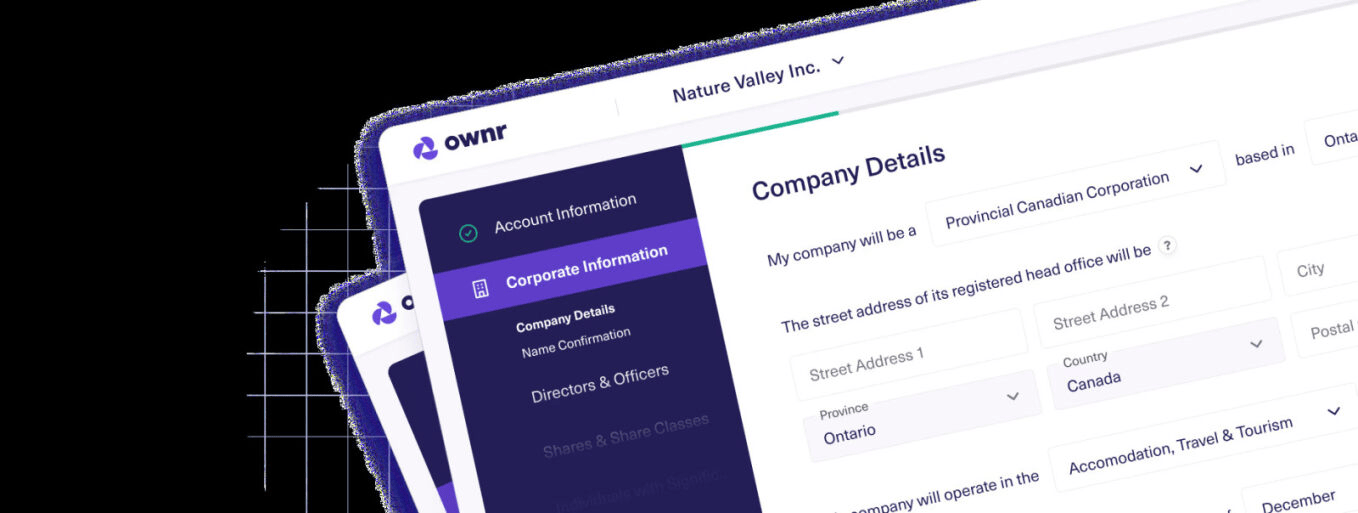
At the core of Ownr is a step-based incorporation system. Users are guided through a sequence that collects essential business details such as ownership structure, company name, and jurisdiction.
Each stage is designed to align with regulatory requirements, ensuring that necessary information is captured systematically. This structured approach reduces ambiguity for users unfamiliar with formal registration processes.
Name Availability Search
Selecting a business name requires confirming that it does not conflict with existing registrations. Ownr includes a search mechanism that allows users to check the availability of proposed names within supported jurisdictions.
This feature acts as an initial screening tool. While it does not replace comprehensive trademark verification, it helps identify obvious conflicts early in the process.
Automated Legal Documentation
Ownr generates foundational legal documents based on user inputs. These documents may include incorporation forms, organizational bylaws, and ownership agreements.
The automation of document creation reduces the need for manual drafting. However, the documents are template-based, meaning they are designed for general use rather than highly customized legal scenarios.
Digital Corporate Record Storage
Maintaining corporate records is a regulatory requirement for incorporated businesses. Ownr provides a centralized digital space where users can store and organize these documents.
This repository allows for easier retrieval and ongoing management of records such as resolutions, ownership details, and incorporation certificates.
Integrated Business Setup Elements
In some cases, Ownr extends beyond registration by connecting users with additional setup services, such as business banking. These integrations aim to reduce the need for separate onboarding processes across different platforms.
The availability of such features may depend on geographic and institutional factors.
Compliance Monitoring Tools
Businesses are subject to recurring obligations, including annual filings and updates to corporate information. Ownr includes tools that help track these requirements, often through reminders or structured dashboards.
While these features support awareness, they function primarily as organizational aids rather than comprehensive compliance solutions.
Common Use Cases
Independent Professionals Formalizing Operations
Freelancers and contractors often begin operating informally. As their work expands, they may seek formal registration for tax, liability, or credibility reasons. Ownr provides a pathway for this transition.
First-Time Business Founders
Individuals launching their first company may lack familiarity with incorporation procedures. The guided nature of Ownr’s workflows can help them understand required steps without relying entirely on external advisors.
Small Enterprises With Limited Administrative Resources
Smaller organizations frequently operate without dedicated legal or administrative teams. A centralized tool for documentation and registration can reduce operational overhead in such contexts.
Businesses With Standard Structural Needs
Companies with straightforward ownership models—such as single-owner corporations or partnerships with limited complexity—may find template-based systems sufficient for initial setup.
Potential Advantages
Consolidation of Administrative Tasks
Ownr brings together multiple steps involved in business formation into a single interface. This reduces the need to interact with separate systems for registration, documentation, and record-keeping.
Clarity Through Guided Processes
The platform’s step-by-step design provides a clear framework for completing tasks. This can help users avoid omissions or procedural errors during registration.
Reduced Reliance on Manual Documentation
Automated document generation eliminates the need to draft foundational legal paperwork from scratch, particularly for standard business structures.
Digital Accessibility
As an online platform, Ownr allows users to complete administrative tasks remotely. This can be relevant for individuals in areas where in-person services are less accessible.
Organized Record Management
Centralized storage of corporate documents supports long-term organization and simplifies retrieval when updates or reviews are required.
Limitations & Considerations
Template-Based Constraints
The use of standardized templates means that documents may not fully address unique or complex business arrangements. Situations involving multiple stakeholders or specialized agreements may require additional customization.
Regional Availability
Ownr’s features and services are not universally applicable across all jurisdictions. Users must ensure that the platform supports their specific location and regulatory environment.
Absence of Personalized Advisory Services
Unlike traditional legal or consulting services, Ownr operates primarily as a self-service tool. It does not inherently provide tailored legal advice based on individual circumstances.
Dependence on User Accuracy
All outputs generated by the platform depend on the accuracy of user-provided information. Incorrect inputs can lead to errors in official filings or documentation.
Partial Coverage of Ongoing Compliance
While Ownr includes reminders and tracking tools, it does not replace comprehensive compliance management systems or professional oversight for regulatory obligations.
Who Should Consider This Tool
Ownr may be relevant for users whose needs align with standardized business formation processes. This includes:
- Individuals starting a business for the first time
- Freelancers transitioning to registered entities
- Small businesses seeking administrative efficiency
- Users comfortable managing processes through digital platforms
The platform is particularly suited to scenarios where simplicity and speed are prioritized over customization.
Who May Want to Avoid It
Certain users may find limited alignment with Ownr’s capabilities:
- Businesses requiring complex legal structuring
- Organizations needing highly customized agreements
- Users seeking ongoing, personalized legal guidance
- Companies operating in unsupported jurisdictions
In these cases, more specialized services may provide greater flexibility and depth.
Comparison With Similar Tools
Ownr operates within a competitive category of online incorporation platforms. These tools generally aim to simplify business registration but differ in execution and scope.
Shared Characteristics
Most platforms in this space provide:
- Digital incorporation workflows
- Automated document generation
- Business name search functionality
- Basic compliance tracking
These similarities reflect the standardized nature of regulatory requirements.
Distinguishing Factors
Differences typically arise in areas such as:
- Geographic coverage and jurisdictional support
- Depth of integrations with financial or administrative services
- User interface design and workflow complexity
- Extent of post-registration support
Ownr’s approach emphasizes a balance between simplicity and functional breadth, particularly through its integration of documentation and record management.
Evaluating Alternatives
When comparing tools, users often consider whether they require flexibility or efficiency. Platforms like Ownr prioritize structured simplicity, while others may offer expanded customization at the cost of increased complexity.
Final Educational Summary
The transition from traditional, multi-step business registration processes to integrated digital platforms reflects broader changes in how administrative services are delivered. Ownr represents one model within this shift, focusing on simplifying incorporation and document management through a unified interface.
Its strengths lie in its structured workflows, automated documentation, and centralized record-keeping. These features can reduce barriers for individuals and small businesses entering formal economic systems. At the same time, its reliance on templates and limited advisory scope highlights the importance of aligning tool capabilities with specific business needs.
Understanding where Ownr fits within the landscape of business formation tools allows users to make informed decisions based on complexity, jurisdiction, and desired level of customization.
Disclosure: This article is for educational and informational purposes only. Some links on this website may be affiliate links, but this does not influence our editorial content or evaluations.