
Introduction
A website can receive traffic, but that does not automatically mean users are engaging with it. Many visitors open a page, scroll for a few seconds, and leave without interacting meaningfully. Traditional analytics tools can show numbers like visits or bounce rate, but they cannot clearly explain how users behave on the page itself.
This is where behavior tracking tools become useful. They focus on understanding real user actions instead of only counting visits. These tools help identify which parts of a webpage attract attention and which sections are ignored.
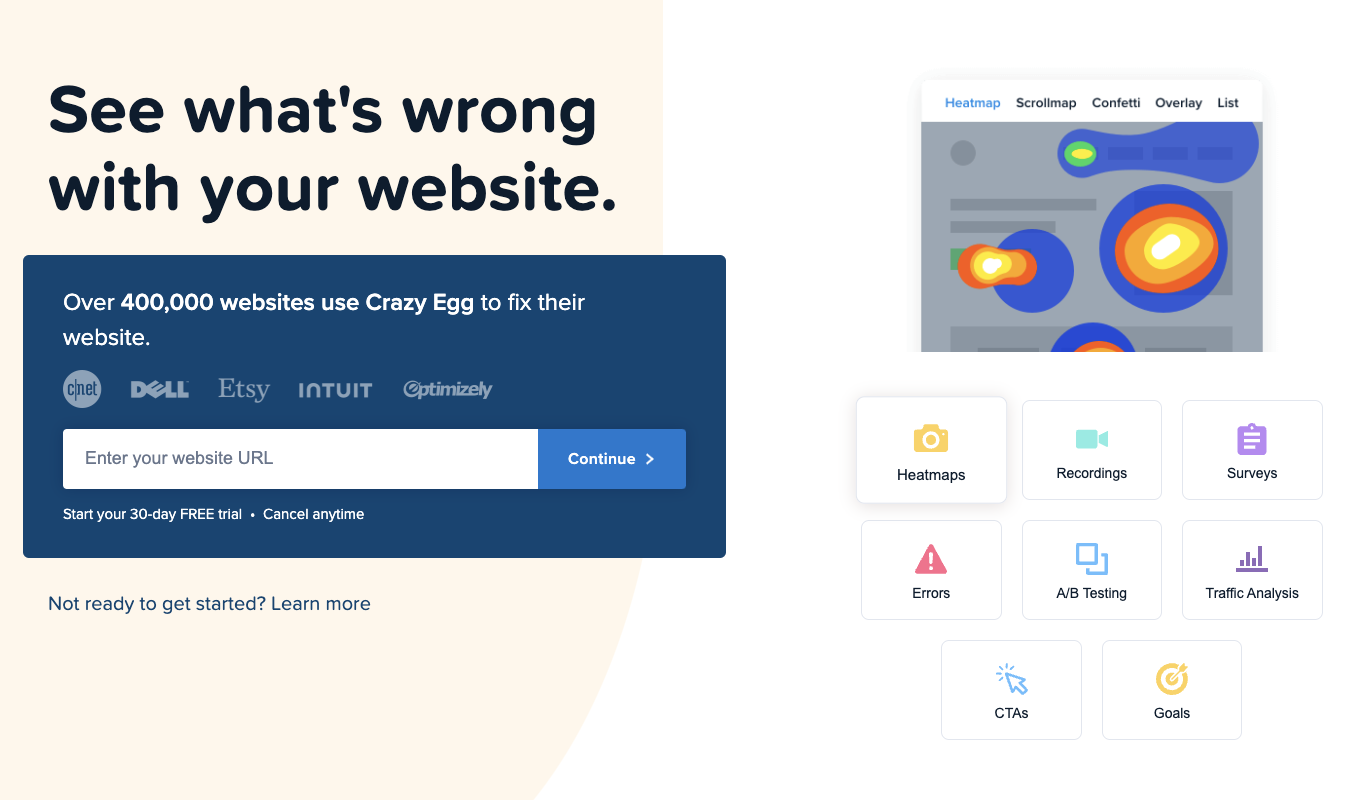
Crazy Egg is one of the tools used for this purpose. It focuses on visualizing user activity so that website owners can understand interaction patterns more clearly. Instead of raw data tables, it provides visual maps and session replays that show real user behavior.
What Crazy Egg Is Used For
Crazy Egg is a behavior analytics software designed to study how users interact with webpages. It falls under the category of UX analytics and website optimization tools.
The tool is mainly used to observe user actions such as clicking patterns, scrolling behavior, and page navigation flow. These actions are then converted into visual formats that are easier to interpret.
It is commonly used by people who manage websites and want to understand how users experience their pages in real conditions. The goal is not just to collect data, but to interpret how that data reflects user attention and engagement.
How the Tool Works in Practice
The working process begins when a small tracking script is added to a website. This script runs in the background and records user interactions as visitors browse the page.
As users interact with the website, their actions are collected in the form of behavioral data. This includes where they click, how far they scroll, and how they move through different sections.
After collection, this data is processed into visual reports. Instead of numbers, users see graphical representations that highlight behavior patterns.
For example, areas with high interaction appear more visually emphasized, while less viewed sections appear lighter. Session replays allow observation of individual browsing sessions to understand user journeys step by step.
Main Components of Crazy Egg
The platform is built around several core components that focus on behavior visualization.
One component is click tracking visualization, which shows where users interact most on a webpage. This helps identify which elements attract attention.
Another component is scroll depth analysis, which shows how far users move down a page before leaving or losing interest.
There is also session replay functionality, which allows playback of real user sessions to observe navigation patterns.
Some versions include page comparison testing, which helps compare different layout variations to see how user behavior changes.
Traffic breakdown features may also be available, allowing analysis based on device type or traffic source.
Where It Is Commonly Used
Behavior analytics tools like Crazy Egg are used in several real-world scenarios.
One common area is website design evaluation, where teams study how users interact with page layouts.
It is also used in conversion analysis, where the goal is to understand why users do not complete actions such as form submissions or purchases.
Marketing teams use it to evaluate landing page performance and understand engagement levels on campaign pages.
UX teams rely on it for user experience improvement, identifying design elements that may confuse or distract users.
It is also useful for detecting content visibility issues, such as important sections being overlooked by visitors.
Benefits of Using Behavior Analytics Tools
One of the main benefits is the ability to see user behavior visually rather than relying only on numerical data.
It helps identify patterns that are not obvious in standard analytics reports.
Session recordings allow detailed observation of real user journeys, which can reveal usability problems.
It can also support better decision-making when redesigning webpages or improving content structure.
Overall, it provides a more practical understanding of how users interact with digital interfaces.
Limitations to Keep in Mind
Despite its usefulness, behavior tracking tools also have limitations.
Interpreting visual data requires some level of analytical understanding, as patterns are not always self-explanatory.
Not all user sessions may be captured depending on tracking settings and traffic volume.
The tool focuses mainly on front-end behavior and does not analyze server-side or technical performance issues.
Privacy regulations must also be considered when collecting user interaction data.
For large or complex websites, managing and interpreting data may require additional effort.
Who Typically Uses It
Crazy Egg is usually used by people involved in website improvement and digital experience design.
This includes UX designers, marketers, product managers, and website owners.
It is particularly useful for teams that focus on improving engagement, usability, and conversion outcomes.
Who May Not Need It
It may not be necessary for users who only require basic traffic statistics.
Small websites that do not focus on optimization may not benefit much from behavioral insights.
It is also less useful for users who do not actively work on improving website design or user experience.
How It Compares With Similar Tools
Crazy Egg is part of a group of tools that includes Hotjar, Microsoft Clarity, and similar analytics platforms.
These tools share similar functions such as heatmaps, scroll tracking, and session recordings.
The differences are usually related to interface style, depth of analysis, and additional features offered.
Some tools are more beginner-friendly, while others provide more detailed analytics options.
The choice depends on how deep the analysis needs to be.
Final Summary
Crazy Egg is a behavior analytics tool that helps understand how users interact with websites through visual data such as heatmaps and session recordings. It transforms raw interaction data into meaningful visual insights.
Its main purpose is to improve website usability by showing real user behavior patterns. However, the insights still require proper interpretation to be useful.
Like other analytics tools, its value depends on how effectively it is used for specific website goals.
Disclosure
This article is for educational and informational purposes only. Some links on this website may be affiliate links, but this does not influence our editorial content or evaluations.
