
Introduction
In the digital business environment, access to accurate and up-to-date contact data plays a central role in sales, marketing, and outreach activities. Organizations often rely on specialized tools to identify potential clients, verify contact information, and maintain structured databases. This need has led to the development of B2B data platforms designed to simplify how companies discover and manage leads.
Tools in this category aim to reduce the manual effort involved in prospecting while improving data reliability. However, the effectiveness of such platforms depends on multiple factors, including data accuracy, filtering capabilities, and integration with existing workflows. Understanding how these tools operate is essential before incorporating them into business processes.
What Is UpLead?
UpLead is a cloud-based B2B data platform that provides access to business contact information, including email addresses, company details, and professional profiles. It is commonly categorized under lead generation and sales intelligence tools.
The platform is designed to help users identify potential customers by offering a searchable database of professionals and organizations. It is typically used by:
- Sales teams conducting outbound prospecting
- Marketing professionals building targeted campaigns
- Recruiters sourcing candidates
- Business development teams identifying partnerships
One of the defining aspects of UpLead is its focus on data verification. The platform claims to validate contact information in real time, aiming to reduce the likelihood of outdated or incorrect data. Like other tools in this category, it operates on a subscription model and provides access to a database rather than generating leads independently.
Key Features Explained
UpLead includes several core features that are typical of B2B data platforms. These features are intended to support structured prospecting and data management processes.
1. Contact Search and Filtering
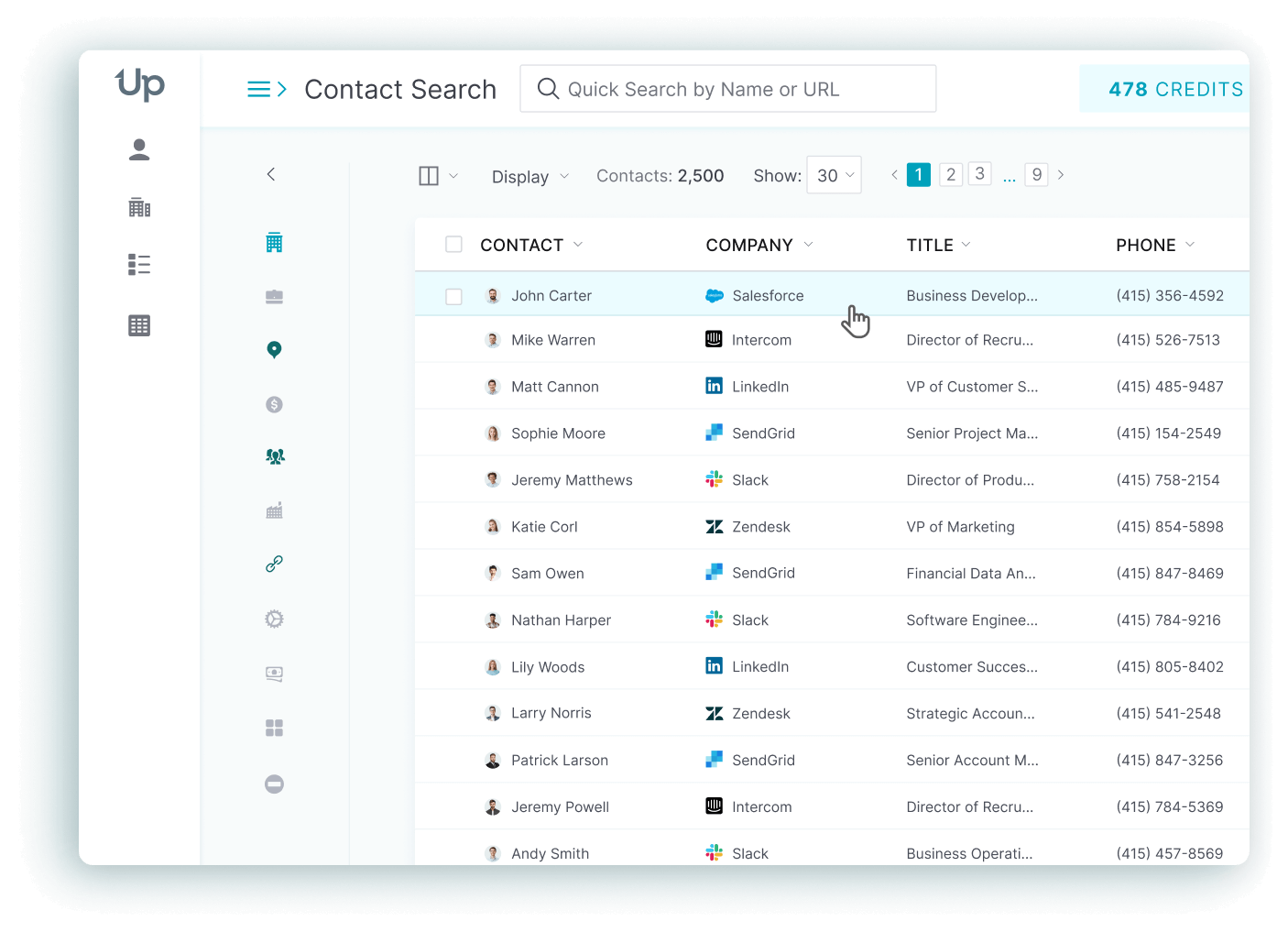
Users can search for contacts using filters such as industry, job title, company size, location, and revenue. This allows for more targeted list building based on specific criteria. The filtering system is designed to narrow down large datasets into more relevant segments.
2. Real-Time Email Verification
One of the platform’s notable functions is its email verification system. When a user selects a contact, the system attempts to verify the email address in real time. This is intended to reduce bounce rates in outreach campaigns.
3. Company Data Insights
UpLead provides company-level data such as industry classification, estimated revenue, number of employees, and technology usage. This information can help users better understand the context of a potential lead.
4. CRM and Integration Support
The platform integrates with several customer relationship management (CRM) systems, allowing users to export or sync contact data. This can help maintain consistency between lead generation and sales pipelines.
5. Data Enrichment
Users can upload existing contact lists and enrich them with additional data points, such as missing emails or company details. This feature is often used to improve the quality of internal databases.
Common Use Cases
UpLead is used across different professional contexts where structured data and targeted outreach are required.
Sales Prospecting
Sales teams often use the platform to build lists of potential clients based on predefined criteria. For example, a company selling software to mid-sized firms can filter contacts by company size and industry.
Email Outreach Campaigns
Marketing teams may use verified contact data to run email campaigns. Verified emails can help reduce bounce rates and improve deliverability, although outcomes still depend on campaign quality and compliance with regulations.
Recruitment and Talent Sourcing
Recruiters can search for professionals based on job titles and experience levels. This helps in identifying potential candidates without relying solely on job applications.
Market Research
Businesses may use the platform to analyze company data within specific industries. This can support research into market trends or competitor analysis.
Potential Advantages
The following points represent potential benefits based on how the tool is designed to function.
Data Verification Focus
Real-time email verification may reduce the likelihood of invalid contact information. This can help maintain cleaner datasets.
Structured Filtering Options
The availability of multiple filters allows users to refine searches and focus on specific audience segments.
Ease of Use
The interface is generally designed for straightforward navigation, which may reduce the learning curve for new users.
Integration Capabilities
Compatibility with CRM systems can streamline workflows and reduce the need for manual data transfer.
Limitations & Considerations
Despite its functionality, UpLead has several limitations that users should consider.
Data Coverage Variability
Like many B2B databases, the completeness of data can vary by region, industry, or company size. Smaller or less digitally visible companies may not be well represented.
Dependence on External Data Sources
The platform aggregates data from multiple sources, which means accuracy may still fluctuate despite verification mechanisms.
Learning Curve for Advanced Filtering
While basic usage is straightforward, more advanced filtering and segmentation may require time to understand effectively.
Compliance and Ethical Use
Users must ensure that their use of contact data complies with data protection regulations such as GDPR or CAN-SPAM. The tool itself does not guarantee compliance.
Cost Considerations
Although pricing is not discussed in detail here, access to contact data platforms typically involves ongoing costs, which may not be suitable for all users.
Who Should Consider Uplead
UpLead may be relevant for:
- Small to mid-sized sales teams needing structured prospecting tools
- Marketing professionals running targeted outreach campaigns
- Recruiters sourcing candidates in specific industries
- Businesses looking to enrich existing contact databases
Its utility depends on how frequently users need verified contact data and how well it integrates into their workflow.
Who May Want to Avoid It
This tool may not be ideal for:
- Individuals or businesses with minimal need for outbound outreach
- Organizations relying solely on inbound marketing strategies
- Users requiring highly specialized or niche datasets
- Those unfamiliar with data compliance requirements
In such cases, the platform’s features may not provide sufficient value relative to its complexity or cost.
Comparison With Similar Tools
UpLead operates in a competitive space alongside platforms such as ZoomInfo, Apollo.io, and Hunter.io.
- ZoomInfo generally offers a larger database and additional analytics features but may be more complex.
- Apollo.io combines lead generation with outreach tools, offering a broader feature set within a single platform.
- Hunter.io focuses more specifically on email discovery and verification rather than full-scale lead databases.
Each tool differs in terms of data scope, usability, and feature emphasis. There is no single solution that fits all use cases, and selection often depends on specific business needs.
Final Educational Summary
UpLead is a B2B data platform designed to support lead generation, contact discovery, and data enrichment. It provides searchable business data along with verification features intended to improve accuracy. While it can be useful in structured outreach workflows, its effectiveness depends on factors such as data coverage, user expertise, and compliance with relevant regulations.
Users should evaluate whether its features align with their operational needs, especially in comparison with similar tools. Considerations such as data accuracy, integration requirements, and ethical usage practices are important when assessing any platform in this category.
Disclosure: This article is for educational and informational purposes only. Some links on this website may be affiliate links, but this does not influence our editorial content or evaluations.
