
Introduction
Businesses that operate in competitive digital marketplaces often rely on data to understand performance, monitor trends, and evaluate decision-making. With the increasing complexity of online channels such as marketplaces, search engines, and advertising platforms, manually tracking metrics becomes difficult and time-consuming.
Tools like DataHawk are designed to organize and analyze large sets of data from multiple sources. Instead of switching between dashboards or manually compiling reports, users can centralize information in one place and interpret it through structured analytics. This type of platform is generally used by teams that manage e-commerce operations, digital marketing campaigns, or marketplace listings.
DataHawk fits into the broader category of analytics and data aggregation platforms. These tools aim to simplify data visibility and help users understand patterns without needing to build custom reporting systems from scratch.
What Is DataHawk?
DataHawk is a data analytics and monitoring platform that focuses on aggregating and visualizing performance data, particularly for e-commerce and marketplace environments. It allows users to connect multiple data sources and analyze metrics in a centralized dashboard.
Category and Purpose
DataHawk belongs to the following categories:
- Analytics platforms
- Data aggregation tools
- E-commerce analytics software
- Performance monitoring systems
Its primary purpose is to help users collect, organize, and interpret data from various sources so they can better understand performance trends and operational metrics.
Typical Users
DataHawk is commonly used by:
- E-commerce managers
- Marketplace sellers
- Digital marketing teams
- Data analysts working with retail or online sales data
- Agencies managing product performance across platforms
These users often require insights into sales performance, keyword rankings, and marketplace visibility.
How DataHawk Works
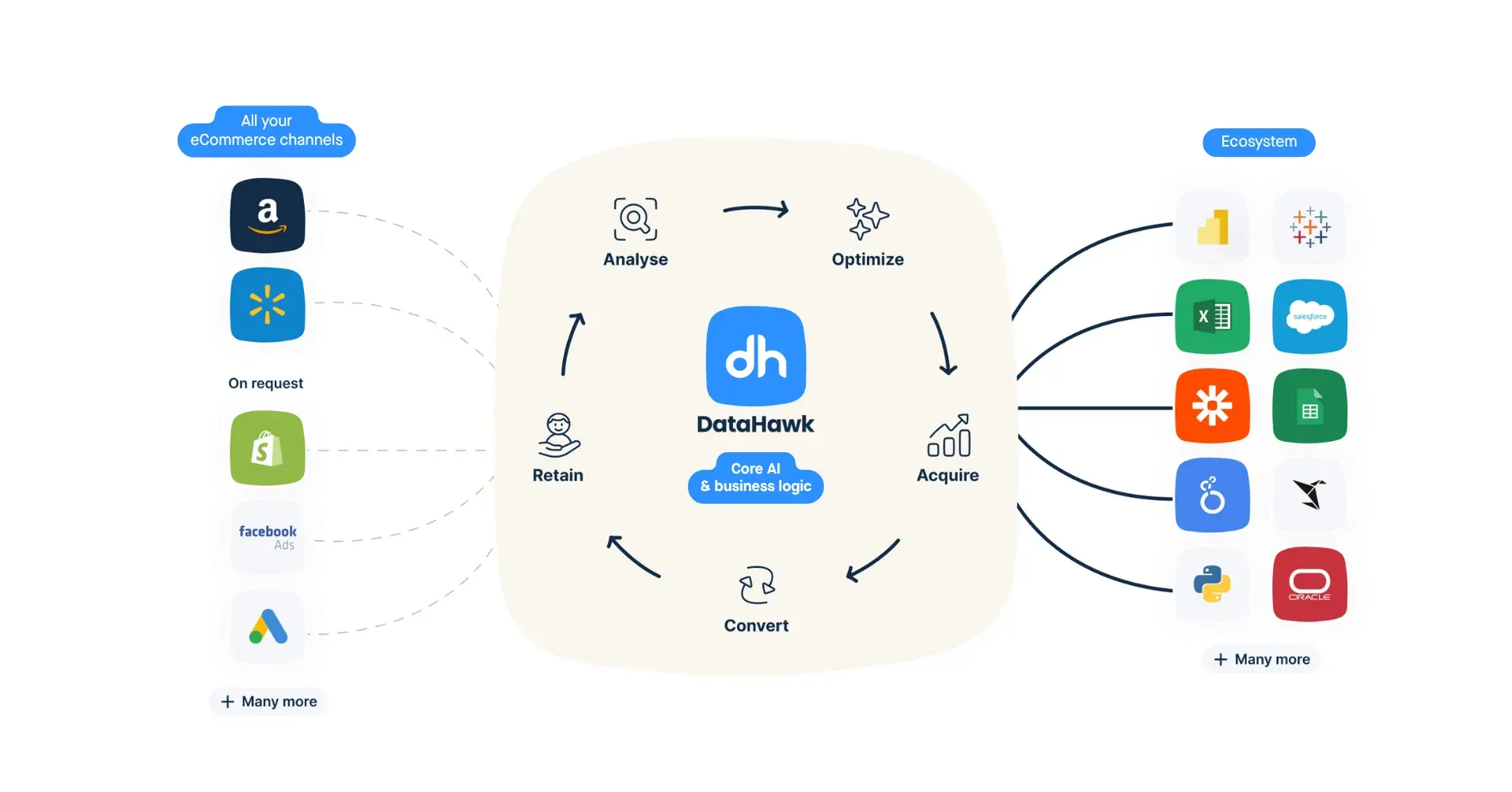
DataHawk operates by connecting to external data sources and consolidating the information into a unified system. Users can then view, analyze, and interpret the data through dashboards and reports.
Data Integration
The platform connects with multiple external platforms to collect data. These may include marketplaces, advertising platforms, or other data sources depending on the setup.
Once connected, DataHawk automatically imports and updates data at regular intervals. This reduces the need for manual data collection and helps maintain up-to-date information.
Data Visualization
After data is collected, it is presented in dashboards that display key metrics in visual formats such as charts, tables, and graphs. These visualizations help users identify trends and compare performance across different time periods or categories.
Centralized Dashboard
Instead of managing separate dashboards for each platform, users can access a centralized interface. This allows them to view multiple datasets in one place and analyze relationships between different metrics.
Key Features Explained
Data Aggregation
DataHawk collects data from various sources and combines it into a unified system. This helps reduce fragmentation and provides a more complete view of performance.
Performance Tracking
Users can monitor metrics such as sales trends, product performance, keyword rankings, and other relevant indicators depending on the connected data sources.
Reporting Tools
The platform includes reporting features that allow users to generate structured reports. These reports can be used for internal analysis or shared with stakeholders.
Keyword and Visibility Tracking
For e-commerce environments, tracking product visibility and keyword performance can be important. DataHawk provides tools to monitor how products appear in search results and how they perform over time.
Alerts and Monitoring
Users may set up alerts to notify them of significant changes in data, such as drops in performance or unusual activity. This helps in responding to issues more quickly.
Common Use Cases
E-commerce Performance Analysis
Businesses selling products online use DataHawk to monitor sales trends, track product performance, and analyze marketplace data.
Marketplace Optimization
Sellers operating on platforms like Amazon or similar marketplaces can use the tool to evaluate listing performance and visibility.
Marketing Performance Monitoring
Digital marketing teams can analyze campaign performance by connecting relevant data sources and reviewing aggregated metrics.
Data Consolidation for Agencies
Agencies managing multiple clients may use DataHawk to centralize reporting across different accounts and platforms.
Potential Advantages
The following points describe potential advantages based on typical usage:
- Centralized data from multiple sources in one platform
- Automated data collection reduces manual effort
- Visual dashboards make data interpretation more accessible
- Ability to track performance metrics over time
- Reporting features that support structured analysis
These aspects can help users gain a more organized view of their data and reduce the complexity of managing multiple tools.
Limitations & Considerations
Dependence on Data Sources
The accuracy and usefulness of the platform depend on the quality and availability of data from connected sources. If integrations are incomplete or misconfigured, insights may be limited.
Learning Curve
Understanding how to interpret analytics dashboards and configure reports may require some familiarity with data analysis concepts.
Not a Standalone Data Source
DataHawk does not generate data on its own; it relies on external integrations. Users must already have access to relevant platforms to benefit from its features.
Feature Complexity
While the platform offers multiple features, navigating and configuring them may take time, especially for new users.
Who Should Consider DataHawk
DataHawk may be suitable for:
- E-commerce businesses tracking product performance
- Marketplace sellers analyzing visibility and sales data
- Marketing teams working with multi-channel campaigns
- Agencies managing analytics across multiple clients
- Analysts requiring centralized reporting tools
Who May Want to Avoid DataHawk
DataHawk may not be ideal for:
- Users who do not work with data-heavy workflows
- Small projects that do not require analytics aggregation
- Individuals looking for simple standalone tools
- Users without access to relevant external data sources
Comparison With Similar Tools
| Feature | DataHawk | Google Analytics | Tableau |
|---|---|---|---|
| Primary Focus | E-commerce analytics | Web analytics | Data visualization |
| Data Sources | Multiple platforms | Website data | Multiple sources |
| Visualization | Built-in dashboards | Built-in reports | Advanced dashboards |
| Complexity | Moderate | Moderate | Advanced |
| Use Case | Marketplace analytics | Website tracking | Business intelligence |
Each tool serves a different purpose. DataHawk focuses more on marketplace and e-commerce analytics, while other tools may focus on web traffic or general business intelligence.
Final Educational Summary
DataHawk is an analytics platform designed to aggregate, organize, and visualize data from multiple sources, particularly in e-commerce and marketplace environments. It helps users understand performance metrics through centralized dashboards and reporting tools.
Its usefulness depends on the availability of connected data sources and the user’s need for structured analytics. While it can simplify data analysis workflows, it also requires some familiarity with data interpretation and platform configuration.
Readers should evaluate DataHawk based on their specific analytical needs, data sources, and operational requirements.
Disclosure: This article is for educational and informational purposes only. Some links on this website may be affiliate links, but this does not influence our editorial content or evaluations.
