
Introduction
Modern businesses rely heavily on communication technology to manage customer relationships, sales outreach, and internal collaboration. As organizations scale, traditional phone systems and disconnected communication tools often create operational challenges. Teams may struggle with fragmented customer records, limited visibility into conversations, and inefficient call management processes. These gaps have led to the development of specialized software categories designed to integrate voice communication with customer data systems.
Sales engagement and business calling platforms emerged to address these operational inefficiencies. By combining cloud telephony with customer relationship management (CRM) environments, these tools aim to centralize communication activities and provide structured workflows for outreach teams. Instead of relying solely on standalone phone systems, organizations increasingly adopt software platforms that record interactions, log conversations automatically, and allow managers to analyze communication patterns.
Within this category of communication technology is Kixie, a platform designed to support outbound calling workflows, automated dialing processes, and integration with customer databases. Understanding how such tools function requires examining both their technical capabilities and the broader role they play in digital sales infrastructure.
This article explores the structure, functions, advantages, and limitations of Kixie from an educational perspective, placing the platform within the wider ecosystem of sales communication technology.
What Is Kixie?
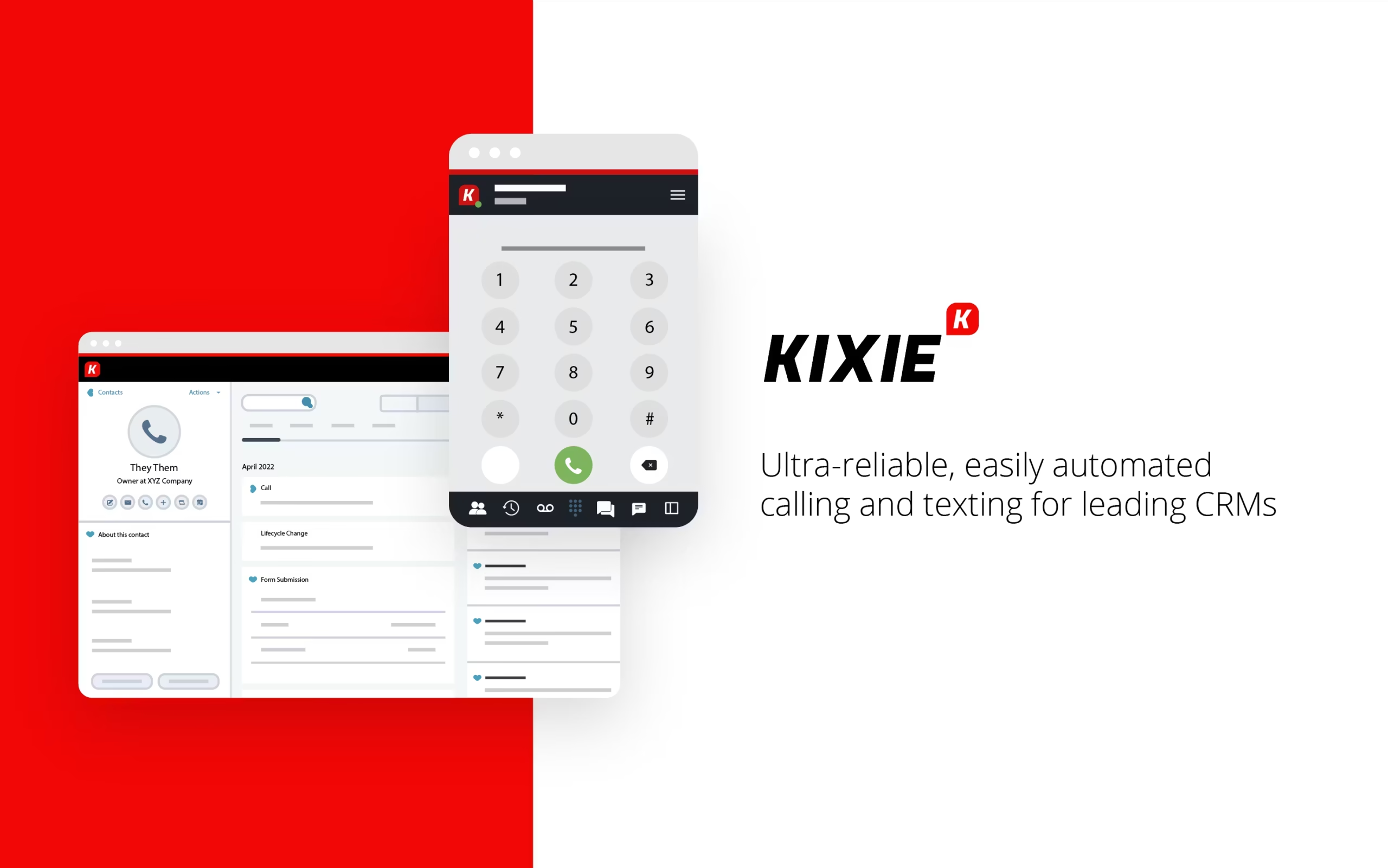
Kixie is a cloud-based sales engagement and business calling platform that focuses on voice communication automation and CRM integration. It operates within the broader category of sales productivity software, often used by organizations that rely on outbound phone communication as part of customer acquisition, support, or relationship management.
Unlike traditional telephone systems that operate independently of digital data systems, Kixie connects voice communication with CRM platforms and other business applications. This integration allows calls, messages, and communication activity to be logged automatically alongside customer records.
The platform is commonly categorized within several overlapping software segments:
- Cloud telephony systems
- Sales engagement platforms
- CRM communication integrations
- Automated dialing software
- Business VoIP solutions
Kixie is typically accessed through a browser-based interface or integrated directly inside supported CRM systems. Instead of switching between separate applications, users can initiate calls, review call history, and track interactions within their existing workflow environment.
Another defining characteristic is the use of automation in communication processes. Automated dialing features, call routing systems, and conversation tracking tools are designed to reduce manual tasks often associated with sales outreach.
From an infrastructure perspective, Kixie operates as a Voice over Internet Protocol (VoIP) service. Calls are transmitted over internet networks rather than traditional phone lines, allowing communication activity to be integrated with digital analytics and software-based workflows.
Key Features Explained
Communication platforms like Kixie combine multiple operational tools within a single system. These features typically focus on improving the efficiency of outbound calling and monitoring communication activity.
Automated Dialing Systems
One of the central capabilities within Kixie is automated dialing. Instead of manually entering phone numbers, the platform can automatically dial contacts from a predefined list. This approach reduces the time agents spend navigating between call records and dialing interfaces.
Automated dialing features are commonly used in environments where teams handle large volumes of outbound calls. The software sequentially connects calls while presenting the associated contact record to the user.
CRM Integration
CRM integration is a defining component of modern sales communication tools. Kixie connects with customer relationship management systems so that call activity becomes part of a unified customer profile.
This integration typically allows:
- Automatic call logging
- Recording of conversation history
- Association of calls with specific contacts or deals
- Synchronization of notes and follow-up tasks
Such integration helps maintain consistent documentation of communication history across teams.
Call Tracking and Analytics
Call tracking systems capture data related to communication activity. These systems may record metrics such as call duration, response times, and connection rates.
Analytics dashboards within communication platforms allow organizations to evaluate patterns in sales outreach or customer interactions. Managers may use these metrics to review team activity levels or identify trends in call outcomes.
Local Presence Dialing
Local presence technology displays a phone number that appears geographically close to the recipient. The goal of this feature is to present calls with local area codes rather than unfamiliar numbers from distant locations.
This functionality is commonly used by outbound sales teams seeking to improve answer rates during call campaigns.
Call Recording and Monitoring
Call recording systems capture voice conversations for documentation or training purposes. In many communication platforms, recorded calls can be stored alongside customer records.
Organizations sometimes use call recordings to review conversation techniques, ensure compliance with internal procedures, or analyze communication patterns.
SMS Communication Tools
In addition to voice calls, Kixie includes messaging capabilities that allow users to send text messages directly from the platform. These messages may be associated with CRM contact records in the same way that calls are logged.
Messaging tools are often used for follow-up communication, appointment confirmations, or quick responses to customer inquiries.
Common Use Cases
Communication platforms like Kixie are often deployed in industries where structured outreach and consistent customer interaction are central to daily operations.
Sales Development Teams
Outbound sales teams frequently use automated dialing systems to contact prospective customers. These teams may manage large contact lists and conduct daily outreach campaigns aimed at introducing products or scheduling consultations.
Customer Success and Support
Customer success departments sometimes rely on integrated calling tools to maintain communication with existing clients. Logging conversations within CRM records helps teams track customer issues, onboarding progress, or service updates.
Lead Qualification Operations
Some organizations employ dedicated teams responsible for qualifying incoming leads. These teams may use integrated calling software to review lead data and conduct structured follow-up conversations.
Recruitment and Staffing Agencies
Recruitment professionals often communicate with both job candidates and hiring managers. Communication tracking tools can help maintain organized records of conversations during the hiring process.
Financial and Insurance Services
In sectors such as financial advisory services or insurance brokerage, professionals frequently rely on direct communication with clients. Integrated call tracking tools help maintain detailed interaction histories.
Potential Advantages
Communication platforms in the sales engagement category offer several operational advantages when implemented effectively.
Centralized Communication Records
By integrating voice calls with CRM systems, communication activity becomes part of a unified customer record. This centralization reduces the likelihood of fragmented information across multiple systems.
Reduced Manual Data Entry
Automatic call logging eliminates the need for manual documentation of phone interactions. This feature helps maintain consistent records while reducing administrative workload.
Improved Workflow Efficiency
Automated dialing and integrated contact records can reduce time spent switching between systems. This streamlined workflow is often beneficial in high-volume communication environments.
Analytical Insights
Data collected from call tracking systems can provide insight into outreach activity. Managers may review call frequency, connection rates, or conversation durations to better understand team performance patterns.
Remote Accessibility
Because cloud telephony platforms operate through internet infrastructure, they can typically be accessed from various locations. This characteristic supports distributed or remote work environments.
Limitations & Considerations
Despite the operational benefits associated with communication platforms, several limitations should be considered before implementation.
Dependence on Internet Connectivity
VoIP-based communication relies entirely on stable internet connections. Network disruptions or insufficient bandwidth may affect call quality or reliability.
Learning Curve for Teams
Teams transitioning from traditional phone systems may require training to adapt to integrated communication platforms. Users must learn how to navigate CRM integrations, call analytics dashboards, and automated dialing tools.
Compliance and Privacy Regulations
Call recording and communication tracking features may raise regulatory considerations in certain regions. Organizations must ensure compliance with local privacy laws and customer consent requirements.
Integration Compatibility
While many communication platforms integrate with widely used CRM systems, compatibility may vary depending on the organization’s existing technology stack.
Cost Structure
Cloud communication platforms typically operate through subscription-based pricing models. Organizations should evaluate whether the operational benefits align with their communication volume and workflow requirements.
Who Should Consider Kixie
Platforms like Kixie may be relevant for organizations that rely heavily on structured outbound communication and customer engagement workflows.
Examples of potential users include:
- Sales teams conducting high volumes of outbound calls
- Businesses operating inside CRM-driven sales pipelines
- Organizations managing distributed sales or support teams
- Companies seeking centralized communication tracking
Businesses that prioritize data-driven communication workflows may find integrated calling systems particularly useful for maintaining consistent records.
Who May Want to Avoid It
Not every organization requires advanced communication platforms. In some environments, simpler solutions may be sufficient.
Organizations that might not benefit significantly include:
- Businesses with minimal phone communication activity
- Small teams relying primarily on email-based communication
- Companies without CRM systems or structured sales pipelines
- Organizations with strict telecommunication infrastructure requirements
In such cases, the complexity of a sales engagement platform may exceed operational needs.
Comparison With Similar Tools
Kixie operates within a competitive category that includes multiple cloud communication platforms. While many tools share similar foundational features, differences often appear in integration capabilities, automation tools, and analytics depth.
Some sales engagement platforms emphasize multichannel outreach, combining email automation, social messaging, and calling within a single interface. Others focus primarily on telephony features and call analytics.
Communication tools may also differ in:
- CRM compatibility
- Dialer technology
- Reporting features
- workflow automation options
- scalability for larger sales teams
Organizations evaluating communication software often compare these factors alongside operational needs, internal infrastructure, and team size.
Understanding the broader market helps place platforms like Kixie within the context of evolving sales technology ecosystems.
Final Educational Summary
Communication technology has evolved significantly as organizations increasingly rely on digital tools to manage customer relationships and sales outreach. Traditional phone systems often operate independently from business data platforms, creating gaps in documentation and workflow visibility.
Sales engagement platforms attempt to address these limitations by integrating telephony with CRM systems, automation tools, and communication analytics. Kixie represents one example of this category, offering features designed to connect voice communication with structured data environments.
Its capabilities—such as automated dialing, CRM integration, call tracking, and messaging tools—reflect broader trends in cloud-based business communication software. These platforms are particularly relevant in environments where outbound calling and customer interaction are central components of daily operations.
However, as with any software infrastructure, adoption requires careful evaluation of technical requirements, operational goals, and compliance considerations. The value of integrated communication systems varies depending on how heavily an organization depends on structured phone-based outreach.
Understanding tools like Kixie within the wider context of sales technology allows businesses and researchers to evaluate how communication software continues to shape modern customer engagement strategies.
Disclosure
This article is for educational and informational purposes only. Some links on this website may be affiliate links, but this does not influence our editorial content or evaluations.
