
Introduction
Digital communication between organizations and customers has shifted significantly over the past decade. Email once dominated customer interaction, followed by live chat systems embedded within websites and mobile applications. More recently, messaging platforms have become a central communication channel for both individuals and businesses. Applications such as WhatsApp, Telegram, and Facebook Messenger collectively serve billions of users worldwide, creating a communication environment where customers increasingly expect businesses to interact through the same tools they use for personal conversations.
This shift has led to the emergence of a specialized category of software commonly known as WhatsApp Business API platforms or customer messaging automation systems. These platforms act as intermediaries between organizations and messaging networks, allowing companies to manage high volumes of conversations, automate responses, integrate CRM systems, and coordinate customer support workflows.
One example within this category is Wati.io, a platform designed to enable businesses to manage customer communication through WhatsApp in a structured and scalable manner. Rather than operating as a simple messaging client, tools in this category typically provide automation features, team collaboration tools, conversation management systems, and integrations with external data platforms.
Understanding how platforms like Wati.io operate helps illustrate broader changes in customer communication infrastructure, particularly as messaging becomes a primary channel for customer service, sales inquiries, and transactional notifications.
What Is Wati.io?
Wati.io is a WhatsApp Business API management platform that provides tools for businesses to interact with customers through WhatsApp while maintaining operational structure. It functions as a customer engagement platform designed for organizations that receive or initiate large volumes of WhatsApp messages.
The platform belongs to the broader category of conversational customer engagement software, which includes systems designed to manage communication across messaging channels. Unlike the standard WhatsApp mobile application, which is designed primarily for individual use or small-scale business messaging, Wati.io is built to support multi-agent teams, workflow automation, and centralized conversation management.
At its core, Wati.io acts as a dashboard interface for WhatsApp Business API operations. Organizations connect their verified WhatsApp Business account to the platform, allowing staff members to access conversations from a shared environment. Within this environment, teams can assign conversations to specific agents, monitor message history, automate replies, and integrate communication data with external software such as CRM systems.
In practical terms, Wati.io transforms WhatsApp from a one-to-one messaging tool into a structured customer communication platform suitable for support teams, sales teams, and customer success departments.
Key Features Explained
Multi-Agent Shared Inbox
One of the defining characteristics of Wati.io is the shared inbox model. Instead of individual employees responding to messages through separate devices, the platform aggregates all incoming WhatsApp conversations into a centralized interface.
This structure allows multiple team members to access the same communication stream while maintaining accountability through conversation assignment and internal tracking.
Typical functions within a shared inbox include:
- Conversation assignment to specific agents
- Internal notes visible only to team members
- Message status tracking
- Conversation history storage
These capabilities help organizations coordinate responses more efficiently when dealing with large message volumes.
WhatsApp Automation and Chatbots
Automation is a common feature in messaging platforms designed for customer interaction. Wati.io includes tools for building automated workflows that respond to customer messages without human intervention.
Automation can operate through rule-based triggers. For example:
- Automatic replies when a message is received outside business hours
- Greeting messages for first-time contacts
- Responses triggered by specific keywords
In some implementations, these automation systems operate as chatbots, guiding users through structured conversation flows. This approach can help organizations handle common requests such as appointment booking, order status inquiries, or frequently asked questions.
Automation tools in this category aim to reduce response times and distribute workload across human agents and automated systems.
Broadcast Messaging
Another capability associated with WhatsApp Business API platforms is broadcast messaging. Wati.io allows organizations to send messages to multiple recipients simultaneously, provided that the recipients have consented to receive communications.
Broadcast functionality can be used for:
- Order updates
- Appointment reminders
- Shipping notifications
- Customer service announcements
These messages are typically delivered individually rather than in group chats, preserving the appearance of one-to-one communication.
Broadcast systems often rely on approved message templates, a requirement of WhatsApp’s business messaging policies.
CRM and Software Integrations
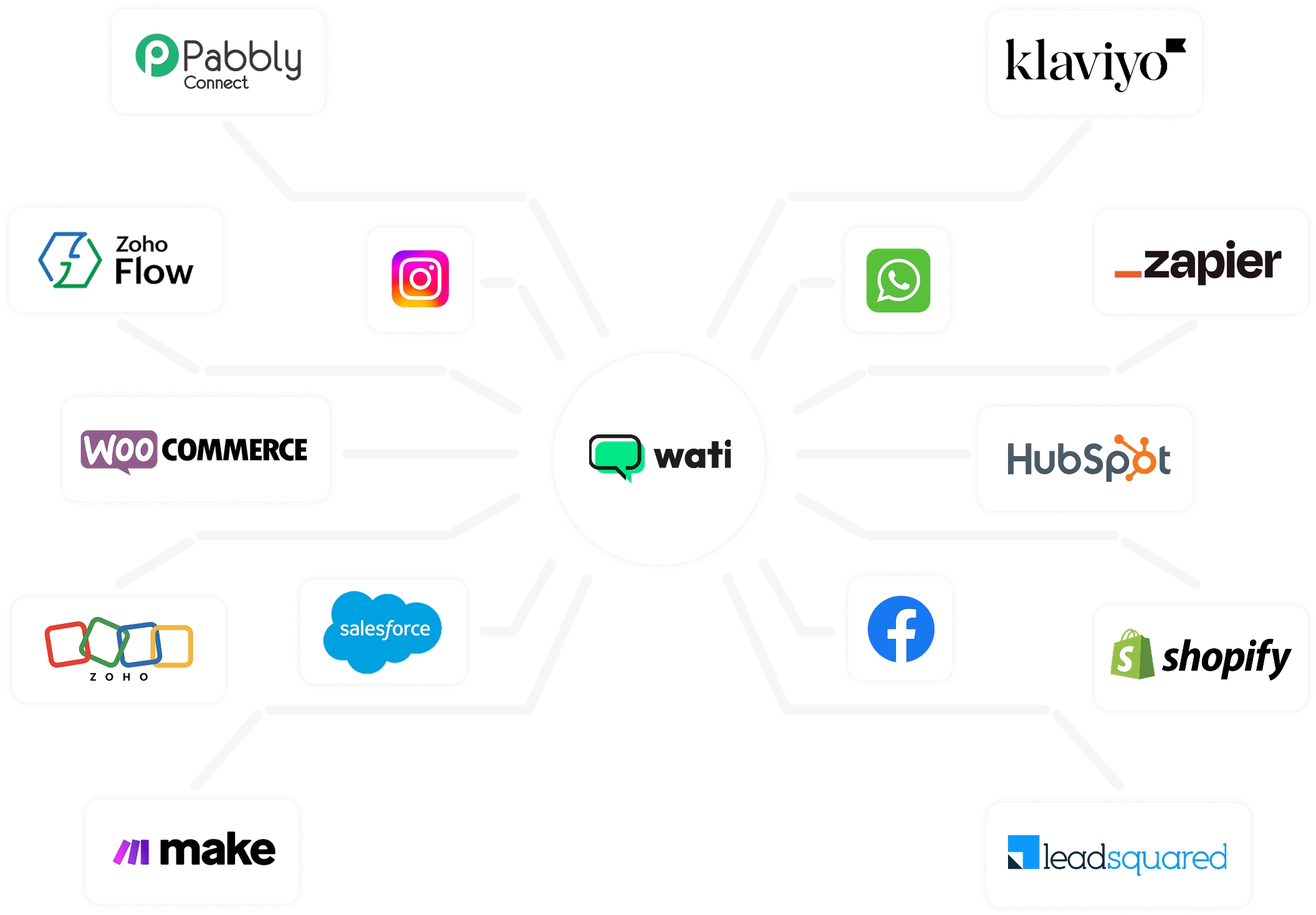
Modern customer communication tools often operate within a larger ecosystem of business software. Wati.io supports integration with various external systems, enabling organizations to synchronize messaging activity with customer records.
Common integration scenarios include:
- CRM platforms storing customer interaction histories
- E-commerce platforms linking orders to conversations
- Marketing automation systems tracking customer engagement
- Customer support platforms coordinating ticket management
These integrations allow messaging data to become part of a broader customer data infrastructure, improving continuity across support, marketing, and operational teams.
Contact and Lead Management
Wati.io also includes basic tools for organizing contacts and segmenting audiences. Businesses can store contact information, categorize users, and track conversation histories.
Contact management features may include:
- Tagging contacts by category or interest
- Segmenting users for broadcast messages
- Tracking message interactions
- Recording notes related to customer communication
This capability positions messaging platforms as partial alternatives to lightweight CRM tools, particularly for organizations that rely heavily on messaging-based communication.
Analytics and Reporting
Data analysis is an important component of customer communication platforms. Wati.io provides reporting tools designed to help organizations evaluate messaging performance and team productivity.
Typical metrics may include:
- Message response times
- Conversation volume
- Agent performance metrics
- Customer engagement rates
These analytics tools can assist managers in identifying workflow bottlenecks and adjusting staffing or automation strategies accordingly.
Common Use Cases
Customer Support Operations
Many organizations use WhatsApp as a customer support channel. Messaging platforms such as Wati.io provide structured systems that allow support teams to manage inquiries, troubleshoot problems, and follow up with customers.
The shared inbox model is particularly relevant in this context because it allows multiple support agents to collaborate while maintaining consistent communication records.
Sales Inquiries and Lead Communication
Messaging applications are often used by customers to ask questions before making purchasing decisions. Businesses may use platforms like Wati.io to respond to inquiries related to product availability, pricing, or service options.
Sales teams may also use messaging channels to nurture leads and provide product information during early stages of the customer journey.
Appointment Scheduling
Service-based businesses such as clinics, consultants, and local service providers frequently rely on messaging platforms for scheduling appointments.
Automation tools can confirm bookings, send reminders, and notify customers about schedule changes.
Order and Delivery Notifications
E-commerce companies often send transactional updates through messaging applications. Platforms like Wati.io enable businesses to automate notifications related to:
- Order confirmation
- Shipment tracking
- Delivery updates
- Payment reminders
These notifications can supplement email and SMS communication systems.
Customer Feedback Collection
Some organizations use messaging channels to collect feedback after a purchase or support interaction. Automated messages can request ratings, comments, or survey responses, helping businesses monitor service quality.
Potential Advantages
Alignment With Messaging Behavior
One reason messaging platforms have gained traction in business communication is the widespread use of messaging apps among consumers. WhatsApp, in particular, has a large global user base.
Platforms like Wati.io allow businesses to meet customers within communication channels they already use regularly.
Centralized Communication Management
Shared inbox systems consolidate conversations from multiple customers into a single interface. This approach can improve coordination among support teams and reduce the risk of missed messages.
Automation for High-Volume Interactions
Automation tools can handle repetitive tasks, such as answering frequently asked questions or confirming appointment bookings. This capability may reduce workload for human agents.
Integration With Business Systems
Integration capabilities allow messaging platforms to function alongside CRM systems, marketing tools, and e-commerce platforms. This integration supports more consistent data management across departments.
Scalable Team Collaboration
Because messaging activity is centralized, organizations can expand support teams without requiring separate WhatsApp devices or accounts for each employee.
Limitations & Considerations
Dependence on WhatsApp Policies
Platforms that operate through the WhatsApp Business API must comply with messaging policies set by the platform provider. These policies may affect message templates, broadcast permissions, and customer consent requirements.
Businesses using Wati.io must operate within these policy constraints.
Limited Channel Diversity
Wati.io focuses primarily on WhatsApp communication. Organizations that require multi-channel messaging across SMS, email, and various social platforms may need additional software solutions.
Learning Curve for Teams
Although messaging platforms often appear simple at the user level, enterprise messaging systems involve workflows, automation rules, and integration setups that may require training for staff members.
Automation Design Challenges
Automation tools depend heavily on well-designed conversation flows. Poorly structured automation can create frustrating experiences for customers if automated responses fail to address user questions effectively.
Cost Considerations
Use of the WhatsApp Business API typically involves messaging fees in addition to platform subscription costs. Organizations must consider these operational expenses when implementing messaging systems.
Who Should Consider Wati.io
Certain types of organizations may find platforms like Wati.io particularly relevant.
Examples include:
Customer support teams handling high WhatsApp message volume
Businesses receiving large numbers of inquiries through WhatsApp may benefit from shared inbox and automation tools.
E-commerce businesses providing order updates
Messaging platforms can support automated notifications related to purchases and deliveries.
Service businesses managing appointment communication
Scheduling reminders and confirmations can be automated through messaging workflows.
Organizations operating in regions where WhatsApp is widely used
In markets where WhatsApp functions as a primary communication channel, structured messaging platforms can become an essential customer support tool.
Who May Want to Avoid It
Despite its capabilities, Wati.io may not be appropriate for every organization.
Examples include:
Businesses requiring multi-channel customer communication
Companies that rely heavily on email, SMS, and social media messaging simultaneously may prefer platforms designed for omnichannel support.
Small teams with low message volume
Organizations receiving only occasional customer inquiries may not require the complexity of a dedicated messaging management platform.
Companies with strict communication compliance frameworks
Some regulated industries require specialized record-keeping or compliance systems beyond what messaging platforms provide.
Comparison With Similar Tools
Wati.io operates within a competitive ecosystem of WhatsApp Business API platforms and conversational engagement tools.
Comparable platforms in this category often include:
- Customer messaging automation platforms
- Conversational CRM systems
- WhatsApp engagement tools
While feature sets vary, many platforms share common capabilities:
- Shared team inboxes
- Automation workflows
- Chatbot development tools
- Broadcast messaging systems
- CRM integrations
Differences between platforms often emerge in areas such as:
- Integration ecosystem
- user interface design
- automation complexity
- analytics capabilities
- pricing structures
Organizations evaluating messaging platforms often compare these aspects to determine compatibility with existing workflows and infrastructure.
Final Educational Summary
Wati.io represents a growing class of software designed to manage business communication within messaging applications. As messaging platforms continue to shape how individuals interact with organizations, tools that organize, automate, and analyze these interactions have become increasingly relevant.
By providing features such as shared inbox management, automation workflows, broadcast messaging, and CRM integrations, Wati.io transforms WhatsApp from a simple messaging tool into a structured communication environment suitable for teams.
However, the platform’s usefulness depends largely on organizational needs. Businesses with high volumes of WhatsApp communication or customer support interactions may find structured messaging platforms beneficial. Others with limited messaging requirements or multi-channel communication needs may require different solutions.
Understanding tools like Wati.io provides insight into the broader evolution of customer communication technology, where messaging platforms increasingly serve as primary channels for service delivery, customer engagement, and transactional updates.
Disclosure
This article is for educational and informational purposes only. Some links on this website may be affiliate links, but this does not influence our editorial content or evaluations.
