
Introduction
As organizations increasingly adopt artificial intelligence, enterprises face growing challenges in managing AI systems at scale. Siloed solutions, inconsistent security practices, and fragmented governance models have created operational complexity and increased risk exposure. Enterprise AI platforms emerged to address these challenges by providing centralized control, streamlined workflows, and robust oversight. Airia is a contemporary example of this category, offering a unified platform for orchestrating, securing, and governing AI agents in organizational contexts.
What Is Airia?
Airia is an enterprise AI platform designed to integrate multiple facets of AI operations into a single system. It is categorized as a comprehensive AI management platform, supporting orchestration, security, and governance. Unlike point solutions that handle only specific AI tasks, Airia aims to consolidate capabilities required for large-scale deployments, enabling enterprises to build, monitor, and manage AI agents with centralized oversight.
Key Features Explained
Airia’s architecture is structured around three primary pillars: orchestration, security, and governance.
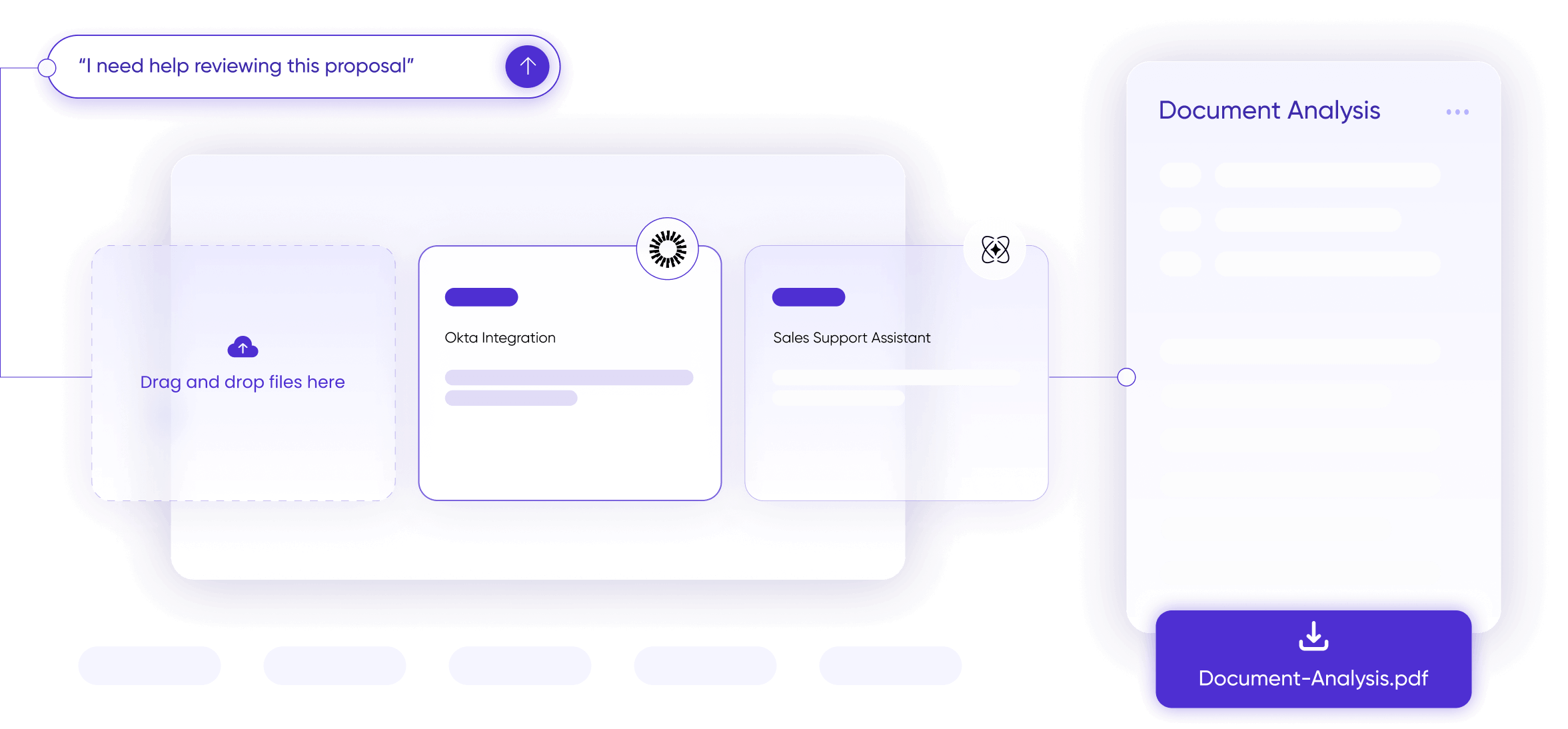
- AI Orchestration: Airia allows organizations to design, deploy, and manage AI agents across different business units. This includes workflow automation, task assignment, and integration with internal systems. Orchestration ensures that AI models operate consistently and according to enterprise-defined rules.
- Security Controls: Embedded security measures safeguard sensitive data, regulate agent behavior, and monitor operational risk. Airia provides real-time visibility into AI activities, helping enterprises detect anomalies before they escalate.
- Governance and Compliance: Airia supports centralized oversight of AI deployments, offering features such as inventory tracking, risk classification, and audit trails. Governance tools are aligned with regulatory requirements and internal policies, promoting responsible AI use.
- Integration Capabilities: The platform can connect with diverse enterprise systems, including databases, SaaS platforms, and CRMs, enabling AI agents to function with contextual accuracy.
- Monitoring and Insights: Analytics dashboards provide real-time metrics on AI performance, operational efficiency, and cost implications. These insights support informed decision-making at the leadership level.
Common Use Cases
Airia is applied across industries where enterprise-scale AI deployment is required. Common use cases include:
- Automating customer service workflows through AI agents integrated with CRM systems.
- Managing internal operational processes by orchestrating AI-driven task execution.
- Ensuring data privacy and compliance in sectors like finance and healthcare.
- Centralizing oversight for multiple AI initiatives across global teams.
- Monitoring AI performance and operational risks in real-time to support decision-making.
Potential Advantages
The primary advantages of Airia include:
- Consolidation of Tools: Reduces the need for multiple disconnected AI solutions, simplifying administration.
- Improved Risk Management: Built-in security and monitoring features allow enterprises to mitigate potential data and operational risks.
- Operational Clarity: Centralized dashboards and governance controls provide transparency across AI activities.
- Scalability: The platform supports enterprise growth by allowing AI agents to scale without increasing system complexity.
Limitations & Considerations
Despite its strengths, Airia may present certain limitations:
- Complexity of Implementation: Integrating Airia into existing enterprise systems can require technical expertise and time-intensive configuration.
- Resource Requirements: Running and maintaining the platform may demand significant IT resources, including staff trained in AI governance.
- Enterprise Orientation: Small businesses or organizations with limited AI deployment may find Airia’s capabilities excessive relative to their needs.
- Learning Curve: Users may require specialized training to utilize the orchestration and governance features effectively.
Who Should Consider Airia
Airia is particularly relevant for:
- Large-scale enterprises seeking centralized AI management.
- Organizations in regulated industries that require strict compliance and auditability.
- Businesses deploying multiple AI agents across teams and systems.
- IT and AI governance teams tasked with monitoring operational risks.
Who May Want to Avoid It
Conversely, Airia may not be suitable for:
- Small or mid-sized companies with minimal AI usage.
- Teams without dedicated technical or governance staff to manage complex AI deployments.
- Organizations seeking a lightweight or single-purpose AI tool rather than an integrated platform.
Comparison With Similar Tools
Airia can be compared with other enterprise AI platforms such as Microsoft Azure AI, IBM Watson Orchestrate, and Google Cloud AI solutions. Unlike single-purpose tools, Airia emphasizes unified orchestration, security, and governance. While competitors may excel in specific AI services, Airia’s strength lies in combining deployment, risk management, and compliance features in one system. This holistic approach differentiates it from tools that only address automation, analytics, or model management.
Final Educational Summary
Airia exemplifies the evolving class of enterprise AI platforms designed to integrate AI operations into a cohesive framework. Its focus on orchestration, security, and governance addresses common enterprise challenges, including operational complexity, data sensitivity, and regulatory compliance. While implementation may require dedicated resources and expertise, the platform’s structured oversight and scalability features make it a compelling option for large organizations managing multiple AI initiatives. Understanding Airia within the context of enterprise AI management highlights the broader trend toward unified, risk-aware, and transparent AI deployment strategies.
Disclosure
This article is for educational and informational purposes only. Some links on this website may be affiliate links, but this does not influence our editorial content or evaluations.
