
Introduction
Email remains one of the most widely used digital communication channels across businesses, applications, and online services. From account notifications and password resets to marketing messages and system alerts, organizations depend on email as a critical communication layer. However, delivering emails consistently to recipients’ inboxes is more complex than simply sending a message through a mail server.
Internet service providers (ISPs) and email providers maintain strict policies to prevent spam, phishing, and malicious content. As a result, businesses operating their own email servers often encounter issues such as delivery delays, blocked messages, blacklisted IP addresses, and spam filtering problems. These challenges have led to the emergence of specialized email delivery infrastructure platforms.
Cloud-based SMTP relay services are designed to address these problems by managing the technical aspects of sending large volumes of emails while maintaining deliverability standards. One such platform in this category is SMTP2GO, which provides managed email delivery services for applications, websites, and transactional messaging systems.
Understanding how these platforms operate helps organizations determine whether managed email infrastructure aligns with their communication requirements.
What Is SMTP2GO?
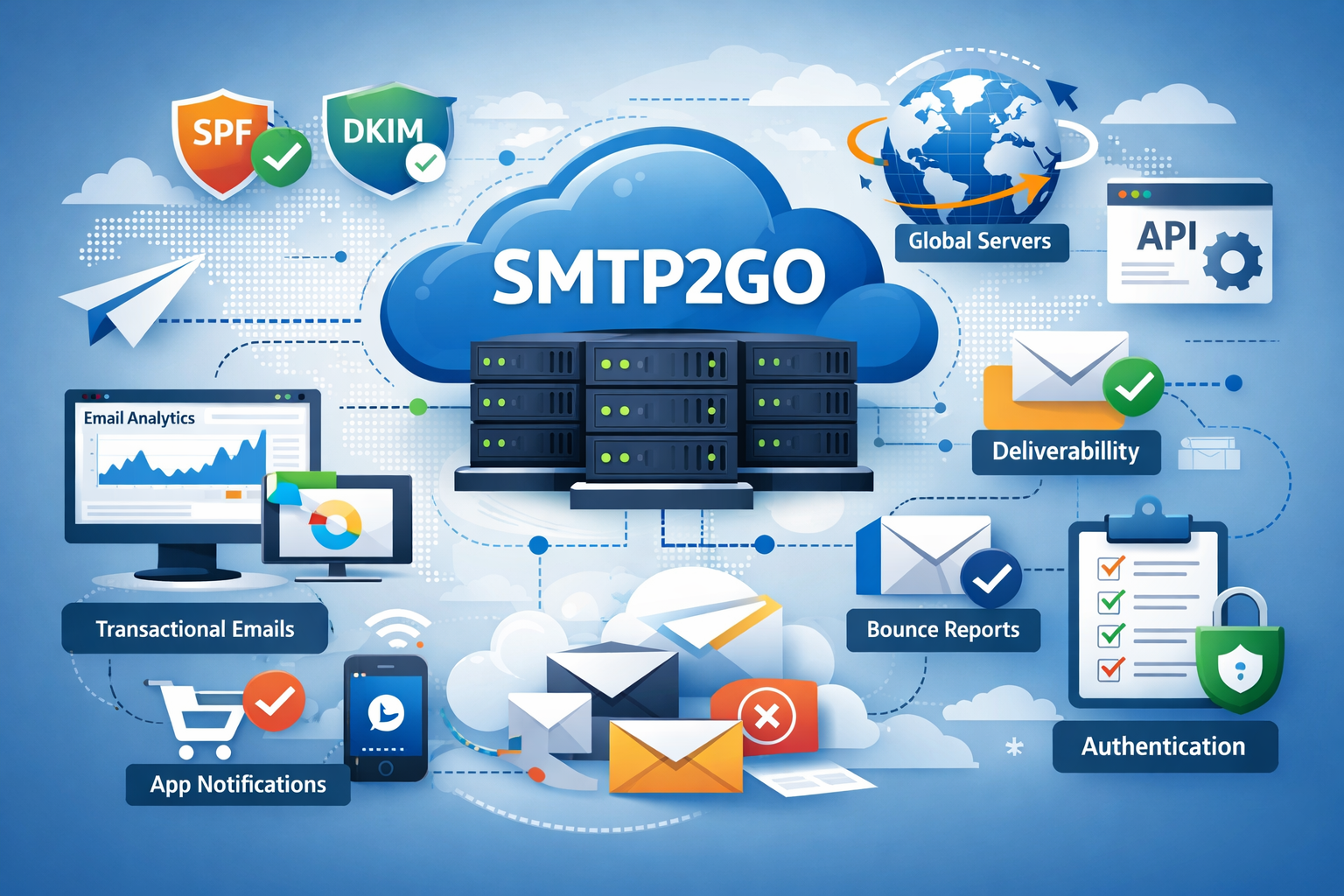
SMTP2GO is a cloud-based SMTP relay and email delivery platform designed to assist businesses and developers in sending transactional and system-generated emails reliably. It functions as an intermediary layer between applications or websites and the recipient’s email server.
The platform is built around the Simple Mail Transfer Protocol (SMTP), which is the standard protocol used to send email across the internet. Instead of relying on a self-hosted mail server, users connect their systems to SMTP2GO’s infrastructure, which then processes and routes outgoing emails to recipients.
SMTP2GO provides infrastructure that handles authentication, delivery optimization, and reputation management. By distributing email traffic through managed servers, the system attempts to improve the likelihood that messages reach inboxes rather than spam folders.
From a classification standpoint, SMTP2GO belongs to the email delivery infrastructure category. This category overlaps with:
- Transactional email services
- SMTP relay platforms
- Email API services
- Email deliverability management tools
These platforms are frequently used by developers, SaaS companies, online stores, and software platforms that need automated email messaging.
Key Features Explained
SMTP2GO offers a range of technical capabilities focused on improving the reliability and monitoring of outgoing email traffic. The following sections describe some of the core functional elements typically associated with the platform.
SMTP Relay Service
The primary function of SMTP2GO is its SMTP relay capability. An SMTP relay server accepts outgoing emails from a sender’s system and forwards them to the recipient’s email server.
Instead of managing a private mail server with its own IP reputation, users connect their application to SMTP2GO’s infrastructure using SMTP credentials. The service then handles message routing and delivery.
This approach is commonly used for:
- Website notification emails
- User account confirmations
- Password reset emails
- Automated alerts from software systems
Because SMTP is a widely supported protocol, most programming languages, web platforms, and email libraries can integrate with an SMTP relay without extensive configuration.
Email API Integration
In addition to traditional SMTP connections, SMTP2GO provides an email API that developers can use to send messages programmatically.
Application programming interfaces (APIs) allow software systems to communicate with email infrastructure directly. Through API requests, developers can automate email sending within applications, backend services, or cloud environments.
Common developer use cases include:
- Automated system notifications
- SaaS application messaging
- Order confirmations in e-commerce systems
- Event-triggered emails
APIs also allow more detailed control over message data, headers, and tracking information.
Email Deliverability Management
Deliverability refers to the ability of an email to reach a recipient’s inbox instead of being blocked or filtered.
SMTP2GO incorporates various mechanisms that support deliverability management, such as:
- Monitoring sender reputation
- Managing sending IP infrastructure
- Supporting authentication standards like SPF and DKIM
- Handling bounce responses from recipient servers
These mechanisms help maintain compliance with email ecosystem policies set by major providers such as Gmail, Outlook, and Yahoo.
Maintaining a positive sending reputation is particularly important for systems that send large volumes of automated email messages.
Real-Time Reporting and Analytics
Another functional area of SMTP2GO is delivery monitoring. The platform records various metrics associated with email transmission.
Typical reporting data may include:
- Sent messages
- Successful deliveries
- Bounces
- Spam complaints
- Delivery delays
These analytics allow administrators to identify potential delivery issues or system misconfigurations.
For example, a sudden increase in bounce rates might indicate invalid recipient addresses or domain authentication problems.
Monitoring delivery performance helps organizations maintain stable email communication channels.
Global Email Server Infrastructure
Cloud-based email delivery platforms often operate distributed server networks across multiple geographic regions. SMTP2GO uses globally distributed infrastructure to process outgoing email traffic.
The purpose of distributed servers includes:
- Reducing delivery latency
- Improving redundancy
- Preventing single-point infrastructure failures
- Supporting global application deployments
By routing emails through multiple locations, the system can continue functioning even if one server region experiences technical issues.
Authentication and Security Support
Modern email ecosystems require authentication mechanisms to verify the identity of senders. SMTP2GO supports common authentication standards used for email validation.
These include:
- SPF (Sender Policy Framework)
- DKIM (DomainKeys Identified Mail)
- TLS encryption for message transmission
These protocols help ensure that messages are verified by receiving servers and reduce the risk of spoofing or unauthorized sending.
Authentication also contributes to overall sender reputation within the email ecosystem.
Common Use Cases
SMTP2GO is used in a range of technical and operational scenarios where automated email messaging is required. The following examples illustrate typical implementations.
Transactional Email Systems
Many websites rely on automated emails triggered by user actions. Examples include account verification messages, password reset emails, and purchase confirmations.
These messages are considered transactional emails, meaning they are generated in response to a specific event or user interaction.
SMTP relay services like SMTP2GO allow these messages to be sent reliably without maintaining a dedicated email server.
Software Application Notifications
Software platforms often generate automated alerts for system events.
Examples include:
- System monitoring alerts
- Infrastructure status notifications
- Security warnings
- Application error reports
Developers frequently connect monitoring tools or internal applications to SMTP relay platforms to handle these notifications.
E-commerce Communication
Online stores generate multiple types of customer communication emails.
These may include:
- Order confirmations
- Shipping updates
- Payment receipts
- Delivery notifications
Because these messages are time-sensitive, reliable email delivery infrastructure becomes important for maintaining operational communication with customers.
SaaS Platform Messaging
Software-as-a-service (SaaS) platforms commonly integrate email delivery services directly into their applications.
Examples include:
- User activity alerts
- Product updates
- Subscription billing notifications
- System usage reports
SMTP2GO can serve as the messaging backend for such automated communication systems.
Developer Testing Environments
Developers frequently need to test email sending during application development.
Using an SMTP relay platform allows test environments to send emails without configuring complex mail server infrastructure. It also provides visibility into delivery logs and message status.
Potential Advantages
SMTP relay platforms offer several operational benefits when compared with self-hosted email infrastructure. SMTP2GO reflects many of these characteristics.
Reduced Server Maintenance
Operating an independent email server requires ongoing configuration, security management, and monitoring. SMTP relay services handle many of these responsibilities within their infrastructure.
This reduces the technical overhead associated with maintaining mail servers.
Deliverability Optimization
Maintaining IP reputation and complying with email authentication standards can be challenging for individual organizations.
Managed email delivery platforms implement infrastructure designed to maintain consistent sending reputations and monitor deliverability performance.
Scalability
Email volume may vary significantly depending on application activity. Cloud-based infrastructure allows email sending capacity to scale based on usage patterns.
This scalability is particularly useful for systems that experience sudden spikes in user activity.
Monitoring and Diagnostics
Detailed reporting tools allow administrators to observe delivery outcomes and diagnose problems.
Access to delivery logs, bounce responses, and complaint reports provides insight into how recipient servers respond to outgoing messages.
Limitations & Considerations
Despite the benefits associated with managed email infrastructure, there are also factors that organizations should evaluate before adopting such platforms.
Dependence on Third-Party Infrastructure
Using a managed SMTP relay means that email delivery depends on an external provider’s infrastructure. Service interruptions or provider-specific restrictions could affect message transmission.
Organizations that require full control over messaging infrastructure may consider self-hosted alternatives.
Configuration Requirements
Although SMTP relay platforms simplify infrastructure management, proper configuration remains necessary. Domain authentication, sender verification, and DNS record setup must be implemented correctly.
Incorrect configuration may lead to delivery issues or message rejection by recipient servers.
Cost Considerations
Email infrastructure services are typically priced according to email volume or usage tiers.
Organizations sending very large volumes of email must evaluate long-term operational costs compared with self-managed infrastructure.
Compliance and Policy Management
Email messaging must comply with anti-spam regulations and regional communication laws. Organizations remain responsible for ensuring their email practices follow applicable regulations, even when using third-party delivery infrastructure.
SMTP2GO may be relevant for organizations that require dependable automated email messaging but prefer not to operate their own mail servers.
Examples include:
- SaaS application developers
- E-commerce platforms
- Web application teams
- IT monitoring systems
- Digital platforms requiring transactional messaging
These environments typically generate automated messages triggered by application events, which makes SMTP relay services practical.
Who May Want to Avoid It
Not every organization requires a dedicated email delivery platform.
Some situations where SMTP relay services may be unnecessary include:
- Individuals sending only personal email
- Small projects with minimal messaging requirements
- Organizations already operating robust internal mail infrastructure
- Systems that rely exclusively on internal communication networks
In these scenarios, existing email systems may already provide sufficient functionality.
Comparison With Similar Tools
SMTP2GO belongs to a broader ecosystem of email delivery platforms that offer similar infrastructure services. Several other platforms operate within this space.
Examples include:
- SendGrid
- Mailgun
- Amazon Simple Email Service
- Postmark
While these platforms provide overlapping functionality, they differ in areas such as:
- Pricing structure
- API capabilities
- infrastructure architecture
- analytics tools
- developer integration options
The selection of an email delivery platform typically depends on factors such as application architecture, email volume, and integration requirements.
Final Educational Summary
Reliable email communication requires more than simply sending messages through a mail server. Internet service providers and email platforms enforce strict filtering rules to protect users from spam and malicious content. As a result, organizations that send automated or high-volume email messages often rely on specialized infrastructure platforms.
SMTP2GO is one such platform that provides SMTP relay services and email delivery infrastructure designed for application-based messaging. By acting as an intermediary between software systems and recipient mail servers, it helps manage authentication, message routing, and delivery monitoring.
The platform fits within the broader category of cloud-based email delivery services used by developers, SaaS platforms, and digital businesses. Its core capabilities include SMTP relay connections, API integrations, deliverability management tools, and reporting dashboards.
At the same time, adopting external email infrastructure introduces considerations such as third-party dependency, configuration requirements, and operational cost structures. Evaluating these factors is an important part of selecting an email delivery solution.
Understanding the technical role of SMTP relay platforms helps organizations make informed decisions about how they manage automated messaging within their digital systems.
Disclosure:
Disclosure: This article is for educational and informational purposes only. Some links on this website may be affiliate links, but this does not influence our editorial content or evaluations.
