
Introduction
Businesses that interact with customers by phone often face operational challenges. Traditional phone systems typically require physical infrastructure, fixed hardware, and on-site maintenance. These systems can be costly to scale and difficult to integrate with modern digital workflows. As companies expand internationally and adopt remote or hybrid work models, older telephony systems frequently struggle to support distributed teams and real-time data needs.
This environment has led to the growth of cloud-based call management platforms, sometimes referred to as virtual phone systems or cloud call center software. Instead of relying on physical PBX hardware, these platforms operate through internet-based infrastructure. This approach allows organizations to manage inbound and outbound communication using web applications, mobile apps, and integrations with other business software.
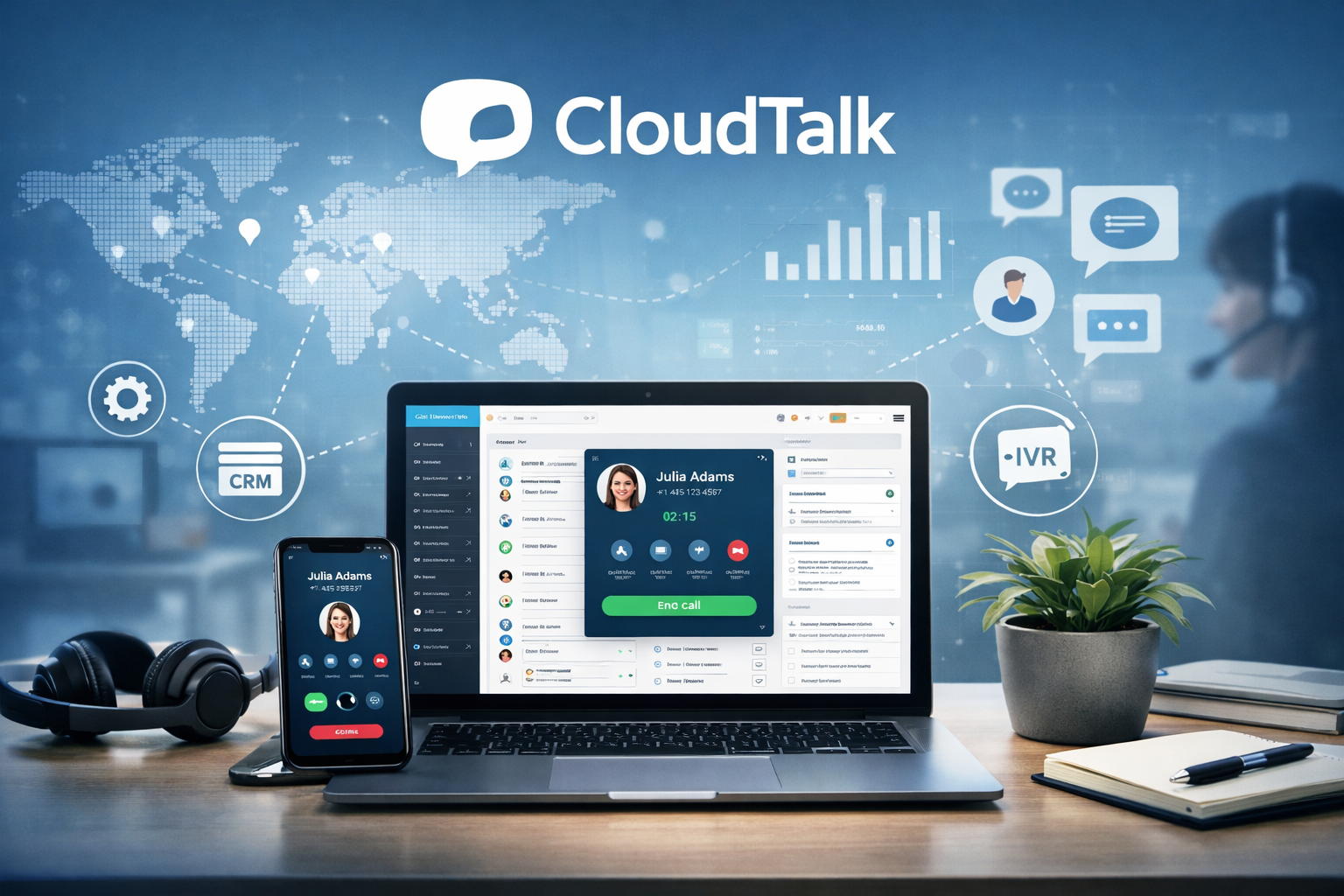
Within this category, CloudTalk is recognized as a software platform designed to manage customer communication workflows through a cloud telephony environment. The platform focuses on providing tools that help teams organize calls, analyze communication patterns, and integrate telephony functions with customer relationship systems and support tools.
Understanding how such platforms function can help organizations evaluate whether cloud telephony aligns with their operational structure and communication needs.
What Is CloudTalk?
CloudTalk is a cloud-based call center and business phone system designed to facilitate voice communication over the internet. Instead of using traditional telephone lines, the platform operates through Voice over Internet Protocol (VoIP) technology. This approach enables calls to be handled through software interfaces, web dashboards, and mobile applications.
The platform falls into the category of cloud contact center software. Tools in this category typically focus on managing customer conversations at scale. They often include features such as call routing, analytics, integrations with customer databases, and collaboration tools for support or sales teams.
CloudTalk is commonly used by organizations that rely heavily on phone communication, including customer support departments, sales teams, and service providers. Because the system is cloud-based, it does not require local telephony hardware to function. Instead, users access the platform through an online interface and connect calls using internet connectivity.
Another characteristic of cloud telephony systems like CloudTalk is their ability to integrate with existing digital platforms. Many organizations connect their call system with CRM software, help desk platforms, or workflow automation tools to centralize communication records.
Key Features Explained
CloudTalk includes a variety of tools intended to manage and analyze business calls. These features are designed to support communication workflows and operational visibility.
Call Routing Systems
Call routing allows incoming calls to be automatically directed to the appropriate team or individual. Routing rules can be based on factors such as business hours, language selection, agent availability, or call queue logic. This functionality helps organize large volumes of calls and distribute them efficiently.
Interactive Voice Response (IVR)
IVR systems allow callers to interact with automated menus before reaching an agent. Users can navigate options using keypad inputs or voice prompts. IVR is commonly used to categorize inquiries, route calls to departments, or provide automated information.
Call Recording and Monitoring
CloudTalk includes the ability to record calls for documentation or analysis. Recorded calls may be reviewed for training purposes, quality monitoring, or compliance requirements. Supervisors can also monitor ongoing calls in some configurations.
Call Analytics and Reporting
The platform offers reporting dashboards that summarize call metrics. Typical metrics include call volume, wait times, call duration, and agent performance indicators. These analytics tools help organizations examine communication patterns and operational efficiency.
Integration With Business Software
CloudTalk supports integrations with external platforms such as CRM systems, help desk tools, and productivity software. These integrations allow call data to appear within existing customer records or service workflows.
International Number Support
Cloud telephony platforms often provide virtual phone numbers for different countries. This capability allows organizations to establish regional presence without maintaining physical offices in each location.
Call Queues and Agent Management
Call queues organize incoming calls when agents are unavailable. Queue management tools can prioritize calls, manage waiting lists, and balance workloads among available agents.
Common Use Cases
CloudTalk and similar cloud communication platforms are used in a variety of operational contexts. Their applications often depend on the communication intensity of a business.
Customer Support Operations
Support teams frequently rely on phone systems to respond to inquiries or technical issues. Cloud-based call center tools help manage incoming call volumes and provide agents with contextual information about customers.
Sales Communication
Sales teams may use telephony software for outbound calling campaigns, follow-up conversations, or lead qualification processes. Call tracking tools can help document conversations and analyze engagement patterns.
Remote and Distributed Teams
Organizations with geographically distributed staff may adopt cloud telephony systems because they do not require centralized office infrastructure. Agents can access the platform from different locations using internet-enabled devices.
Service-Based Businesses
Industries such as healthcare scheduling, financial services, consulting, and logistics often rely on structured phone communication. CloudTalk may be used to organize appointment calls, service requests, or operational coordination.
International Customer Communication
Companies serving global markets sometimes use virtual phone numbers to enable local calling options for customers in different regions.
Potential Advantages
Cloud-based telephony systems offer several structural benefits compared with traditional phone systems.
Reduced Hardware Dependency
Because the infrastructure is hosted in the cloud, organizations generally do not need to install or maintain PBX hardware on-site. This can simplify deployment and system management.
Scalability
Cloud communication platforms can often be expanded by adding new users or phone numbers through software settings. This flexibility can be useful for organizations experiencing growth or seasonal demand changes.
Centralized Communication Records
Call recordings, call logs, and analytics data are typically stored within a centralized dashboard. This allows managers to review communication patterns and maintain historical records.
Integration With Digital Workflows
CloudTalk’s integration capabilities allow call activity to be associated with customer records in external platforms. This can support workflow continuity across sales, support, and operational teams.
Accessibility Across Devices
Users may access the system through desktop applications, web interfaces, or mobile apps. This flexibility can support remote work arrangements and mobile teams.
Limitations & Considerations
While cloud telephony offers operational benefits, organizations may encounter several considerations before implementing such systems.
Dependence on Internet Connectivity
Because VoIP systems rely on internet access, call quality can be affected by network stability. Organizations operating in areas with inconsistent connectivity may experience service interruptions.
Learning Curve
Employees transitioning from traditional phone systems may require time to adapt to software-based communication tools. Training and onboarding processes may be necessary.
Data Security Concerns
Cloud platforms handle sensitive communication data. Organizations often need to review compliance standards, encryption practices, and data storage policies when selecting a provider.
Integration Complexity
Although integrations can streamline workflows, setting up connections between multiple software platforms sometimes requires configuration and technical oversight.
Cost Structure
Cloud telephony systems typically operate on subscription-based pricing models. Organizations evaluating these tools may compare subscription costs against traditional infrastructure investments.
Who Should Consider CloudTalk
CloudTalk may be relevant for certain organizational contexts, particularly where phone communication is central to operations.
Businesses that manage high call volumes, such as customer support centers or service hotlines, may benefit from structured call routing and analytics capabilities.
Companies operating remote or distributed teams may also explore cloud telephony systems because these platforms do not rely on physical office hardware.
Organizations that already rely heavily on CRM platforms, help desk software, or automation tools may find integration features useful for centralizing communication data.
Finally, companies expanding into international markets sometimes adopt virtual phone numbers to support regional customer contact.
Who May Want to Avoid It
Despite its functionality, CloudTalk may not be suitable for every type of organization.
Businesses that rarely communicate with customers by phone may find the platform’s capabilities unnecessary.
Organizations operating in regions with unstable internet infrastructure may encounter challenges with VoIP reliability.
Very small teams that only require basic calling functionality might prefer simpler phone solutions without extensive analytics or call management features.
Companies with strict regulatory requirements may also need to conduct detailed compliance assessments before adopting cloud communication platforms.
Comparison With Similar CloudTalk
CloudTalk operates in a competitive category that includes several other cloud-based communication platforms. Tools in this category often provide overlapping features but may differ in architecture, integration ecosystems, or analytics capabilities.
Some platforms emphasize omnichannel communication, combining voice calls with messaging channels such as chat or email. Others focus specifically on voice-based call center operations.
Additionally, some solutions are designed for large enterprise environments, while others target small and medium-sized businesses. Differences may also appear in areas such as reporting complexity, automation capabilities, and supported integrations.
When evaluating cloud telephony systems, organizations often compare aspects such as call routing flexibility, reporting depth, CRM compatibility, international number availability, and system scalability.
Understanding these differences helps companies choose software that aligns with their operational structure and communication needs.
Final Educational Summary
Cloud-based telephony platforms have become increasingly relevant as businesses transition toward digital infrastructure and distributed work environments. These systems replace traditional phone hardware with internet-based communication tools that can be accessed through software interfaces.
CloudTalk represents one example of a cloud call center platform designed to manage voice communication workflows. Its feature set includes call routing, analytics dashboards, integration support, and virtual phone numbers. These capabilities are intended to help organizations organize inbound and outbound call activity within a centralized digital system.
Like many software platforms in the communication technology sector, CloudTalk offers structural benefits such as scalability and centralized data management. At the same time, considerations such as internet reliability, integration complexity, and subscription costs may influence implementation decisions.
Organizations evaluating cloud telephony systems typically analyze their communication volume, workflow requirements, and infrastructure capabilities before adopting such tools. Understanding how platforms like CloudTalk operate can help businesses make informed decisions about modernizing their phone communication systems.
Disclosure
Disclosure: This article is for educational and informational purposes only. Some links on this website may be affiliate links, but this does not influence our editorial content or evaluations.
