
Introduction
Managing websites, applications, and hosting infrastructure has become increasingly complex as digital services expand. Businesses, developers, and organizations often rely on servers to host websites, manage databases, run applications, and maintain online services. However, direct server management traditionally requires technical knowledge of command-line environments, operating systems, networking, and security configurations.
To simplify this process, a category of software known as server control panels emerged. These platforms provide graphical interfaces that allow users to manage hosting environments without relying entirely on manual server commands. Tasks such as creating domains, managing databases, configuring email accounts, installing applications, and monitoring performance can be performed through structured dashboards.
One widely recognized solution in this category is Plesk, a hosting control panel designed to manage websites, servers, and applications from a centralized interface. Over time, server management platforms like Plesk have become important tools for web hosting providers, system administrators, digital agencies, and developers who need structured environments for handling multiple websites or services.
Understanding how such tools function helps clarify how modern hosting environments are maintained and organized.
What Is Plesk?
Plesk is a web hosting control panel used to manage servers, websites, applications, email services, and databases through a graphical interface. Instead of interacting directly with a server’s command line, administrators can use structured menus and configuration panels to perform routine tasks.
Originally developed as a commercial hosting management platform, Plesk evolved into a widely used system for managing both Linux and Windows servers. It provides an environment where hosting providers, developers, and administrators can manage multiple websites from a single dashboard.
The platform operates as a layer between the user and the server operating system. It automates and organizes technical processes such as:
- Domain configuration
- File management
- Database administration
- Email server configuration
- Security settings
- Software installation
Because of this structure, Plesk is commonly classified as a server management platform or web hosting control panel.
In many hosting environments, the platform acts as a centralized administration tool where users manage multiple projects, websites, and services without needing to configure every element manually.
Key Features Explained
Centralized Server Management
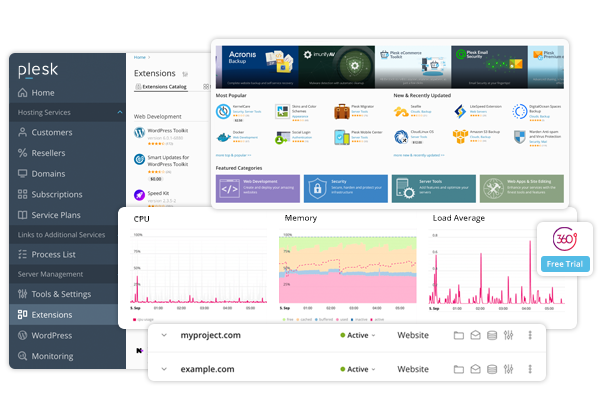
One of the defining characteristics of Plesk is its ability to control multiple aspects of a server from a single interface. Instead of working with multiple tools or scripts, administrators can monitor and manage websites, domains, and server resources in one environment.
This centralized structure helps organize tasks such as server configuration, user permissions, and hosting account management.
Domain and Website Administration
Plesk allows administrators to create and manage multiple domains within the same server environment. Through its interface, users can:
- Add new domains
- Configure hosting settings
- Manage DNS records
- Assign domain resources
This functionality is particularly relevant for hosting providers and agencies managing multiple client websites.
File and Database Management
Web applications typically require file storage and database support. Plesk integrates tools that allow users to manage website files and databases through the control panel.
Common functions include:
- Uploading and editing website files
- Managing MySQL or other databases
- Creating database users
- Controlling file permissions
These tools provide administrative access without requiring direct server-level commands.
Email Hosting Configuration
Many websites require domain-based email services. Plesk includes built-in tools for creating and managing email accounts associated with hosted domains.
Within the panel, administrators can:
- Create mailbox accounts
- Configure forwarding rules
- Manage spam filtering
- Set mailbox storage limits
This capability enables organizations to manage communication systems within the same hosting environment.
Security Management
Security plays an important role in hosting infrastructure. Plesk includes several built-in security management tools designed to help administrators monitor and configure protective measures.
Typical security features may include:
- Firewall configuration
- SSL certificate management
- Malware scanning tools
- Security monitoring dashboards
These tools aim to simplify security oversight without requiring extensive manual configuration.
Application Installation Tools
Many modern websites rely on content management systems or web applications. Plesk includes tools that help administrators install and manage commonly used applications.
Through integrated installers, users can deploy platforms such as content management systems, e-commerce applications, and development frameworks.
These features help streamline the process of launching new websites or applications.
Monitoring and Performance Insights
Server monitoring is another component of hosting management. Plesk provides monitoring dashboards that display information related to server resources and website activity.
Examples of monitored elements include:
- CPU usage
- Memory consumption
- Storage capacity
- Website traffic patterns
Monitoring tools assist administrators in identifying potential performance issues within hosting environments.
Common Use Cases
Server management platforms like Plesk appear in many types of hosting and development environments. Several common scenarios illustrate how such tools are used.
Web Hosting Providers
Hosting companies often manage thousands of websites across multiple servers. A control panel like Plesk provides an organized interface that allows them to create customer accounts, allocate hosting resources, and manage domain services efficiently.
Digital Agencies
Agencies responsible for building and maintaining client websites frequently require a structured way to manage multiple projects. Plesk allows them to host and administer several websites within a single control panel environment.
Independent Developers
Developers sometimes use Plesk to manage staging servers, development environments, or client websites. The platform simplifies many technical tasks while still allowing deeper configuration when needed.
Small Business Website Management
Organizations operating a small number of websites may use server control panels to manage domains, email services, and web applications without relying entirely on hosting support teams.
Application Deployment Environments
Some development teams use hosting control panels to deploy web applications, manage database connections, and maintain server infrastructure.
Potential Advantages
Simplified Server Administration
One of the most notable advantages of Plesk is the ability to manage servers through a graphical interface. This reduces the reliance on command-line operations for many common tasks.
Multi-Site Management
The platform is designed to manage numerous websites simultaneously. Administrators can organize domains, accounts, and resources from a single dashboard.
Structured Environment for Hosting Services
Hosting providers benefit from the platform’s structured management tools, which help maintain organization across many customer accounts and services.
Integration With Web Technologies
Plesk supports multiple programming environments and web technologies. This compatibility enables developers to run various types of web applications on the same server.
Built-In Management Tools
Because the platform integrates file management, database administration, email configuration, and monitoring tools, users often avoid the need to install many separate utilities.
Limitations & Considerations
Licensing Structure
Plesk is a commercial platform that typically requires licensing. Organizations considering its use must account for licensing costs associated with server installations.
Learning Curve for Beginners
Although graphical interfaces simplify server management, users who are new to hosting environments may still require time to understand concepts such as domains, DNS records, databases, and server resources.
Resource Overhead
Control panels introduce additional software layers on a server. In some configurations, this may require extra system resources compared with minimal server installations.
Feature Complexity
Because Plesk includes numerous management tools, the interface may appear complex for users who only need basic website hosting features.
Dependency on Platform Updates
As with most server management software, maintaining security and stability requires regular updates and system maintenance.
Who Should Consider Plesk
Certain groups may find server control panels such as Plesk relevant for their hosting environments.
Hosting Companies
Organizations providing shared hosting or managed hosting services often require control panels to manage large numbers of client accounts.
Web Development Agencies
Agencies responsible for maintaining many client websites may benefit from structured domain and server management tools.
System Administrators
Administrators managing Linux or Windows servers may use control panels to streamline routine tasks and simplify resource monitoring.
Freelance Developers
Developers who host websites for multiple clients sometimes rely on centralized management platforms to organize projects.
Educational Environments
Training programs and educational institutions occasionally use server management platforms to teach hosting concepts and web infrastructure management.
Who May Want to Avoid It
While server control panels provide useful management tools, they may not be appropriate in every situation.
Advanced System Administrators
Some experienced administrators prefer managing servers directly through command-line tools and manual configurations. In such cases, a control panel may be unnecessary.
Minimal Server Deployments
Projects that require very lightweight server environments might avoid control panels to reduce system resource usage.
Single-Website Hosting
Individuals hosting a single website on a simple hosting plan may not require the full capabilities of a comprehensive control panel.
Highly Customized Infrastructure
Organizations using specialized server architectures may prefer custom configurations rather than relying on a standardized management interface.
Comparison With Similar Plesk
Server management platforms exist in several forms, each offering different approaches to hosting administration.
Some control panels focus primarily on shared hosting environments, while others emphasize developer workflows or cloud infrastructure management.
Compared with other hosting control panels, Plesk is often recognized for supporting both Windows and Linux server environments, whereas some alternatives focus only on Linux-based systems.
Another distinction involves interface design and integration capabilities. Different platforms offer varying levels of automation, application support, and resource monitoring tools.
When comparing server control panels, administrators typically evaluate factors such as:
- Operating system compatibility
- User interface design
- Security features
- Scalability for hosting environments
- Licensing structure
These considerations help determine whether a specific control panel fits the operational requirements of a particular hosting environment.
Final Educational Summary
Server management tools play an important role in the modern web hosting ecosystem. As websites and online services grow in number and complexity, administrators require structured systems that simplify routine infrastructure tasks.
Plesk represents one example of a web hosting control panel designed to organize server administration through a graphical interface. By integrating domain management, database configuration, email services, security tools, and monitoring features into a single environment, the platform provides a centralized approach to hosting management.
Although such platforms can streamline many administrative tasks, they also introduce considerations related to licensing, system resources, and operational complexity. As a result, their usefulness often depends on the scale and nature of the hosting environment.
Understanding the role of server control panels like Plesk helps clarify how modern websites and applications are managed behind the scenes. For hosting providers, development teams, and system administrators, these tools form part of the broader infrastructure that supports digital services across the internet.
Disclosure: This article is for educational and informational purposes only. Some links on this website may be affiliate links, but this does not influence our editorial content or evaluations.
