
Introduction
Outbound communication remains a common strategy in business development, recruitment, partnerships, and B2B marketing. However, sending individual emails, tracking follow-ups, and managing responses manually can become inefficient as contact lists grow.
To address this challenge, a category of tools known as sales engagement platforms has emerged. These platforms aim to organize outreach activities, automate follow-ups, and centralize communication tracking across channels such as email and professional networking platforms.
One such platform in this category is lemlist. This article provides a structured and independent overview of its functionality, potential benefits, limitations, and comparable alternatives.
What Is Lemlist?
Lemlist is a cloud-based outreach automation platform designed primarily for business-to-business (B2B) communication. It enables users to design structured communication sequences and manage engagement across multiple channels from a centralized dashboard.
The platform generally serves:
- Sales development representatives
- Startup founders
- Marketing teams running outbound campaigns
- Agencies managing outreach for clients
In broader terms, Lemlist belongs to the sales engagement and prospecting software category. Tools in this segment typically combine contact management, messaging automation, personalization features, and performance tracking.
Visit Lemlist Official Website
Key Features Explained
1. Campaign Sequencing
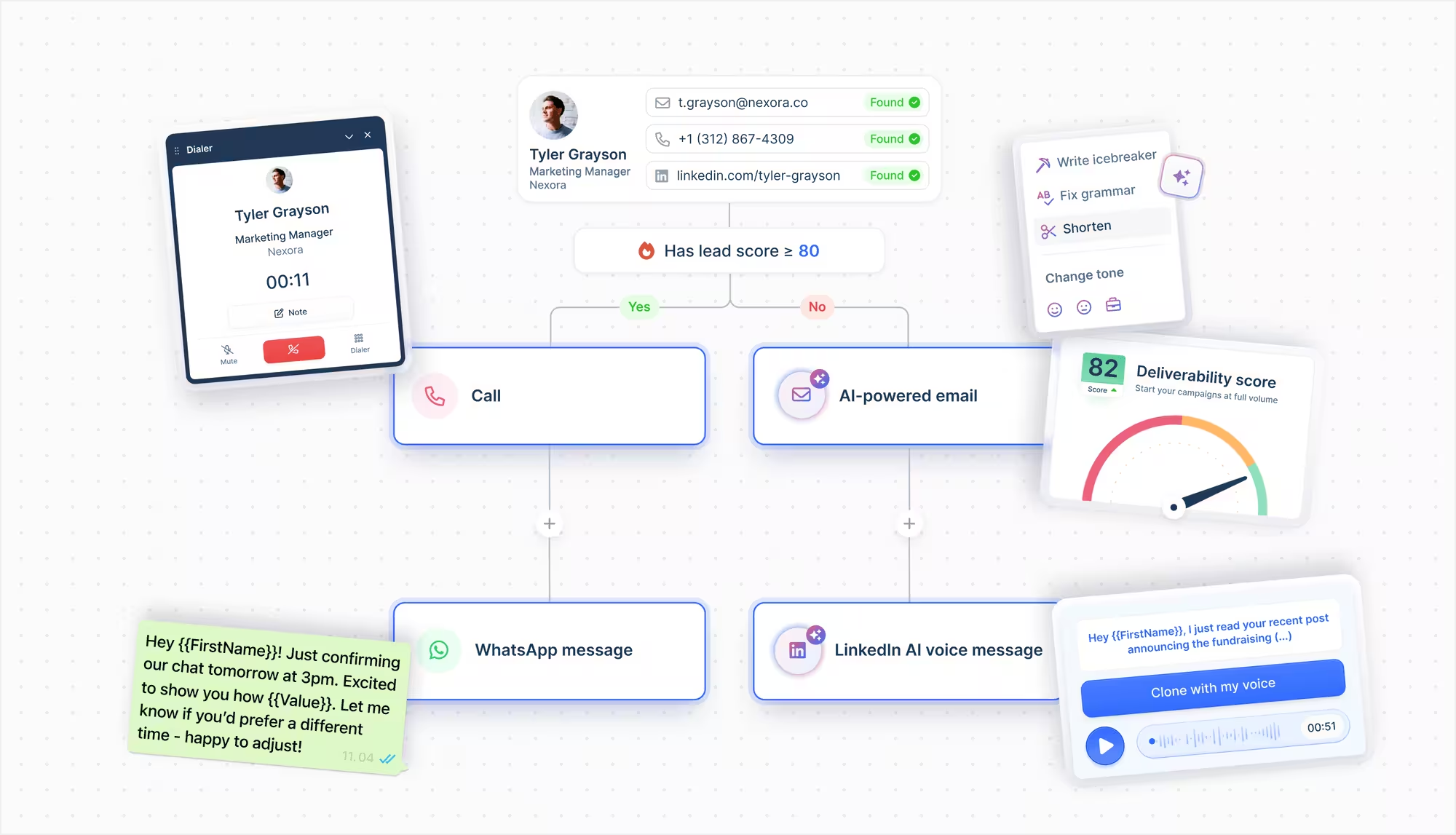
Lemlist allows users to create multi-step outreach sequences. These sequences can include:
- Email messages
- Follow-up emails
- LinkedIn interaction steps
- Task reminders for manual calls
Each step is scheduled based on time delays or trigger conditions, helping users maintain structured communication without manually tracking each prospect.
2. Personalization Variables
The platform supports dynamic fields within templates. For example, user-defined variables can insert a recipient’s name, company, or other data into messages.
This approach is intended to streamline outreach customization while reducing repetitive editing work.
3. Email Warm-Up and Deliverability Monitoring
Modern email systems apply strict spam filtering standards. Lemlist includes tools designed to support:
- Gradual email account warm-up
- Monitoring of sending behavior
- Basic deliverability tracking metrics
These features aim to help maintain sender reputation, though deliverability outcomes depend on multiple external factors beyond the platform itself.
4. Lead Discovery and Data Enrichment
Lemlist includes contact discovery functionality and email verification features. Users can:
- Search for business contacts
- Validate email addresses
- Enrich contact profiles
This reduces reliance on third-party lead databases, although database depth may vary compared to dedicated data providers.
5. Analytics and Reporting
The platform provides performance metrics such as:
- Open rates
- Reply rates
- Bounce rates
These analytics help users monitor campaign activity, though the level of reporting detail may not match enterprise-level systems.
6. Integrations
Lemlist integrates with selected CRM platforms and workflow tools. Integration capabilities depend on the specific CRM and technical setup used by the organization.
Common Use Cases
Lemlist is typically applied in the following scenarios:
- Cold email campaigns targeting B2B prospects
- Multichannel outreach combining email and LinkedIn
- Automated follow-up management
- Agency-led prospecting for multiple clients
- Testing outreach sequences before scaling
It is primarily used in outbound sales or partnership-building contexts rather than consumer email marketing.
Potential Advantages
The following are potential advantages based on platform design:
- Centralized control of outreach workflows
- Reduced manual follow-up tracking
- Built-in email verification tools
- Multichannel sequencing within one interface
- Basic deliverability support features
These advantages may contribute to operational efficiency when campaigns are structured and compliant.
Limitations & Considerations
Evaluating limitations is essential before adopting any outreach software.
1. Automation Does Not Ensure Results
While automation reduces manual effort, it does not guarantee engagement or response rates. Message quality, targeting accuracy, and compliance with email regulations significantly influence outcomes.
2. Per-User Pricing Structure
The platform generally operates on a per-seat pricing model. For larger teams, cumulative costs may increase proportionally.
3. Learning Curve for Advanced Workflows
Users designing complex multichannel campaigns may require onboarding time to configure sequences effectively.
4. Deliverability Depends on External Variables
Inbox placement is influenced by domain age, content structure, sending frequency, and recipient behavior. No outreach platform can fully control these elements.
5. Feature Scope Compared to Enterprise Platforms
When compared with larger enterprise tools such as Outreach or Salesloft, Lemlist may offer fewer advanced workflow automations or deep reporting customizations.
Organizations with highly complex sales processes may require broader enterprise functionality.
Who Should Consider Lemlist
Lemlist may be suitable for:
- Small to mid-sized sales teams
- Startups implementing structured outbound outreach
- Agencies managing client prospecting campaigns
- Businesses seeking email + LinkedIn workflow coordination
It may be particularly relevant where outbound prospecting is a defined part of growth strategy.
Who May Want to Avoid It
The platform may be less appropriate for:
- Organizations focused primarily on inbound marketing
- Teams requiring enterprise-grade analytics dashboards
- Users uncomfortable with automated outreach practices
- Companies operating under strict regulatory constraints
Additionally, businesses should ensure compliance with local email and data protection laws before implementing automation tools.
Comparison With Similar Tools
Within the outreach automation landscape:
- Apollo.io combines a large B2B contact database with outreach capabilities.
- GMass operates directly within Gmail for bulk sending workflows.
- Smartlead emphasizes cold email scaling and infrastructure management.
Each tool differs in database size, automation flexibility, pricing structure, and reporting capabilities. Selection should depend on operational complexity and workflow preferences rather than brand recognition.
Final Educational Summary
Lemlist is a sales engagement and outreach automation platform designed to help users organize multichannel outbound communication. It combines contact discovery, sequencing tools, personalization variables, and performance tracking within a unified system.
Its effectiveness depends on how well it aligns with a team’s outreach strategy, compliance requirements, CRM infrastructure, and budget structure. As with any automation tool, independent evaluation and careful testing are advisable before long-term adoption.
Readers should evaluate tools based on their own requirements and conduct independent research before implementation.
Disclosure: This article is for educational and informational purposes only. Some links on this website may be affiliate links, but this does not influence our editorial content or evaluations.
